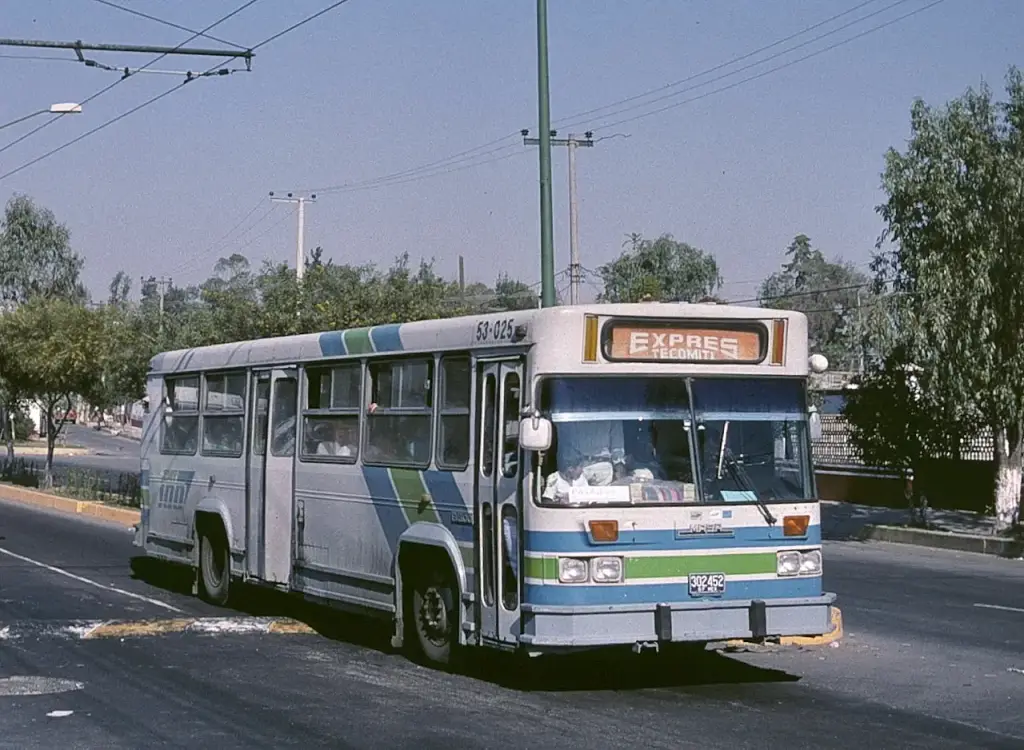

MASA, short for Mexicana de Autobuses, was a Mexican manufacturer of city buses, intercity coaches and trolleybuses based at Tultitlán in the State of Mexico. Formed in 1959 and owned by the state for almost three decades, it became the country’s second-largest bus builder before Volvo acquired it in 1998.
Masa at a glance
| Full name | Mexicana de Autobuses, S.A. |
|---|---|
| Formed | 10 September 1959 |
| Origin | the private body works Sheppard Hnos. (Sheppard Brothers) |
| Founding shareholder | SOMEX, Sociedad Mexicana de Crédito Industrial |
| Factory | Tultitlán, State of Mexico, from 1972 |
| Products | city and suburban buses, intercity coaches, trolleybuses |
| Trolleybuses built | more than 700 for Mexico City, 100 for Guadalajara |
| Notable customers | Ruta 100, Autobuses Estrella Blanca, Autobuses Unidos |
| Plant capacity | 10 integral buses and 10 chassis-mounted buses a day |
| Ownership | Mexican state until privatisation in 1988 |
| Bought by Volvo | September 1998, for US$74 million |
No Wikipedia article exists on the individual MASA models in any language, so this page is based on two sources about the company. The model designations listed are those under which the marque’s vehicles appear on this site and are not described in the sources.
History of the Masa
A state-owned maker, 1959
MASA was created on 10 September 1959, when the Mexican state investment bank SOMEX (Sociedad Mexicana de Crédito Industrial) took over the private company Sheppard Hnos., known in Spanish as Carrocerías Sheppard Hermanos. The new firm was set up at Tultitlán de Mariano Escobedo in the State of Mexico and built a new factory there in 1972, expanded in 1980. SOMEX remained a major shareholder, and buses leaving the works often carried “Somex” nameplates on the front.

Buses and trolleybuses for Mexico City
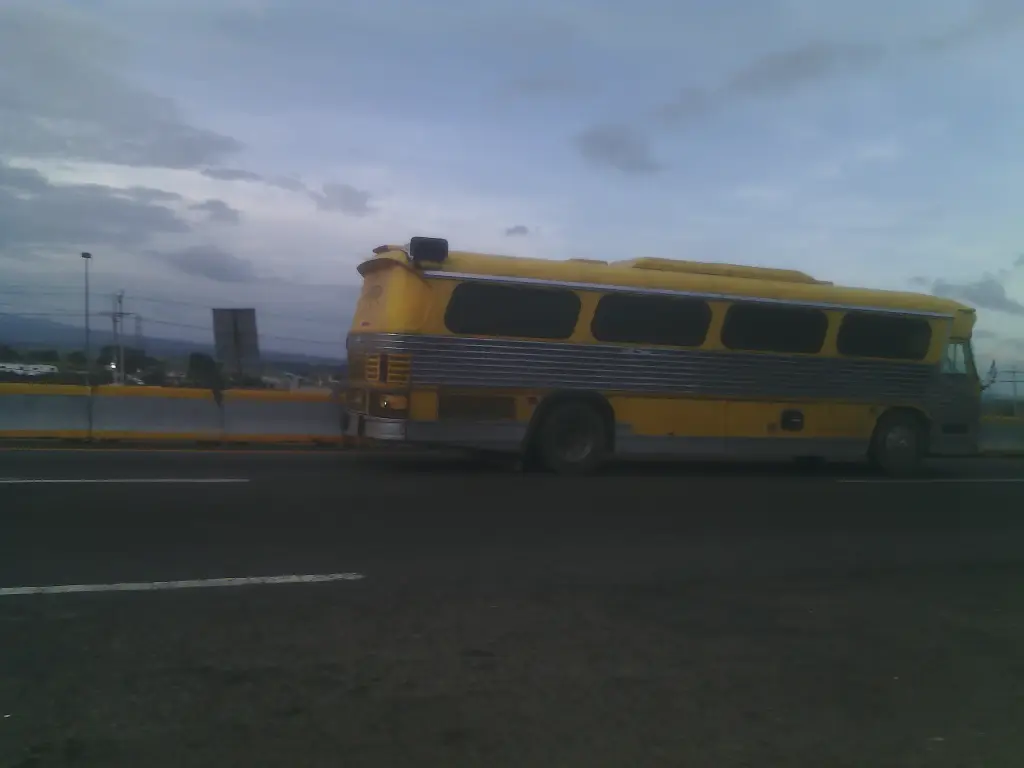
The company built motorbuses for city and suburban work, intercity coaches and trolleybuses. Its output went to operators such as Autotransportes Teziutecos, Autobuses Unidos, Autobuses Centrales de México and Autobuses Estrella Blanca, and to Ruta 100, the Mexico City collective transport system. The Spanish-language account of the firm states that it built more than 80 percent of Mexico City’s urban buses and about half of the intercity buses running in the country, and that its Tultitlán plant, with its own cutting, welding, paint and assembly lines, was among the ten largest bus factories in the world.
Trolleybus production
MASA was the main supplier of new trolleybuses to Mexico’s two trolleybus operators, building more than 700 for the Mexico City system run by Servicio de Transportes Eléctricos (STE) and 100 for Guadalajara’s Sistecozome. Production began after a 1978 partnership with Toshiba, which supplied the electrical propulsion; the first MASA/Toshiba prototype for STE was completed in 1979. Trolleybuses built after 1987 used equipment from Melco/Mitsubishi and Kiepe instead. In 1985 MASA built an articulated trolleybus for STE, and the agency then ordered 67 articulated vehicles made from the rear halves of existing two-axle MASA trolleybuses joined to new front sections; these were delivered in 1986–87. Apart from those 68 articulated machines, all MASA trolleybuses were two-axle vehicles.
Privatisation and Volvo, 1988–1998
The government sold the company to private investors on 17 October 1988, but the buyer defaulted on its payments; production had already stopped, and some transport media reported the firm as having gone out of business that year. It was resold in November 1989 to an industrial group and restructured in 1993, and work continued — 30 new trolleybuses were delivered to STE in 1991. The last trolleybus order came from STE in December 1996 for 200 twelve-metre vehicles; at least 50 arrived in 1997, while the final 75 were held up by funding problems and reached the operator only in 1999, after the sale. Volvo Buses bought MASA in September 1998 for US$74 million and renamed it Volvo Buses de México, keeping production in the same 153,000 sq ft (14,200 m²) plant. At the time of the sale the owners were the bus maker DINA, the Brazilian body builder Carrocerias Nielson (Busscar) and members of MASA’s board.
Design and features
- Born from a body works: the company began with the Sheppard Brothers coachbuilding business, taken over by the state bank SOMEX in 1959.
- Full-range output: city and suburban buses, intercity coaches, articulated diesel buses and trolleybuses came from the same Tultitlán plant.
- Trolleybus specialist: more than 800 trolleybuses for Mexico City and Guadalajara, most of them two-axle.
- Somex nameplates: the shareholder’s name appeared on the front of many buses, and Somex is still the name under which the marque’s vehicles are best known.
- A Volvo subsidiary: since 1998 the factory has operated as Volvo Buses de México.

Masa versions
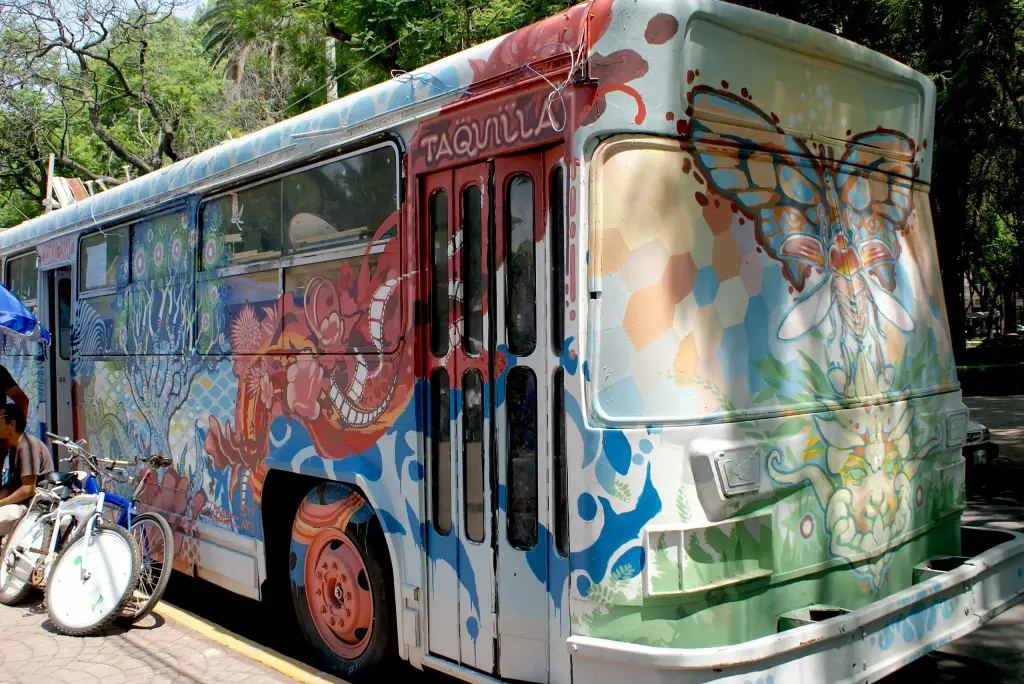
- Somex: the nameplate carried by many MASA buses, taken from the SOMEX investment bank; it survives in the designation of the marque’s best-known bus, the Somex 2030.
- Strada: an intercity coach designation used by MASA on this site.
- Premier: a coach designation of the marque recorded on this site.
- C11 and C11R: bus designations of the marque recorded on this site, the R suffix marking a revised version.
- EL: a further MASA designation recorded on this site.
More vehicles of the marque are collected in the Masa category.
Video: MASA SOMEX 2030
Video on YouTube.
Sources
- MASA (company), English Wikipedia: history, ownership, trolleybus production, Volvo acquisition
- Mexicana de Autobuses, Spanish Wikipedia: factory equipment and capacity, operators served, share of the Mexican market