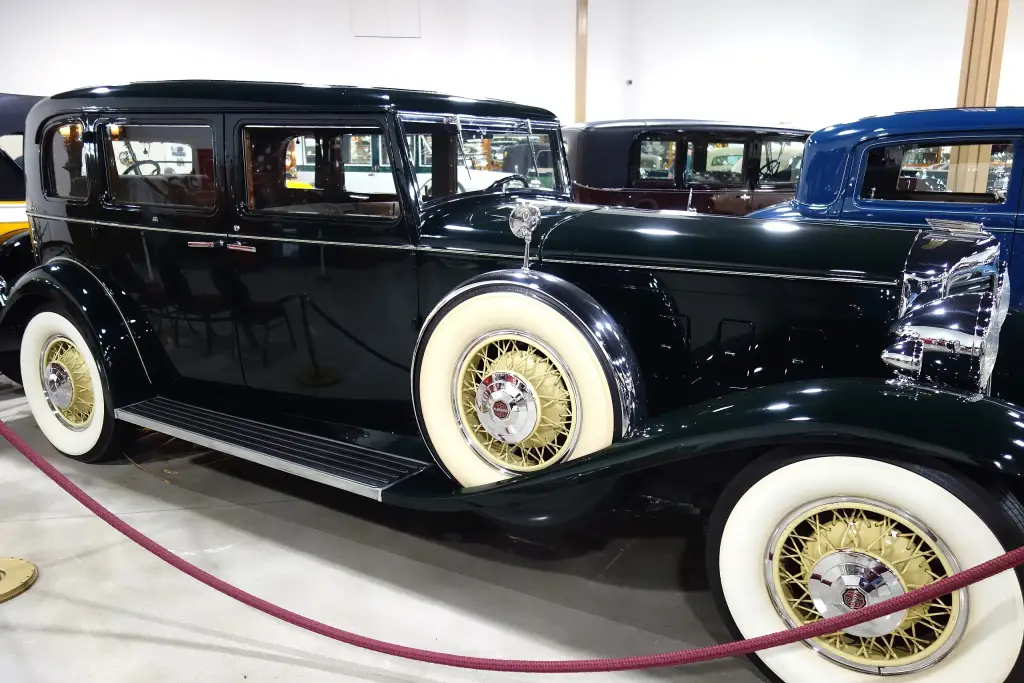
The Marmon Sixteen was produced between 1931 and 1934. Its engine was a 491 cu in (8.0 L) all-aluminium V16 producing 200 hp, and the body was drawn by the industrial designer Walter Dorwin Teague in 1930.
Marmon Sixteen at a glance
| Maker | Marmon Motor Car Company, Indianapolis |
|---|---|
| Production | 1931–1934 |
| Engine | V16, all-aluminium with steel cylinder liners |
| Displacement | 491 cu in (8.0 L) |
| Power | 200 hp (149 kW) |
| Bank angle | 45 degrees |
| Body design | Walter Dorwin Teague, 1930 |
| Engine work began | 1927 |
| Rivals in the V16 class | Cadillac V-16; the Peerless V16 project |
| Company successor | Marmon-Herrington, 1933 |
Based on one source: the English Wikipedia article on the Marmon Sixteen.
History of the Marmon Sixteen
Howard Marmon had begun work on the V16 engine in 1927, and the Sixteen was the car built around it. By the time the model was introduced, Cadillac had already put its own V-16 on the market; that engine had been designed by Owen Nacker, a former Marmon engineer. Peerless was also developing a V16, with help from another ex-Marmon engineer, James Bohannon. Marmon therefore arrived in the multi-cylinder luxury class after its former employees had taken the idea elsewhere.
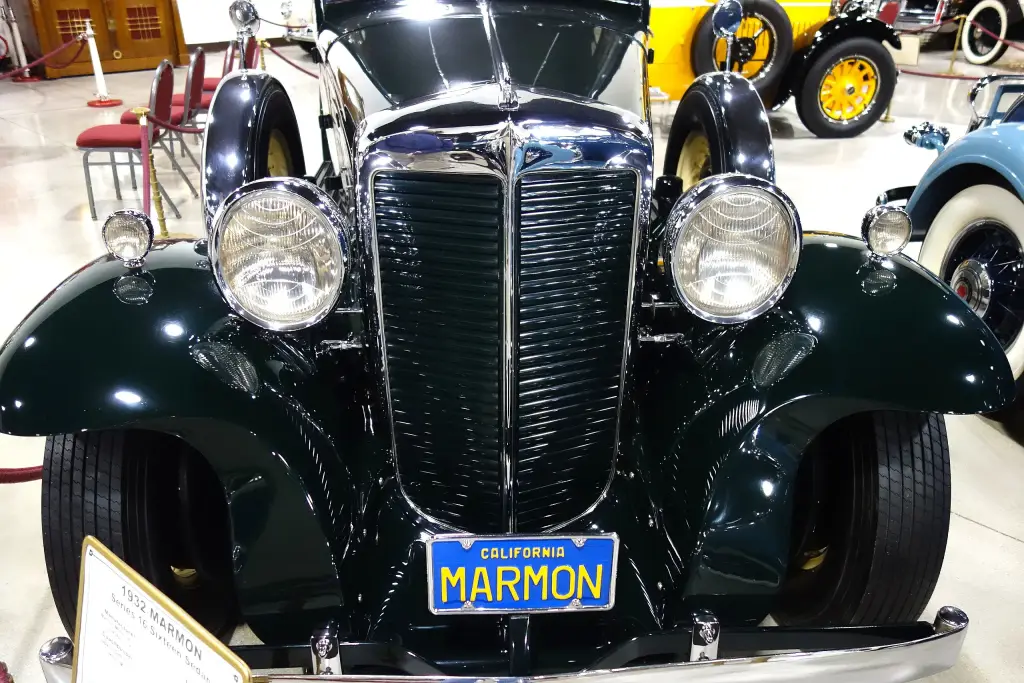
The engine of the Sixteen displaced 491 cu in (8.0 L) and produced 200 hp (149 kW). It was an all-aluminium design with steel cylinder liners and a 45 degree angle between the two banks of cylinders. Aluminium had been a Marmon speciality since the company’s early years, when it pioneered the use of the metal in car manufacture, and the Sixteen used the same approach for its sixteen-cylinder engine.
The body of the car was designed by Walter Dorwin Teague in 1930, with assistance from his son. Production ran from 1931 to 1934. Marmon itself had been building luxury cars in Indianapolis since 1902, and in 1933 the car business was succeeded by Marmon-Herrington, the all-wheel-drive truck company formed by Walter Marmon and Arthur Herrington.
Design and features
- All-aluminium V16: 491 cu in (8.0 L) with steel cylinder liners — the material Marmon had pioneered in car making.
- 200 hp: the output claimed for the sixteen-cylinder engine.
- 45 degree bank angle: a narrow vee for a sixteen-cylinder engine.
- Teague body: styling by Walter Dorwin Teague, drawn in 1930 with help from his son.
- Late arrival: Cadillac’s V-16, designed by an ex-Marmon engineer, was on sale before the Marmon Sixteen.
Marmon Sixteen versions
- Marmon Sixteen (1931–1934): the production car, built around the aluminium V16.
- Teague body (1930): the design drawn before production began, with assistance from Teague’s son.
- The V16 engine: 491 cu in, 200 hp, all-aluminium with steel liners and a 45 degree vee.
The Sixteen was the last luxury car of the old Marmon company; its successor is described in the article on Marmon-Herrington, and the company’s long-running six is covered under the Marmon Model 34. More Marmon cars are in the Marmon collection.
Sources
- Marmon Sixteen, English Wikipedia: production years, engine, body design, rivals