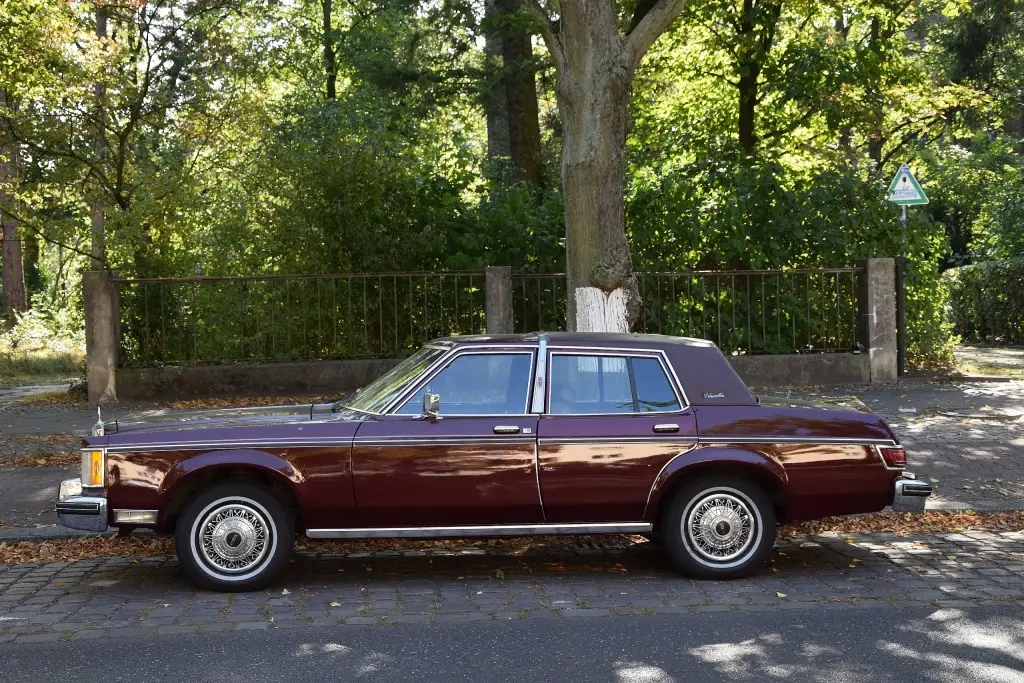
The Lincoln Versailles was a mid-size luxury sedan sold by Lincoln for the 1977–1980 model years. Named after the French palace, it was the smallest Lincoln of its time, created to compete with the Cadillac Seville, and a variant of the Ford Granada and Mercury Monarch.
Lincoln Versailles at a glance
| Maker | Lincoln (Ford Motor Company) |
|---|---|
| Production | 1977–1980 |
| Based on | Ford Granada and Mercury Monarch |
| Assembly | Wayne, Michigan and Mahwah, New Jersey |
| Price at launch | $11,500, about $2,000 below the Cadillac Seville |
| Body | four-door sedan only |
| Headlamps | first Lincoln with exposed headlamps since 1969 |
| Paint | first North American car with clearcoat paint |
| 1979 change | coach roof by American Sunroof Company |
| Built | 50,156 |
Based on one source, the English Wikipedia article on the Versailles.
History of the Lincoln Versailles
In the mid-1970s Lincoln looked for ways to widen its range. Large luxury cars recovered after the 1973 oil crisis, but imported saloons from BMW, Mercedes-Benz and Jaguar were offering American buyers something different from the cars built by Ford, GM and Chrysler. Cadillac answered in May 1975 with the Seville, developed in only 16 months, the smallest Cadillac in forty years and yet its most expensive non-limousine sedan, with an Oldsmobile V8 and Chevrolet Nova underpinnings.
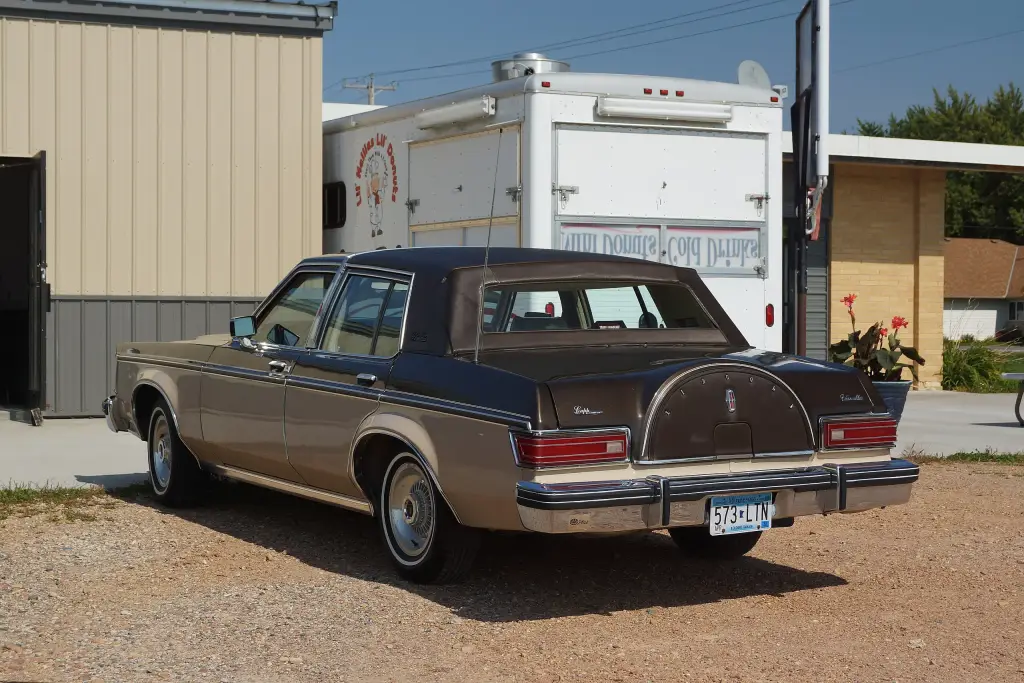
Ford began work on a Lincoln rival for the 1977 model year. Because there was barely a year before launch, the Versailles became a variant of the Ford Granada and Mercury Monarch, sharing most of its visible body panels and its whole roofline with the Mercury. It also took over the design features of the top Mercury Grand Monarch Ghia, which was dropped for 1977. The name had been considered for the Continental Mark III in 1966, when it came third behind Mark VI and LeMarque, and was kept for the Seville competitor, just as the Seville was named after a Spanish province.
The Versailles was the most expensive Lincoln sedan at $11,500, priced $2,000 under the Seville and below the Continental Mark V. It was the first Lincoln built outside Wixom since 1957 and the first time since 1960 that Lincoln sold two sedan lines. It shared the Granada’s wheelbase and was nearly three feet shorter than the Continental, and it was offered only as a four-door. Externally it gained a Continental-style spare-wheel boot lid with LINCOLN lettering, its own tail lamps and rectangular exposed headlamps, the first on a Lincoln since 1969.
Inside it inherited much of the Grand Monarch Ghia’s equipment, including power leather seats, a digital LCD clock, dual map lights, a lit vanity mirror and soundproofed carpeting, and it was the first vehicle marketed in North America with clearcoat paint and halogen headlamps. For 1979 the roofline was changed with a fibreglass coach roof developed by American Sunroof Company, wrapped in a “frenched” vinyl roof with a more upright rear window. Lincoln advertised a special quality regime at the factory, with dynamometer testing, water spray tests for leaks and a simulated road test. Production at Wayne and Mahwah totalled 50,156 cars, and although the Versailles was never directly replaced, the downsized 1982 Continental came close to its size.
Design and features
- Seville rival: Lincoln’s first compact luxury sedan, priced below the Cadillac.
- Clearcoat paint: the first vehicle marketed in North America with it.
- Halogen headlamps: rectangular exposed lamps, the first on a Lincoln since 1969.
- Coach roof: the 1979 fibreglass roof by American Sunroof Company.
Lincoln Versailles versions
- Versailles (1977–1978): the original Granada-based car.
- Versailles (1979–1980): with the coach roof and a roofline of its own.
- Ford Granada and Mercury Monarch: the sister cars it was built alongside.
The Versailles was the smallest Lincoln below the Lincoln Continental and the Continental Mark V, and it anticipated the downsizing that produced the 1982 Continental. More Lincolns are in the Lincoln collection.
Sources
- Lincoln Versailles, English Wikipedia: origins, design, equipment, production