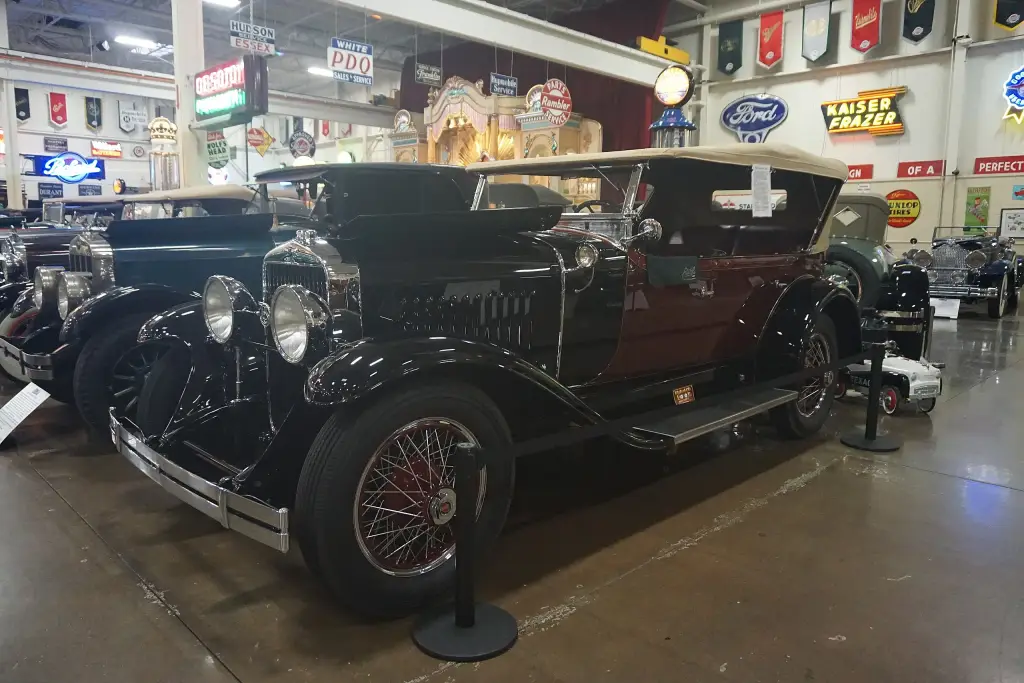

LaSalle was an American brand of luxury automobiles built and marketed by General Motors’ Cadillac division from 1927 to 1940. It was created as a companion marque for Cadillac: a shorter, less expensive car sold through the same dealers, but titled as a LaSalle rather than a Cadillac. Its 1927 design by Harley Earl is usually named as the point where styling, not engineering, began to sell American cars.
LaSalle at a glance
| Maker | Cadillac division, General Motors |
|---|---|
| Production | 1927–1940 |
| Class | Companion marque to Cadillac |
| Platform, first series | GM C platform with the Cadillac V8 |
| Designer, 1927 | Harley Earl |
| Assembly | Wyoming Road Assembly, built by Cadillac |
| Wheelbases, 1927 | 128 in (3,251 mm) and 134 in (3,404 mm) |
| Coachwork, 1927 | eight Fisher selections on the short chassis, four Fleetwood bodies |
| Engine | Cadillac “Ninety Degree V-8” |
| Top 1927 body | Fleetwood Transformable Town Cabriolet, US$4,700 |
| Naming | after René-Robert Cavelier, Sieur de La Salle |
| Series names | 303 (1927–28), 328 (1929) |
Based on one source, the English Wikipedia article on LaSalle, which covers the marque from 1927 to 1940; the body styles in the old records (sedan, coupe, roadster, convertible, ambulance) are versions of the same car.
History of the LaSalle
LaSalle began as an answer to a gap in Alfred P. Sloan’s market segmentation. General Motors placed each of its marques in a price band, from Chevrolet at the bottom through Pontiac, Oakland, Oldsmobile, Viking, Marquette and Buick to Cadillac at the top, but by the mid-1920s Cadillac’s prices had risen so far that nothing of the corporation’s own filled the space between it and Buick. Sloan’s solution was the companion marque: a new nameplate built by an existing division and sold through its dealers. Pontiac filled the gap below Oakland, Viking and Marquette were given to Oldsmobile and Buick, and Cadillac received LaSalle.
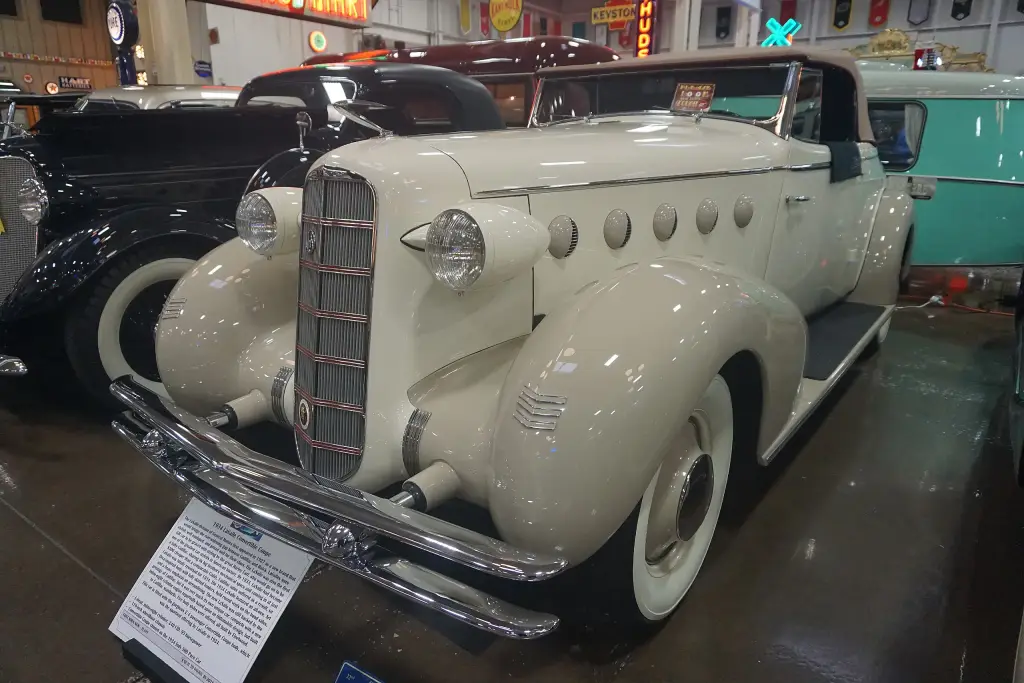

The name followed Cadillac’s own example. Cadillac was named after the French explorer Antoine de la Mothe Cadillac, so the companion marque took that of another French explorer, René-Robert Cavelier, Sieur de La Salle. The car was built by Cadillac to Cadillac standards at a dedicated factory, Wyoming Road Assembly, and was marketed as the second most prestigious marque in the General Motors range — yet it was shorter than a Cadillac, cheaper, and titled as a LaSalle.
The 1927 LaSalle was designed by Harley Earl, who had been hired by Cadillac’s general manager Lawrence P. Fisher and who would spend thirty years at General Motors, eventually controlling all of its styling. Earl did not set out to make a junior Cadillac. Influenced by the rakish Hispano-Suiza roadsters of the day, he conceived something more agile and more stylish, a shorter counterpoint to Cadillac’s big cars, unlike anything else then built in America. The homage went as far as the front of the car: the marque’s circled “LaS” trademark was cast into the horizontal tie bar between the headlamps, a nod to the Hispano-Suiza H6.
Under the skin the first LaSalle used the GM C platform and Cadillac’s “Ninety Degree V-8”, which made it fast as well as small and sporting. Buyers chose between two wheelbases: Fisher offered eight body selections on the 128-inch chassis and three more on the 134-inch one, while Fleetwood Metal Body supplied four coachwork choices on the short chassis. The most exclusive 1927 body was the Fleetwood Transformable Town Cabriolet at US$4,700. In June 1927 a LaSalle driven by Willard Rader, with Gus Bell aboard, covered 952 miles at the Milford Proving Grounds at an average of 95.2 mph, stopping only seven minutes for fuel and tyres — close to the 97.5 mph average of that year’s Indianapolis 500. The run ended early only because of an oil-system fault.
The Series 303 continued into 1928 with steady refinement: Lovejoy hydraulic shock absorbers and a twin-disc clutch, and a wider choice of bodies, with eleven Fisher selections on the 125-inch wheelbase and six on the 134-inch one. The first engine upgrade came with the Series 328 of 1929, which differed slightly from the Cadillac V8 upgraded alongside it; the Victoria and business coupe gave way to a Fisher Landau Cabriolet, while Fleetwood’s offerings were cabriolet coupes and sedans.
Design and features
- Companion marque: a separate GM brand, built by Cadillac and sold through Cadillac dealers at a lower price.
- Harley Earl styling: the 1927 car drawn by the man who would later run all of GM design, inspired by Hispano-Suiza roadsters.
- Cadillac V8: the “Ninety Degree V-8” gave the smaller LaSalle performance to match its looks.
- Coachwork choice: Fisher and Fleetwood bodies on two wheelbases, from open phaetons to town cabriolets.
- Speed record: 952 miles at 95.2 mph average at Milford in June 1927, with seven minutes of stops.
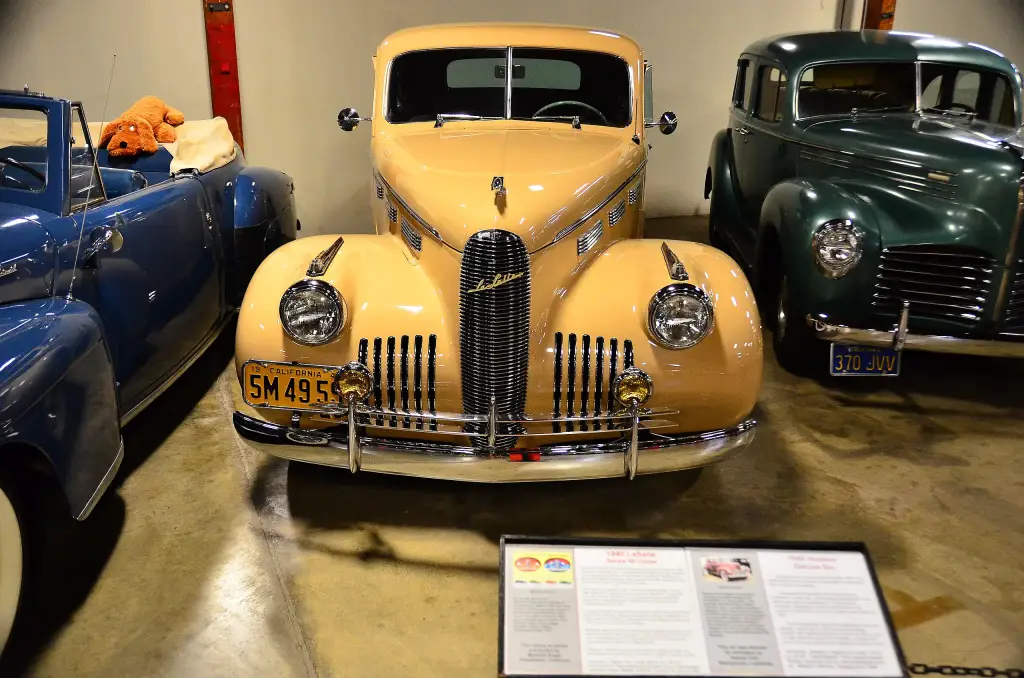

LaSalle versions
- Series 303 (1927–28): the original Earl-designed car on the 128- and 134-inch chassis.
- Fisher bodies: the volume coachwork, from sedans and coupes to the Landau Cabriolet of 1929.
- Fleetwood bodies: the most exclusive 1927 choice, headed by the Transformable Town Cabriolet.
- Series 328 (1929): the first engine upgrade, with a revised V8 shared in spirit with Cadillac’s.
LaSalle was sold alongside the bigger Cadillac cars. More of them are in the LaSalle collection.
Sources
- LaSalle (automobile), English Wikipedia: history, design, coachwork, record