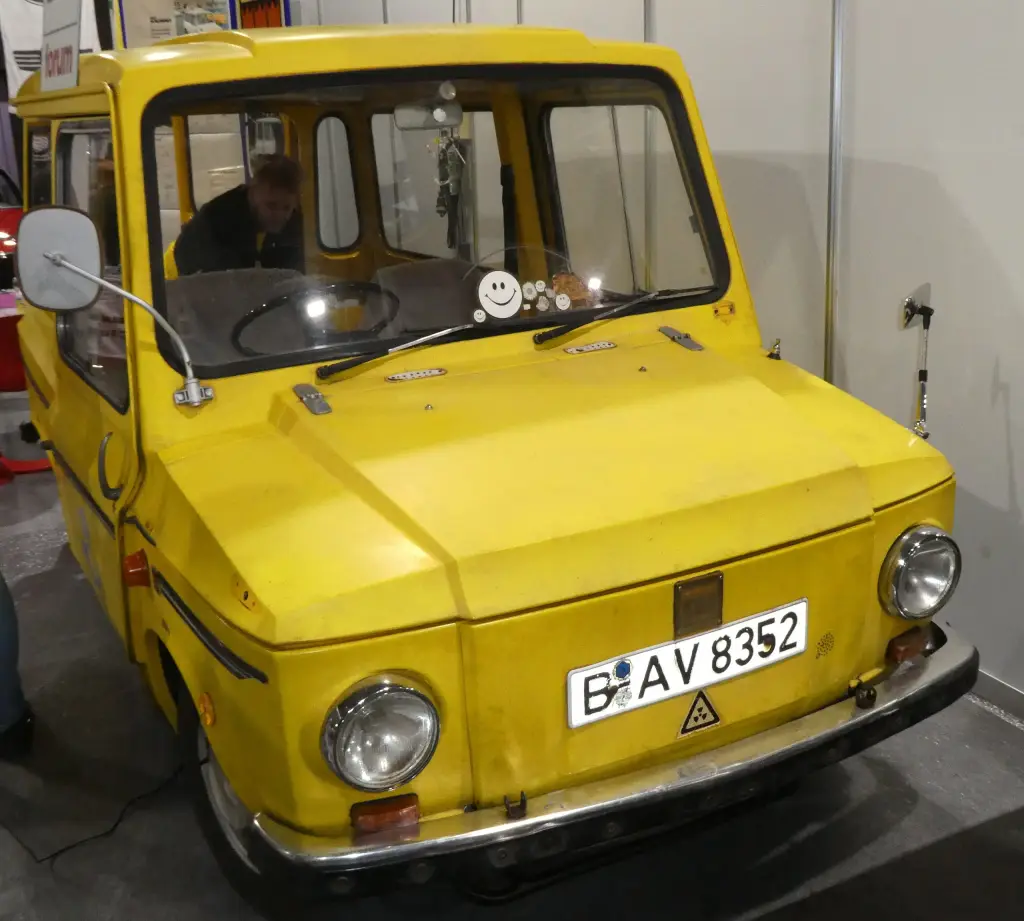
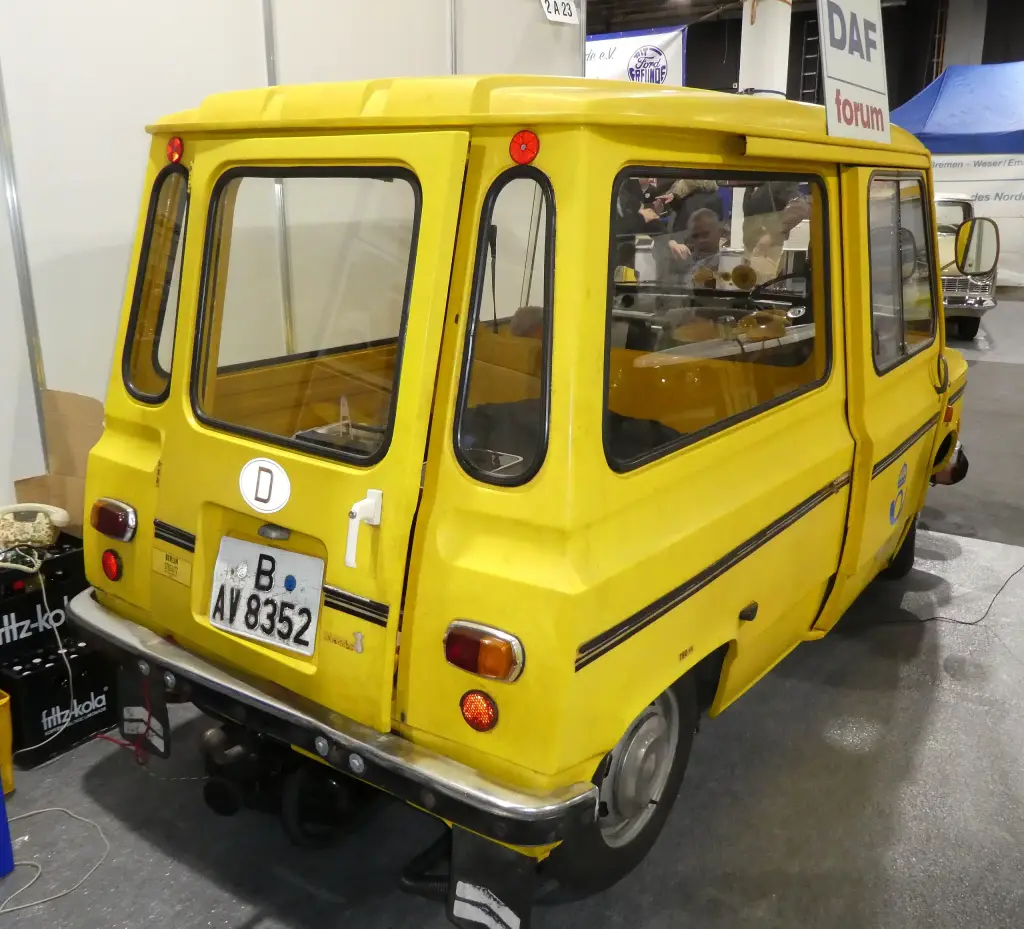
The Tjorven – sold on export markets as the Kalmar – was a small van built by Kalmar Verkstad AB (KVAB) in Kalmar, Sweden, between 1968 and 1971. It used the engine and driveline of the DAF 44 but a completely new body with several solutions that were unusual for the time. It was designed as a distribution vehicle for postmen, with the driver on the right and sliding doors, so that the postman could stop at a letterbox and fill it without leaving his seat.
Kalmar Tjorven at a glance
| Maker | Kalmar Verkstad AB (KVAB), Kalmar, Sweden |
|---|---|
| Names | Tjorven in Sweden, Kalmar on export markets |
| Factory designation | KVD 440/441 |
| Production | 1968–1971 |
| Prototypes | 19 steel-bodied, 1964–1966; ten of them used by the Swedish Post |
| Body | glassfibre-reinforced plastic over a steel frame |
| Running gear | DAF 44 engine and driveline, Variomatic transmission |
| Electrical system | 6 volts in 1968–1969, 12 volts from the 1970 model year |
| Layout | right-hand drive, sliding doors |
| Seating | originally one folding bench seat for the driver and a passenger |
| Museum | Tjorven museum at Rockneby, near Kalmar, since 2016 |
Based on one source, the Swedish Wikipedia article on the Tjorven. The English article with the same name is about the Astrid Lindgren character, not the van.
History of the Kalmar Tjorven
Designed around the post round
The van was drawn up as a distribution vehicle for postmen. In its original form it had only a folding bench, usable by one passenger, and sliding doors with the driver’s seat on the right-hand side – the side of the kerb in Swedish traffic – so that a postman could pull up at a letterbox, open the door and put the post in without walking round the vehicle. Before production began, 19 prototypes with steel bodies were built in 1964–1966 for testing, and ten of those were used by the Swedish Post.
The name from the television
The vehicle was officially the KVD 440/441. Erik Jakobsson, a technician at the Post Board’s operating office who took part in testing the first steel prototype on 27 January 1965, thought the van looked blunt and bus-like, like the character Tjorven in the contemporary television series Vi på Saltkråkan. From then on the van was called Tjorven on the Swedish market.
Glassfibre and two voltages
When the Tjorven entered production it received a body of glassfibre-reinforced plastic over a frame of steel sections. The 1968 and 1969 models had a 6-volt electrical system, which was replaced by 12 volts for the 1970 model year. Underneath, the mechanical parts came from the DAF 44: a small two-cylinder engine, driving through the stepless Variomatic transmission.
Easy in town, not on the open road
The combination of the Variomatic and the compact, high body made the Tjorven nimble and, in city traffic, quick, and roomy for its length. It was less suited to country roads, where the small engine and a tall body sensitive to crosswinds counted against it. The design was ahead of its time in other ways: a folding and split rear seat, sliding doors and a folding passenger seat to lengthen the load floor were solutions that other makers only adopted in the 1980s.
Design and features
- Right-hand drive and sliding doors: the postman could serve a letterbox without stepping out of the cab.
- Variomatic transmission: stepless drive taken from the DAF 44 made the van quick in town.
- Glassfibre body: reinforced plastic panels over a steel frame instead of the steel of the prototypes.
- Clever seating: a folding, split rear seat and a folding passenger seat extended the load length.
- Room for its length: a compact footprint with a tall, square body.
Kalmar Tjorven versions
- Post van: the original right-hand-drive model with a single folding seat.
- Private-market versions: vans with a proper passenger seat for civilian buyers.
- Open bed and estate: a few examples were built with an open platform or as an estate.
- Wheelchair-accessible version: a Tjorven with a lift for the driver.
- Electric examples: a couple of cars were built with electric drive.
- 1970 family prototype: a five-seat car with the 1,100 cc four-cylinder engine of the DAF 55, stronger front brakes and a horizontally split tailgate.
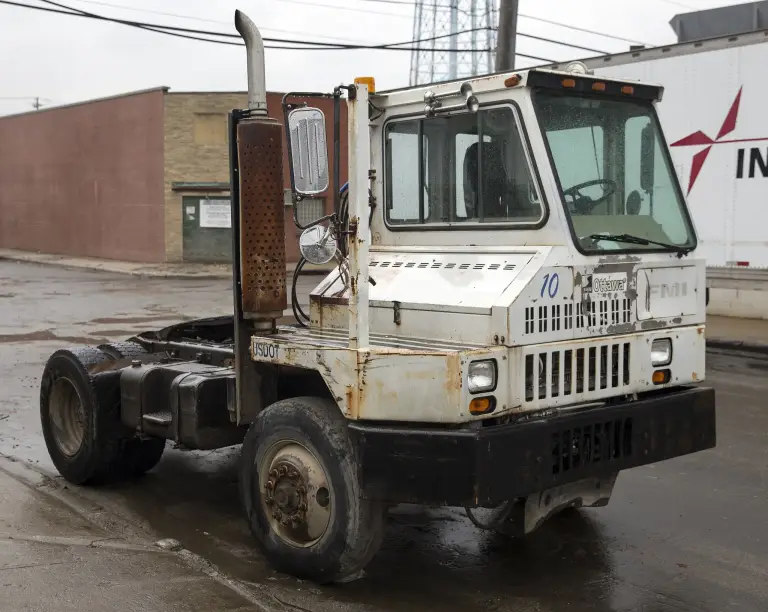
Kalmar Verkstad is better known today for its terminal tractors, described in the Kalmar Ottawa article. More vehicles of the make are in the Kalmar collection.
Sources
- Tjorven, Swedish Wikipedia: prototypes, body, electrical system, variants, name, museum