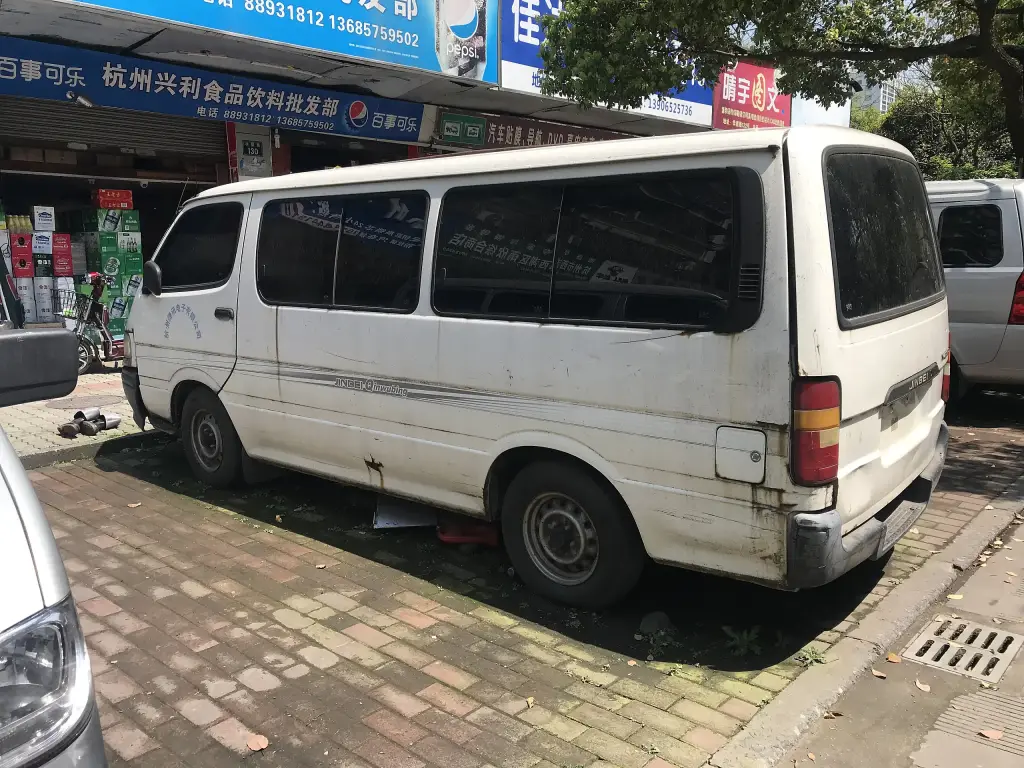

The Jinbei Haise (金杯海狮) is a four-door mid-size van produced by the Chinese automaker Jinbei since 1991. It started life as a licensed, rebadged Toyota HiAce of the fourth generation, and despite six rounds of restyling it has stayed on that same Toyota platform underneath.
Jinbei Haise at a glance
| Maker | Jinbei (Brilliance Jinbei), China |
|---|---|
| Production | since 1991 |
| Class | four-door mid-size van |
| Origin | licensed rebadged fourth-generation Toyota HiAce |
| First van assembled | 3 November 1991, from CKD kits |
| 10,000th built | 1997 |
| 200,000th built | 17 July 1999 |
| Annual sales | over 65,000 by the end of 2002 |
| 800,000th built | 23 September 2008 |
| 1,000,000th built | 27 October 2010 |
| Generations | six between 1991 and 2013 |
| Spin-off | Grand Haise, sold as the H2 abroad |
This page is based on one source, the English Wikipedia article on the Jinbei Haise. The generation dates overlap in that source and are given here as stated there.
History of the Jinbei Haise
Haise I (1991–2001)
On 3 November 1991 the first Jinbei Haise was assembled in China from CKD kits. The van was a licensed copy of the pre-facelift fourth-generation Toyota HiAce, and it carried the words “Jin Bei” in block letters across the front. The recipe of a proven Japanese van built locally at a lower price would define the model for the next three decades.

Haise II (1999–2006)
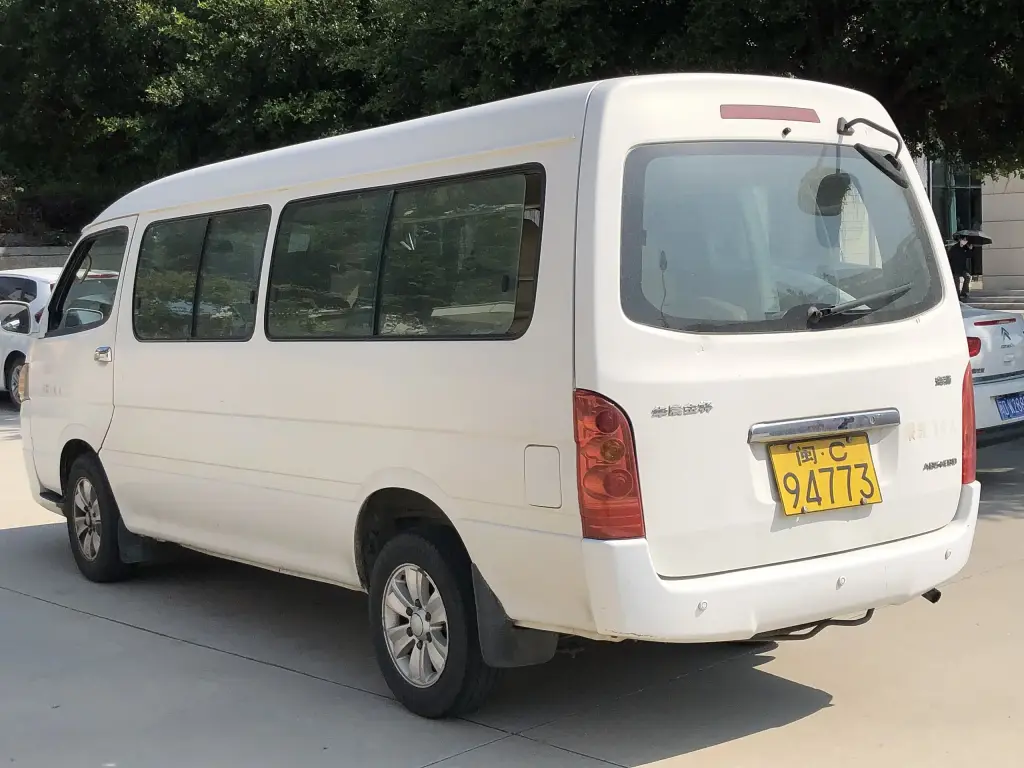
The second generation remained a rebadged Toyota HiAce, now with the facelifted front fascia of the Japanese van. The rear end was left exactly as it had been, so the changes were easy to spot from the front and invisible from behind.
Haise III (2002–2006)
The third generation was again a rebadged, updated HiAce Mk4. By then the Haise had become a volume product: the 10,000th van was built in 1997, the 200,000th followed on 17 July 1999, and by the end of 2002 annual sales had passed 65,000.
Haise IV (2002–2011)
The fourth generation brought a completely redesigned front fascia and updated tail lamps, although underneath it was still the fourth-generation HiAce. On 27 October 2010 Brilliance Jinbei rolled out the one-millionth Haise. The same day, more upmarket models on the same platform went on sale; they resembled the fifth-generation Toyota HiAce (H200) and were named Grand Haise, or H2 in foreign markets.
Haise V (2006–present)
The fifth generation was essentially an extensive facelift of the HiAce-based fourth-generation van, with a redesigned rear end and updated headlamp and grille trim. While it was on sale, the fourth generation continued as a cheaper, lower-trim option.
Haise VI (2008–2013)
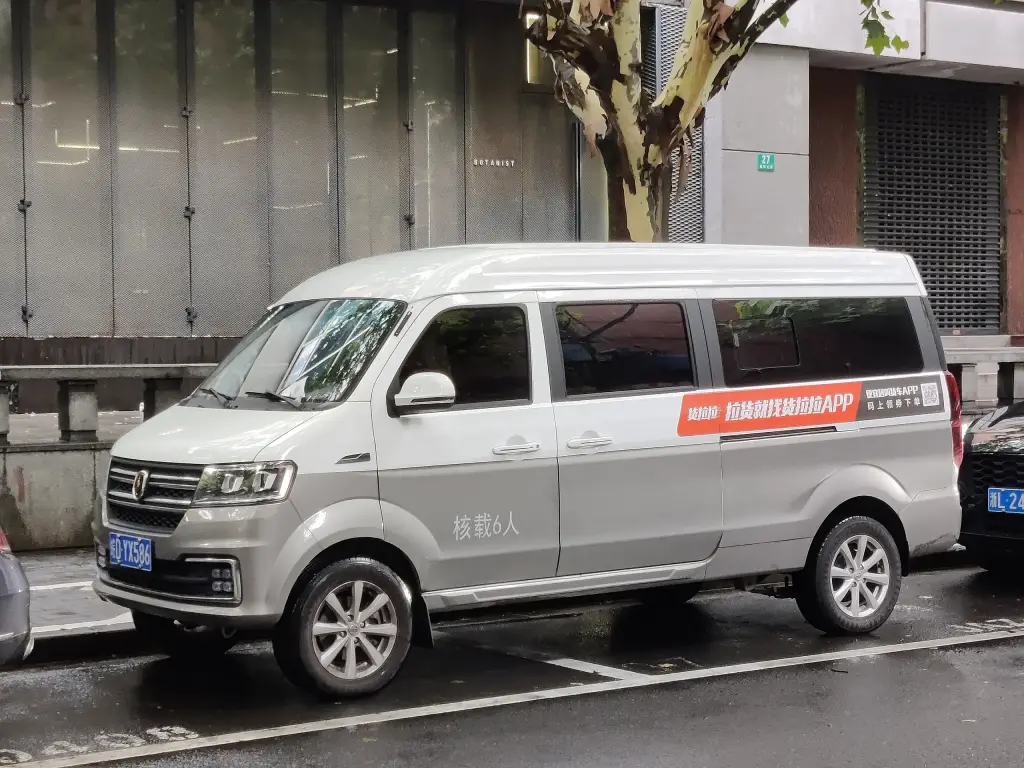
The sixth generation was launched on 23 September 2008, when the 800,000th Haise was also produced. It featured a completely redesigned front fascia and rear end, but remained a heavy facelift of the earlier vans. The fifth generation stayed on sale alongside it as the more affordable choice. This version has since been dropped from Jinbei’s official model range.
Design and features
- Toyota foundations: every Haise generation is built on the fourth-generation Toyota HiAce platform.
- Licensed production: the van began as a CKD-assembled, rebadged HiAce rather than an independent design.
- Steady facelifts: new front and rear ends arrived roughly every few years, while the structure stayed the same.
- Two vans at once: older generations were often kept on sale alongside newer ones as cheaper options.
- Huge volumes: the millionth Haise was built in October 2010, nineteen years after the first.

Jinbei Haise versions
- Haise I (1991–2001): the original pre-facelift HiAce copy with “Jin Bei” lettering on the nose.
- Haise II (1999–2006): facelifted front, unchanged rear.
- Haise III (2002–2006): updated HiAce Mk4 body with the original rear end.
- Haise IV (2002–2011): new front fascia and tail lamps, still HiAce underneath.
- Haise V (2006–present): extensive facelift with a redesigned rear end.
- Grand Haise: the upmarket H200-style spin-off, sold as the H2 abroad.
More Chinese and Asian light commercial vehicles are in the Jinbei collection, and the articles page has the longer reads from the site.
Sources
- Jinbei Haise, English Wikipedia: generations, dates, production milestones