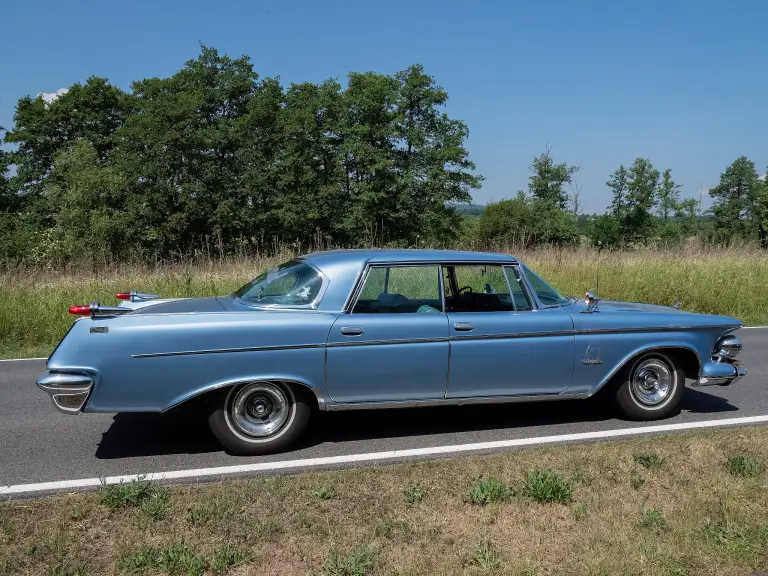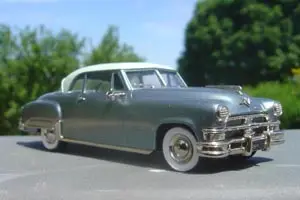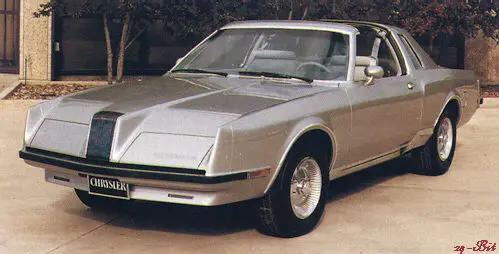
The Imperial LeBaron belongs to the make Chrysler sold separately from its own brand between 1955 and 1975 and again from 1981 to 1983. The car in the video below is a 1972 example, from the last years of the first period.
Imperial LeBaron at a glance
| Maker | Imperial Division, Chrysler Corporation |
|---|---|
| Make years | 1955–1975, again 1981–1983 |
| Earlier Imperial | Chrysler Imperial, from 1926 |
| Separate make from | 1955 |
| Styling | Virgil Exner, 1955–1963 |
| Engines | V8 |
| Gearbox | automatic |
| Signature detail | gunsight taillights, free-standing 1955–56 and 1961–62 |
| Built 1955 | 11,430 |
| Built 1956 | 10,268 |
| Engineering customers | Facel Vega Excellence; Hongqi CA72 |
| Rivals | Lincoln and Cadillac |
based on one source (English Wikipedia); the source describes the Imperial make and its 1955–1956 models and has no section on the LeBaron itself.
History of the Imperial LeBaron
The Imperial name first appeared in 1926, at the New York City National Automobile Show, on Chrysler’s flagship luxury model. Those cars were built on extended-length platforms of the company’s full-size models and competed with Cadillac, Continental, Lincoln, Duesenberg, Pierce-Arrow, Cord and Packard. Walter P. Chrysler wanted a share of the luxury market, since his most expensive car at the time had only a six-cylinder engine; the new model shared its body with the cheaper Chrysler Six but used a larger 288.6 cu in (4.7 L) unit. Later generations were based on the Chrysler Royal, Airflow, Saratoga and New Yorker.
For 1955 the Chrysler brand identification was dropped and the car was simply the Imperial, launched and registered as a separate marque under the Imperial Division. Chrysler informed the licensing agencies of the then 48 states that the Imperial would no longer be registered as a Chrysler, and once the make existed Cadillac stopped using the Imperial name for its top-level limousines. Lincoln followed the same road two years later, when Ford set up the Continental Division as a standalone brand.
After 1955 the Imperial featured new or modified body styles every two to three years, all with V8 engines and automatic transmissions, and technologies that Chrysler later introduced in its other models. The engineering travelled: Chrysler supplied Imperial engines and transmissions to the French maker Facel Vega for the Excellence, and Hongqi in China used an Imperial found locally to build its CA72. Styling came from Virgil Exner, whose “100 Million Look” defined the Imperial from 1955 until 1963, with free-standing gunsight taillights that appeared in 1955–56 and returned in 1961–62.
In the first two seasons the range consisted of the Newport two-door hardtop with 3,418 cars, a pillared four-door sedan with 7,840 and the C-70 Crown limousine with 172, for 11,430 cars in 1955; for 1956 the hardtop became the Southampton, a four-door Southampton hardtop was added, the Hemi grew from 331 to 354 cu in and production reached 10,268, on a wheelbase of 133.0 inches (3,378 mm). The make continued until 1975 and returned briefly for 1981–1983, which puts the 1972 LeBaron of the video in its closing years.
Design and features
- Luxury division: Imperial was registered as a make, not a Chrysler, from 1955.
- Exner styling: the 100 Million Look of 1955–1963.
- V8 and automatic: used across the make throughout its life.
- Gunsight taillights: the free-standing lamps of 1955–56 and 1961–62.
- Engineering donor: Imperial parts went into the Facel Vega Excellence and the Hongqi CA72.
Imperial LeBaron versions
- Newport two-door hardtop (1955): 3,418 built.
- Pillared four-door sedan (1955): 7,840 built.
- Crown limousine, C-70 (1955): 172 built.
- Southampton (1956): the hardtop renamed, with a four-door hardtop added.
The 1955–56 body styles have their own pages: Newport, Southampton, Imperial Custom and Imperial Sedan. More cars are in the Imperial collection.
Video: NEW TOY – Classic 1972 Chrysler Imperial LeBaron
Video on YouTube.
Sources
- Imperial (automobile), English Wikipedia: make history, 1955-1956 models, production, engineering