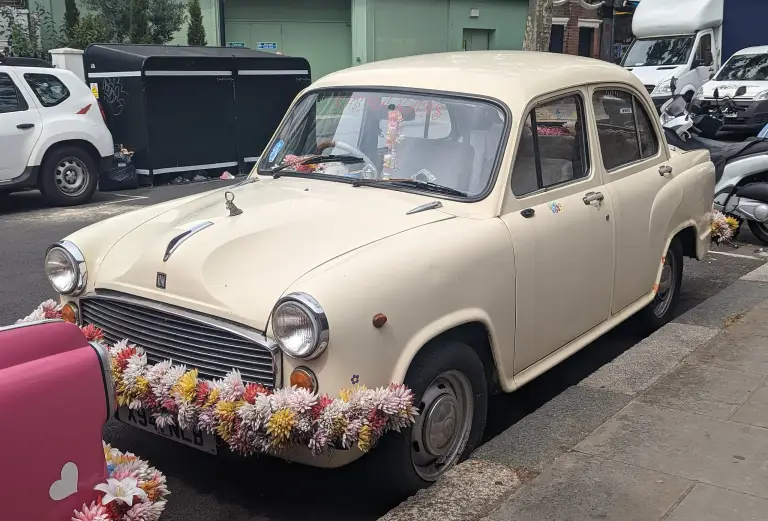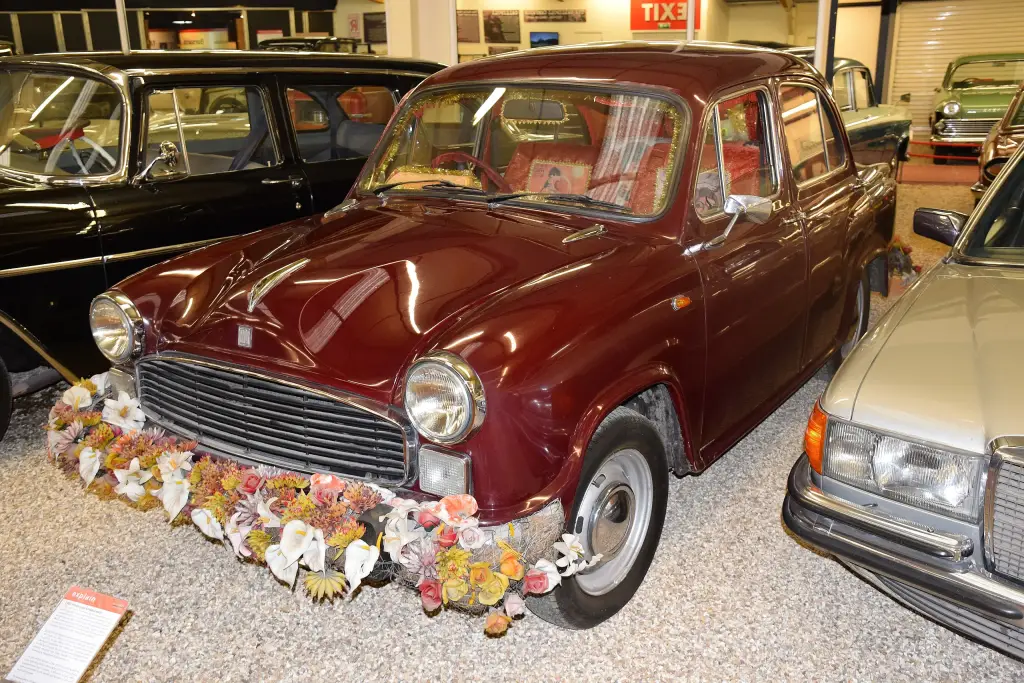
The Hindustan Ambassador was manufactured by Hindustan Motors in India from 1957 to 2014, one of the longest production runs of any car in the world. Based on the Morris Oxford Series III, it became the standard saloon of Indian officialdom and the country’s best-known taxi, and it was still being built in the second decade of the twenty-first century with almost no change to its basic design.
Hindustan Ambassador at a glance
| Maker | Hindustan Motors, Uttarpara, West Bengal |
|---|---|
| Production | 1957–2014 |
| Based on | Morris Oxford Series III (1956) |
| Body | fully enclosed monocoque, four-door saloon |
| Early engine | 1,476 cc side-valve four (Mark I, 1958–1960) |
| Later engine | overhead-valve four |
| Predecessor | Hindustan Landmaster |
| UK import | Fullbore Mark 10, 1992 |
| Taxis | sale outlawed in India from 1 April 2011 |
| Sales in final full year | 2,200 (year to March 2014) |
| Brand sold | 2017 to Groupe PSA for ₹80 crore (US$8.3 million) |
This page is based on one source, the English Wikipedia article on the Ambassador, so its figures could not be cross-checked.
History of the Hindustan Ambassador
From Oxford to Ambassador
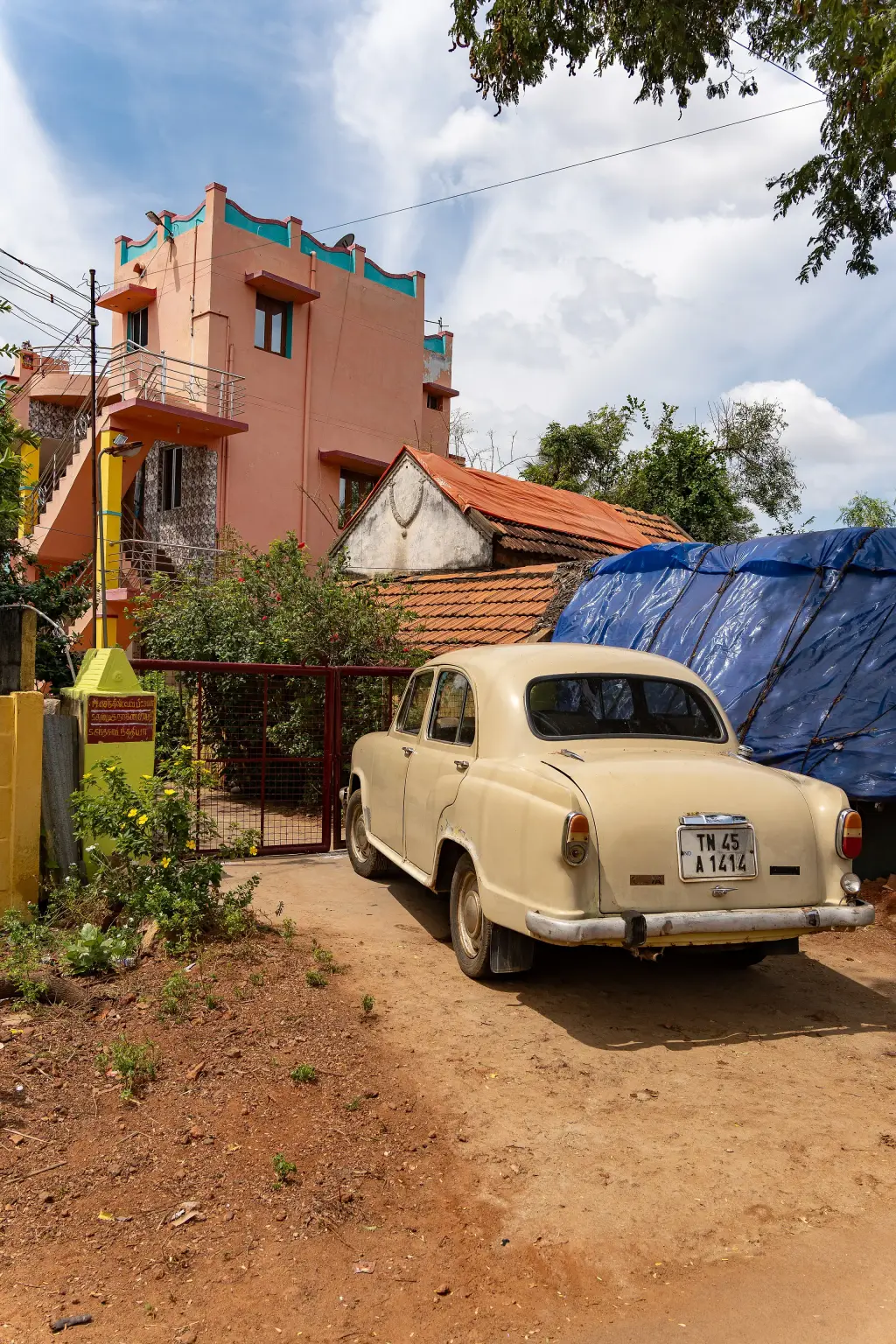
The Ambassador began as a licence-built British car. In 1956 Morris Motors, then part of the British Motor Corporation, sold the rights and tooling of the Morris Oxford Series III to Hindustan Motors, just as it had done with the earlier Series I and Series II models that Hindustan sold as the Hindustan 14 and the Landmaster. All the tooling went to the Uttarpara plant in West Bengal, and the new car was introduced in 1957 as a rebadged Oxford. It replaced the Landmaster, which was based on the Oxford Series II, and the larger Hindustan Deluxe that had been built on the Chevrolet Deluxe.
A Birla company
Hindustan Motors was part of the Birla group and was established in 1942 by B.M. Birla, just before Indian independence. It began in a small assembly plant at Port Okha near Gujarat, putting together the Morris 10 as the Hindustan 10. In 1948 the company moved its assembly plant from Port Okha to Uttarpara, in the Hooghly district of West Bengal, and strengthened its manufacturing capacity. The Ambassador was technically more advanced than the cars it replaced: it had a fully enclosed monocoque chassis, which made it unusually spacious inside. The Mark I of 1958 to 1960 used the 1,476 cc side-valve engine of the earlier Hindustan 14; later cars received an overhead-valve engine.
Half a century in the market
The political influence of the Birla family helped the Ambassador survive the 1954 government policy that promoted an indigenous automobile industry, and for several decades it dominated the Indian market. Buyers chose it for its space and ruggedness against rivals such as the Premier Padmini and the Standard 10. By the early 1980s, however, the comparatively expensive Ambassador was losing ground because of its low fuel economy and poor quality. It still accounted for more than two thirds of Indian car production, but waiting lists ran to twelve months, while the Premier Padmini had a waiting list of nearly five years. The Ambassador stayed dominant in official and company use and remained popular as a taxi, but private buyers gradually abandoned the “Amby” during the 1980s and 1990s.
The end of production
Production at the plants outside Kolkata and Chennai ended because of weak demand and the company’s financing problems. In the financial year that ended in March 2014 Hindustan Motors sold 2,200 Ambassadors, only a tenth of the sales the model had reached in the mid-1980s. Taxi use had already been restricted: the sale of Ambassador taxis was outlawed from 1 April 2011, a year after stricter emission standards reached eleven Indian cities including Kolkata. In later years the company fitted a cleaner diesel engine so that the car could return to taxi service in Kolkata. In February 2017 Hindustan Motors sold the Ambassador brand, including its trademarks, to Groupe PSA for ₹80 crore, and in May 2022 it reported that the nameplate would be revived with a new engine and design, to be built in Chennai.
Design and features
- Monocoque body: a fully enclosed chassis that gave the car its famous interior space.
- Ruggedness: simple mechanicals that could be repaired almost anywhere in India.
- Official presence: for decades the default car of government departments and company fleets.
- Taxi work: a fixture of Indian cities until the 2011 restrictions.
- Long life without change: the same basic design stayed in production from 1957 to 2014.
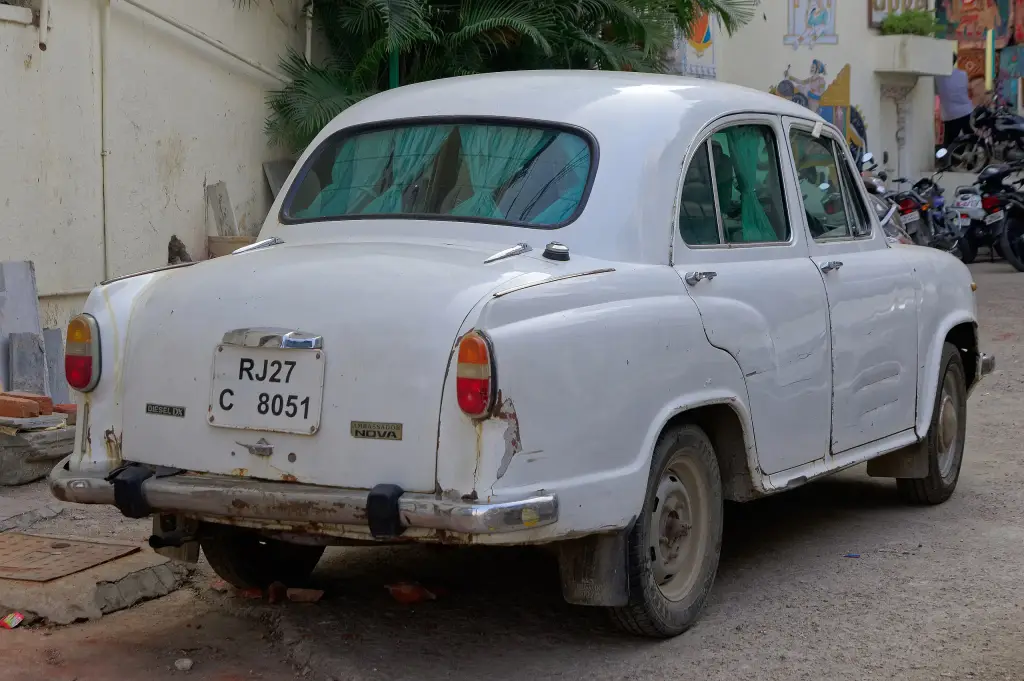
Hindustan Ambassador versions
- Mark I (1957–1963): the original rebadged Oxford, with a side-valve engine in its first years.
- Later Marks: the same body with an overhead-valve engine and gradual detail changes.
- Fullbore Mark 10 (1992): a short-lived British import, retrofitted with a heater and seat belts for European rules.
- Diesel taxis: later cars with a cleaner diesel engine that allowed a return to taxi work in Kolkata.
The Ambassador shared its plant with the Hindustan Contessa, the company’s more modern saloon, and Hindustan later sold the Hindustan Lancer. More cars are in the Hindustan collection.
Video: Road Ends for India’s Iconic Ambassador Car
Video by The New York Times on YouTube.
Sources
- Hindustan Ambassador, English Wikipedia: history, production, brand sale, export