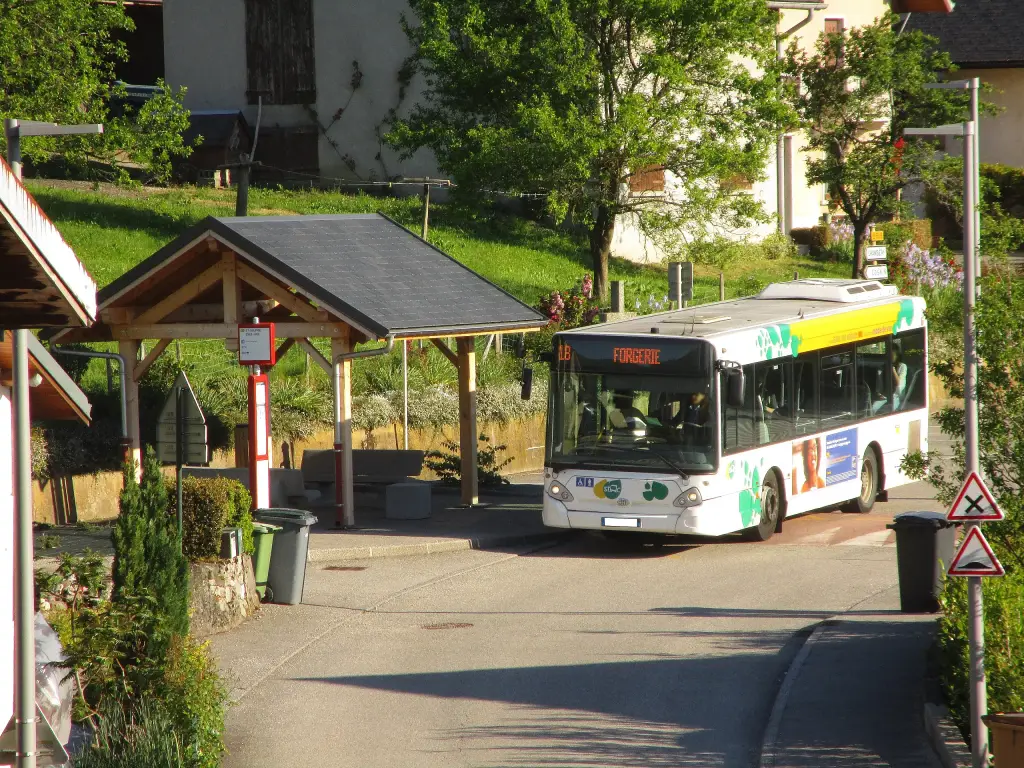

The Heuliez GX is the city bus range of Heuliez Bus, the bus division of the French coachbuilder Heuliez of Cerizay. It began in 1984 with the standard GX 107 and the articulated GX 187, and from the mid-1990s moved to low-floor vehicles sold under the Access’Bus name. Production of the classic GX models ended in 2006.
Heuliez GX at a glance
| Maker | Heuliez Bus, Cerizay and later Rorthais, France |
|---|---|
| Range | standard GX 107, articulated GX 187, midibus GX 117, low-floor GX 317 |
| GX 107 | 1984–1996, 2,113 built |
| GX 187 | 1984–1996, 534 built |
| GX 117 and 117 L | 1998–2006, 796 built |
| GX 317 | 1994–2005 |
| Engines | Renault diesel at first, Iveco from 2001; CNG and LPG on the GX 317 |
| Gearboxes | ZF or Voith automatic; Allison T 280 R on the GX 117 |
| Chassis | Renault PR 180 under the GX 187; Renault CS.S (Agora) under the GX 317 |
| Range name | Access’Bus, from the low-floor generation |
| Predecessors | Heuliez O 305 and articulated O 305 G |
| Successors | GX 127, GX 217, GX 327 and GX 417 |
The GX models have pages only on the French Wikipedia; the English article on Heuliez covers the company and its bus division.
History of the Heuliez GX
GX 107 and GX 187 (1984)
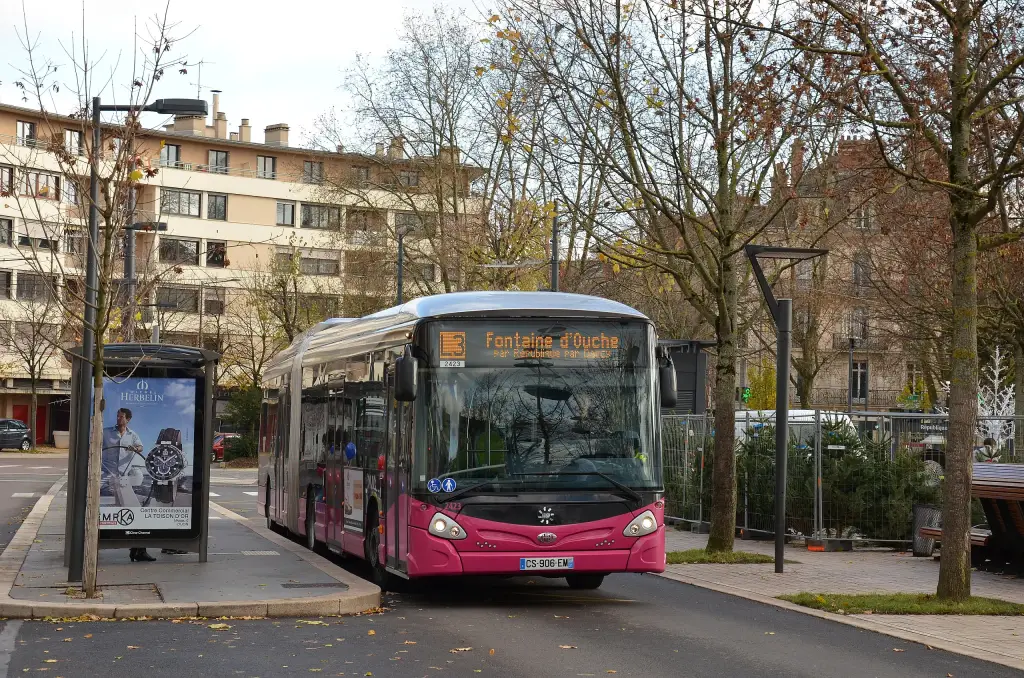

The GX 107 was presented on 20 and 21 October 1983 and went on sale at the beginning of 1984. It replaced the Heuliez O 305 and was itself replaced by the GX 217 and GX 317. The standard bus was joined by an articulated version, the GX 187, which took the place of the O 305 G and was later replaced by the GX 417, and by a midibus, the GX 77H. The GX 107 accounted for 2,113 vehicles and the articulated GX 187 for 534, both built from 1984 to 1996.
The first buses used a Renault diesel that met no European emission standard, because the standards did not exist before October 1990. From that year Renault Trucks modified the engine to meet Euro 0, and it was developed further to Euro 1 for the last cars of 1993–1996. The GX 107 and GX 187 were built in two body generations: the first, from 1984 to 1988, had squared corners at the front windscreen; the second, from 1988 to 1996, had rounded corners, slightly redesigned rear lights and the ventilation grilles moved from under the rear window to the right side behind the last window. The GX 187 was built on the chassis of the Renault PR 180, with a Renault MIPS 06.20.45 six-cylinder turbo diesel of 9.8 litres giving 240 hp, or 253 hp as an option, coupled to a ZF 4HP 500 or a Voith automatic gearbox. Heuliez offered twelve different seating layouts.
GX 317 and GX 117 (1994–2006)
The GX 317 of 1994 was the first standard city bus with a low floor built by a French manufacturer; it replaced the GX 107 and GX 217 and was sold under the Access’Bus name. It was built on the Renault CS.S chassis, the platform of the Renault Agora, and followed the engine changes of that model. It was offered with diesel engines from Renault and later Iveco, and also with compressed natural gas and, in very small numbers, LPG; the gas buses carried their cylinders under a long hump on the roof. Renault Véhicules Industriels sold a few examples under its own name as the Renault Citybus, 159 in all, 43 in 1995 and 116 in 1996. Production ended in 2005 and the model was replaced by the GX 327.
The GX 117 and the longer GX 117 L were added in 1998 as low-floor midibuses of 9.30 and 10.50 metres, the first low-floor midibuses from a French maker. They replaced the GX 77H, were derived from the GX 317 and the articulated GX 417, and were built at the Heuliez plant at Rorthais. The first cars used a Renault MIDR 06.02.26 diesel of 6.2 litres and 210 hp to Euro 2; from 2001 an Iveco Tector 6 of 5.9 litres and 210 hp to Euro 3 took over, and all had an Allison T 280 R automatic gearbox. With 796 vehicles sold in France, Germany, Iceland and Switzerland, they were the best-selling low-floor midibuses in Europe at the time; outside France they were sold as Irisbus. Production stopped in August 2006 and the GX 127 took over.
The range after 2006
The GX name did not end with the classic models: the GX 127 and GX 327 replaced the GX 117 and GX 317, and later articulated GX 427 and GX 437 buses remain in service with operators in France, the Netherlands and Spain. The Heuliez bus business itself was sold by the parent coachbuilder in 1980 and has traded since as Heuliez Bus.
Design and features
- Step-free access: from the GX 317 and GX 117 the whole range was low-floor, with a kneeling system lowering the right side by 60 mm on the GX 117 and 80 mm on the GX 317 at stops.
- Stainless steel frames: Heuliez built the bodies from stainless steel tubes and profiles with composite panels for the body and front end.
- Renault underpinnings: the articulated GX 187 used the Renault PR 180 chassis and the GX 317 the Renault CS.S chassis of the Agora.
- Choice of fuel: diesel throughout, with CNG and a handful of LPG versions on the GX 317.
- Automatic transmission: ZF or Voith units on the first generation, Allison on the GX 117.
Heuliez GX versions
- GX 107 (1984–1996): the standard 12-metre city bus, 2,113 built.
- GX 187 (1984–1996): the articulated version on the Renault PR 180 chassis, 534 built.
- GX 317 (1994–2005): low-floor standard bus, also as GX 317 GNV and GX 317 GPL, and as the Renault Citybus.
- GX 117 and GX 117 L (1998–2006): low-floor midibuses of 9.30 and 10.50 metres, sold abroad as Irisbus.
- GX 113 (1985–1995): a GX 107 built for Marseille with its own livery and interior, 299 vehicles.
- GX 44 and GTX: Nantes buses whose old O 305 bodies were replaced by GX 107 bodywork, just under 200 vehicles, plus an articulated GTX.
More French commercial vehicles are in our Heuliez collection.
Sources
- Heuliez GX 107, French Wikipedia: launch, production, generations, versions
- Heuliez GX 187, French Wikipedia: articulated model, engines, chassis
- Heuliez GX 117, French Wikipedia: midibus, engines, production, operators
- Heuliez GX 317, French Wikipedia: low-floor standard bus, engines, Renault Citybus
- Heuliez, English Wikipedia: company history and the bus division