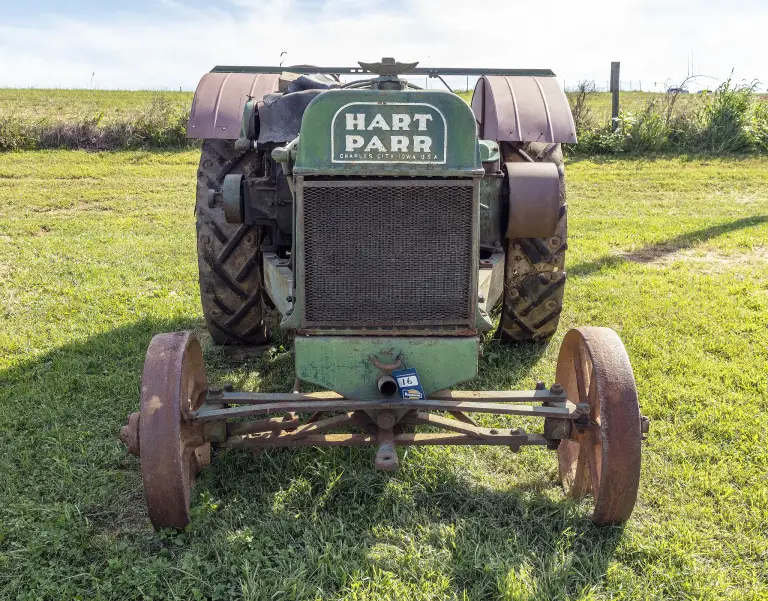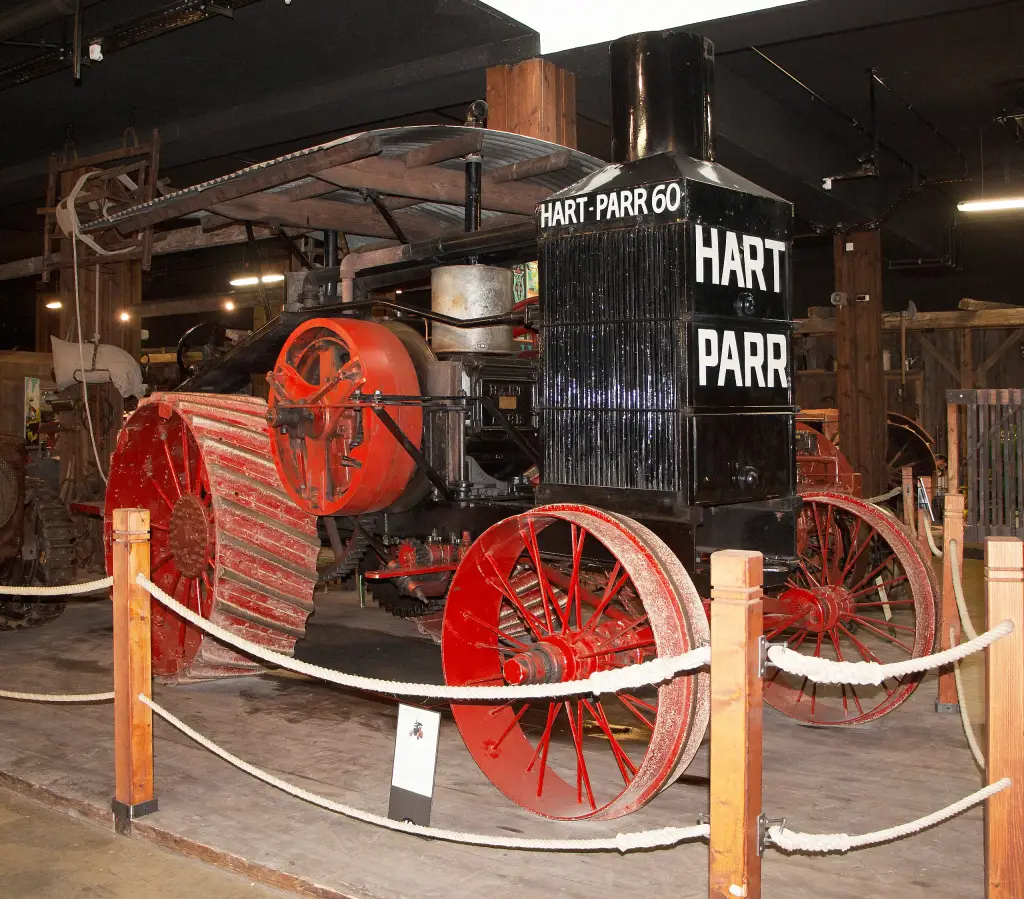
The Hart-Parr 30-60, known as “Old Reliable”, was the machine that made the Hart-Parr name in the American Midwest. A two-cylinder kerosene-burning tractor weighing about ten tons, it was built at Charles City, Iowa, from 1907 to 1918 and rated at 30 horsepower on the drawbar and 60 at the belt pulley.
Hart-Parr 30-60 at a glance
| Maker | Hart-Parr Company, Charles City, Iowa |
|---|---|
| Production | 1907–1918, plus four in 1924 |
| Also known as | “Old Reliable” |
| Type | prairie or sod-busting tractor |
| Engine | two-cylinder, kerosene-burning |
| Displacement | 2,356 cu in |
| Rated speed | 300 rpm |
| Drawbar rating | 30 hp |
| Belt rating | 60 hp |
| Weight | about 10 tons |
| Coolant | 200 quarts of light oil |
| Built | 3,798 |
There is no separate Wikipedia article on the 30-60; the facts here come from the Hart-Parr section of the English Wikipedia article on the Oliver Farm Equipment Company, with company history from the German article on Hart-Parr.
History of the Hart-Parr 30-60
A tractor for the prairies
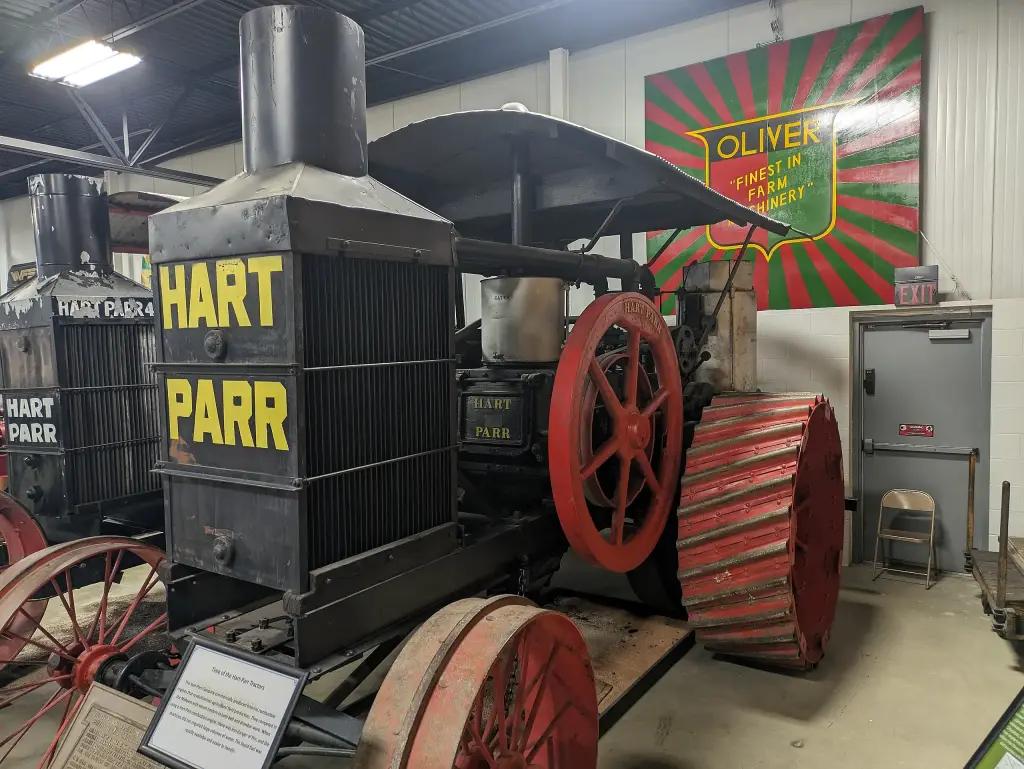
Hart-Parr was founded in Charles City, Iowa, by Charles Walter Hart and Charles H. Parr, who had met at the University of Wisconsin–Madison and graduated in 1897. After building engines and then a first tractor, Hart-Parr No. 1 of 1902, the company turned to the big machines wanted by farmers breaking the prairie sod.
The 30-60 was built from 1907 to 1918. At special request a further four units were built in 1924, long after the model had otherwise left production, bringing the total to 3,798 tractors. The name followed Hart-Parr’s habit of using two figures: the first stood for horsepower at the drawbar, the second for horsepower at the pulley.
How it worked
The engine was a two-cylinder kerosene burner displacing 2,356 cubic inches, running at 300 rpm and producing 30 horsepower at the drawbar and 60 at the belt. It developed over a thousand foot-pounds of torque. Cooling was by oil rather than water: the tractor carried 200 quarts of light oil as coolant, so it could not freeze in winter.
Starting was by battery, with ignition taken over by a dynamo once the flywheel had gained speed. A distinctive elliptical reverser allowed the heavy machine to be reversed. The 30-60 ran on a dual front-wheel layout, a common arrangement on the big prairie tractors of the period.
The end of the prairie era
By 1915 the sod-busting “prairie” tractors were becoming obsolete: they were far too big and clumsy for the average farmer. Hart-Parr’s answer, the two-stroke “Little Red Devil” of 15–22 horsepower, was a complete failure and the tractors were recalled. The company then turned to the “New Hart Parr” 12-25 of 1918, a much smaller tractor that became the basis of all its later models.
Hart-Parr itself lasted until 1929, when it merged with the Oliver Chilled Plow Works, the American Seeding Machine Company and Nichols and Shepard to form the Oliver Farm Equipment Company. The Hart-Parr brand was used for some time after the merger.
Design and features
- Two-cylinder kerosene engine: 2,356 cubic inches and over a thousand foot-pounds of torque at 300 rpm.
- Oil cooling: 200 quarts of light oil instead of water, so the cooling system could not freeze.
- Elliptical reverser: a unusual mechanism for reversing a very heavy tractor.
- Battery starting with dynamo ignition: the dynamo took over once the flywheel was up to speed.
- Dual front wheels: a layout suited to the wide, heavy prairie ploughing for which it was sold.
Hart-Parr 30-60 versions
- 30-60 (1907–1918): the standard production model.
- 1924 batch: four additional tractors built to special request.
- 20-40 “Steel King” (1911–1914): a smaller tricycle tractor of the same period, about 197 built.
- 12-25 (1918): the smaller “New Hart Parr” that replaced the prairie tractors in the range.
The smaller Hart-Parr 18-36 carried the company into the late 1920s. More machines are in the Hart-Parr collection.
Video: Hart Parr 30-60 Start
Video by Rainhill1829 on YouTube.
Sources
- Oliver Farm Equipment Company, English Wikipedia: 30-60 production, engine, ratings, weight, cooling, reverser
- Hart-Parr Company, German Wikipedia: founding, merger, range of engine outputs