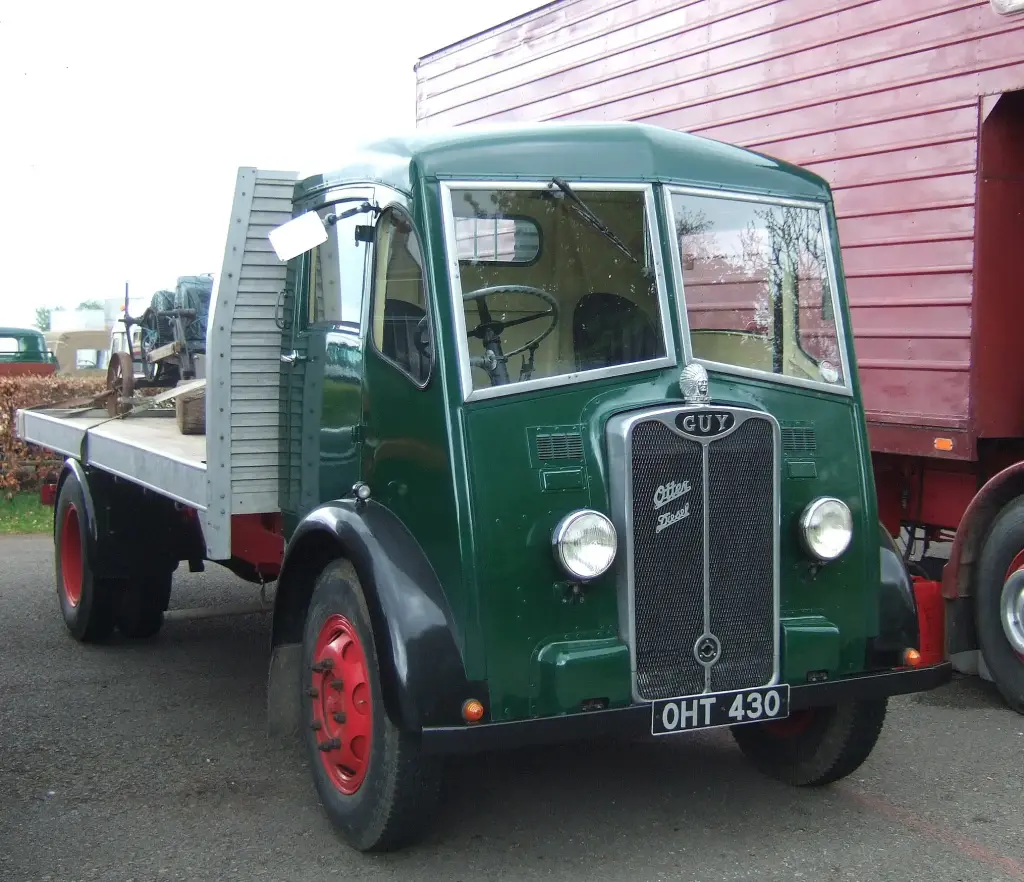

The Guy Otter was one of the commercial chassis built by Guy Motors of Fallings Park, Wolverhampton. Like the rest of the range it was a chassis and engine to which a customer’s body could be fitted, and in 1950 a new version was offered for 30-seat passenger vehicles, 84 of which were ordered by London Transport. The model was updated again in 1957, in the last years of Sydney Guy’s leadership.
Guy Otter at a glance
| Maker | Guy Motors Ltd, Fallings Park, Wolverhampton |
|---|---|
| Type | commercial chassis for lorries and passenger bodies |
| Chassis layout | engine and transmission on a separate subframe |
| Bodies | fitted by coachbuilders to the customer’s order |
| 1950 version | new Otter chassis for 30-seat vehicles |
| London Transport | 84 ordered in 1950 |
| 1957 update | revised Otter announced with the updated Warrior |
| Stablemates | Warrior lorry, Arab bus chassis, Victory chassis |
| Survivors | 1951 diesel lorry and a 1957 example preserved |
Guy has no separate Wikipedia article for the Otter; this page is based on the Guy Motors article, which mentions the model only briefly. That article is the only written source used.
History of the Guy Otter
A Wolverhampton chassis maker
Sydney Guy registered Guy Motors Limited on 30 May 1914, the day he left his post as works manager at Sunbeam, and built a factory at Fallings Park in Wolverhampton. Production of a 30 cwt lorry began in September 1914; it used a light pressed-steel frame rather than the heavy rolled-steel channels common at the time. During the First World War Guy moved the engine and transmission onto a separate subframe, a layout the company kept in its commercial chassis for decades.
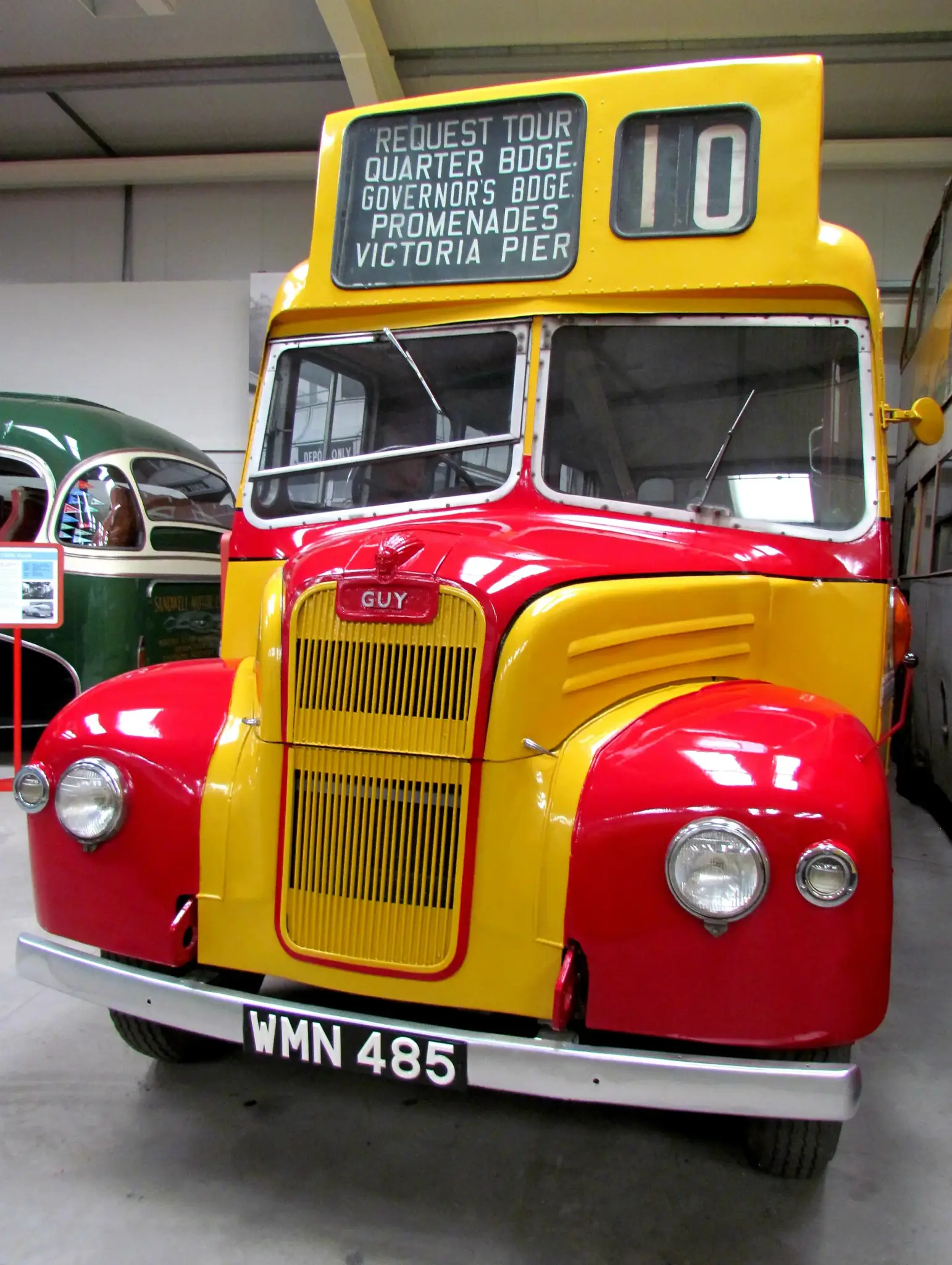

Chassis for many bodies
Guy’s main business was the commercial chassis and engine, supplied ready for a variety of bodies and in different wheelbases for both trucks and buses. After the Second World War the company returned to civilian production with buses as its mainstay and a strong export trade. The Otter was one of the lorry models in that post-war range.
The 1950 version
In 1950 Guy introduced a new version of the Otter chassis for 30-seat vehicles, and London Transport ordered 84 of them. The same year the company signed an agreement with Mahindra & Mahindra to assemble Guy vehicles in India and to represent the marque there.
1957 and after
Sydney Guy retired in 1957 after 43 years with the company. Guy continued to develop its chassis, introducing updated versions of the Otter and the Warrior and the high-performance Victory chassis. The ill-fated Wulfrunian double-decker of 1958 and a loss-making South African operation pushed the company into receivership in 1961, when Jaguar bought it for £800,000 and cut the range. Guy production ended in 1982.
Design and features
- Separate subframe: the engine and transmission sat on their own frame, a Guy practice dating from the First World War.
- Coachbuilt bodies: the Otter was a chassis, so the body was chosen and fitted by the customer’s coachbuilder.
- Goods or passengers: the same model served as a lorry and, from 1950, as a chassis for 30-seat passenger vehicles.
- Long model life: the Otter was revised in 1950 and again in 1957 rather than replaced.
Guy Otter versions
- Otter lorry chassis: the goods version, bodied as a flatbed or other commercial body.
- 1950 passenger chassis: a new version for 30-seat vehicles, ordered by London Transport.
- 1957 Otter: the updated model announced alongside the revised Warrior.
- Preserved examples: a 1951 diesel lorry and a 1957 vehicle survive in preservation.
The Otter was part of the post-war range of Guy commercial vehicles, which also included the Arab bus chassis and the Warrior lorry.
Sources
- Guy Motors, English Wikipedia: company history, Otter references, 1950 and 1957 updates
- Guy Otter, Wikimedia Commons: preserved vehicles in photographs