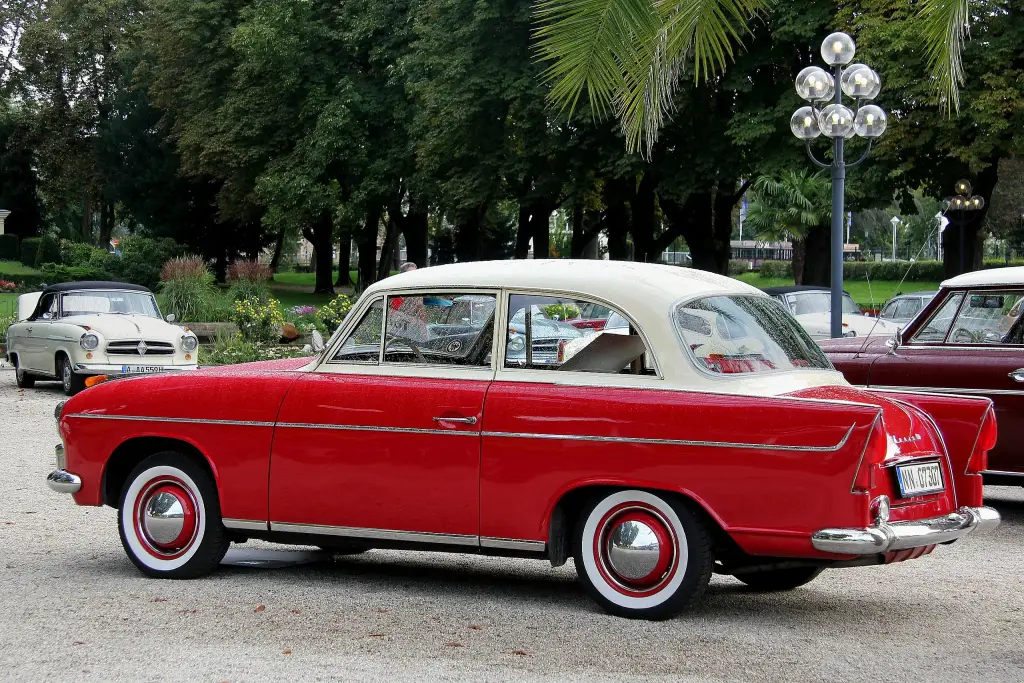

The Goliath 1100 was a small car built in Bremen from 1957 to 1961 by Goliath-Werke Borgward & Co, a subsidiary of Borgward. It replaced the two-stroke Goliath GP 900 with a new water-cooled flat-four engine, and from October 1958 it was sold under the revived Hansa name as the Hansa 1100.
Goliath 1100 at a glance
| Maker | Goliath-Werke Borgward & Co, Bremen |
|---|---|
| Production | 1957–1961 |
| Predecessor | Goliath GP 900 |
| First shown | Geneva Motor Show, March 1957 |
| Engine | 1094 cc water-cooled flat-four |
| Power | 40 bhp; 55 bhp in the 1100 Luxus |
| Top speed | 125 km/h; 135 km/h for the Luxus |
| Body styles | two-door saloon, three-door kombi, two-door coupé |
| Renamed | Hansa 1100, October 1958 |
| Argentinian assembly | 1960–1961, Villa Constitución |
Based on one source (English Wikipedia).
History of the Goliath 1100
A Borgward subsidiary
The Goliath business had been established in 1928 by the engineer Carl Borgward in partnership with Wilhelm Tecklenburg. Its plant was bombed to destruction during the war, but in the 1950s it produced a succession of small front-wheel-drive passenger cars. The Goliath 1100 was the last of these.

New engine for 1957
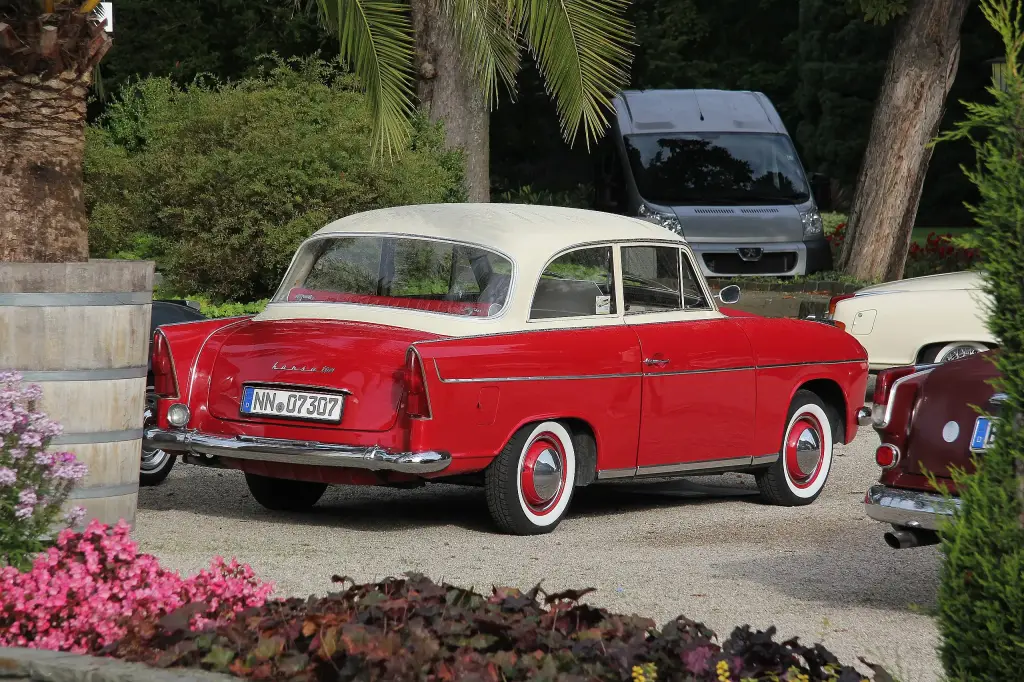
The Goliath 1100 replaced the Goliath GP 900 and, apart from a completely new engine, little had changed. In place of the earlier two-stroke unit the 1100 used a water-cooled boxer motor, an engine layout that Subaru took up several years after the Goliath brand disappeared. The car appeared at the Geneva Motor Show in March 1957; from the outside it was distinguished from the GP 900 by a more modern front grille. A two-door saloon and a three-door kombi, or estate, were available from launch, and a two-door coupé followed a year later.
The Luxus and the Hansa name
Later in 1957 the 40 bhp 1100 was joined by the 1100 Luxus. Both cars shared the 1094 cc engine displacement, but the Luxus, thanks to a second carburettor and a higher compression ratio, produced 55 bhp. Its top speed was 135 km/h against the 125 km/h claimed for the less powerful car. In October 1958 the Goliath 1100 was replaced by the Hansa 1100; Hansa had been the brand name used by the business in the 1930s and 1940s. The new car used most of the same body panels, but it now had sharper tailfins and a kinked chrome strip along the flank. An optional Saxomat automatic clutch was offered.
Built in Argentina
The Hansa 1100 Luxus was also made in Argentina by Goliath Hansa Argentina in Villa Constitución, Santa Fe, under an agreement between the Taubenfeld family and Goliath. Production there ran for the 1960 and 1961 model years in three versions: Sedán de Lujo, Combi and Súper cupé Lujo. The company began operations on 2 May 1960 with a capital of $3,350,000, and on 15 September work started on a 19,000 m² factory.
Design and features
- Water-cooled flat-four: the 1094 cc boxer engine replaced the two-stroke unit of the GP 900.
- Two power levels: a single-carburettor 40 bhp engine or the twin-carburettor 55 bhp Luxus.
- Three body styles: saloon, three-door estate and, from 1958, a two-door coupé.
- Front-wheel drive: the car continued Goliath’s line of small front-driven models.
- Facelift details: the Hansa version added tailfins, a kinked chrome strip and an optional Saxomat clutch.
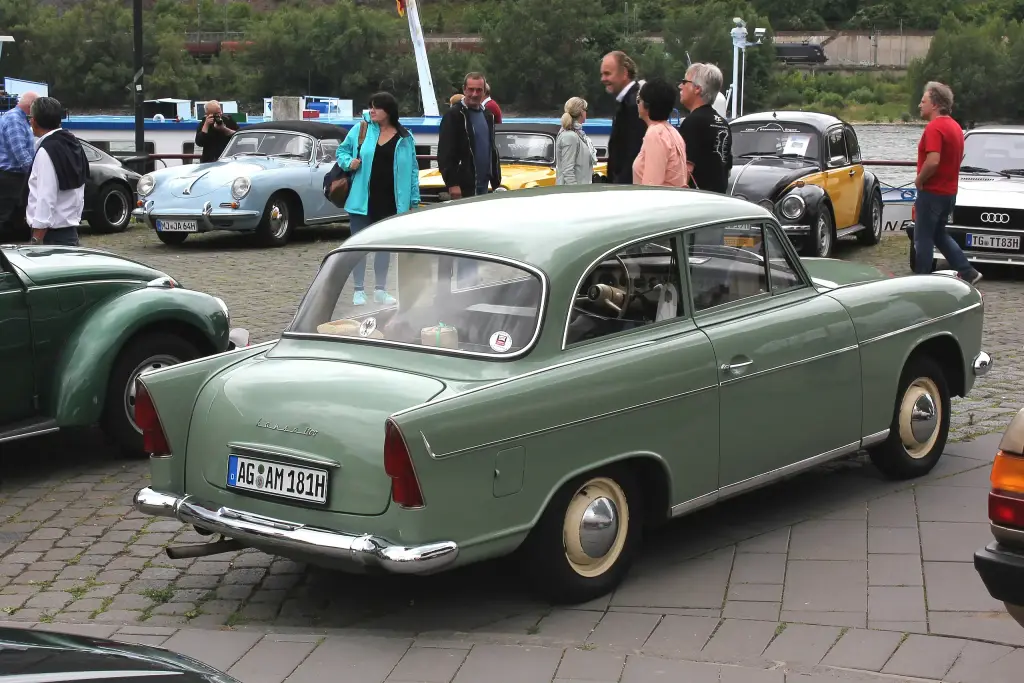

Goliath 1100 versions
- 1100 (1957–1958): 40 bhp, 125 km/h, saloon and kombi.
- 1100 Luxus (1957–1958): second carburettor and higher compression, 55 bhp and 135 km/h.
- 1100 Coupé (1958): two-door coupé added a year after launch.
- Hansa 1100 (1958–1961): renamed model with sharper tailfins and a kinked chrome strip.
- Argentinian cars (1960–1961): Sedán de Lujo, Combi and Súper cupé Lujo built in Villa Constitución.
The 1100 was the last small car of the Borgward group; more cars of the marque are in the Goliath collection.
Video: Hansa 1100 Coupé und Goliath 1100 Limousine
Video on YouTube.
Sources
- Goliath 1100, English Wikipedia: history, engines, bodies, Hansa rename, Argentina