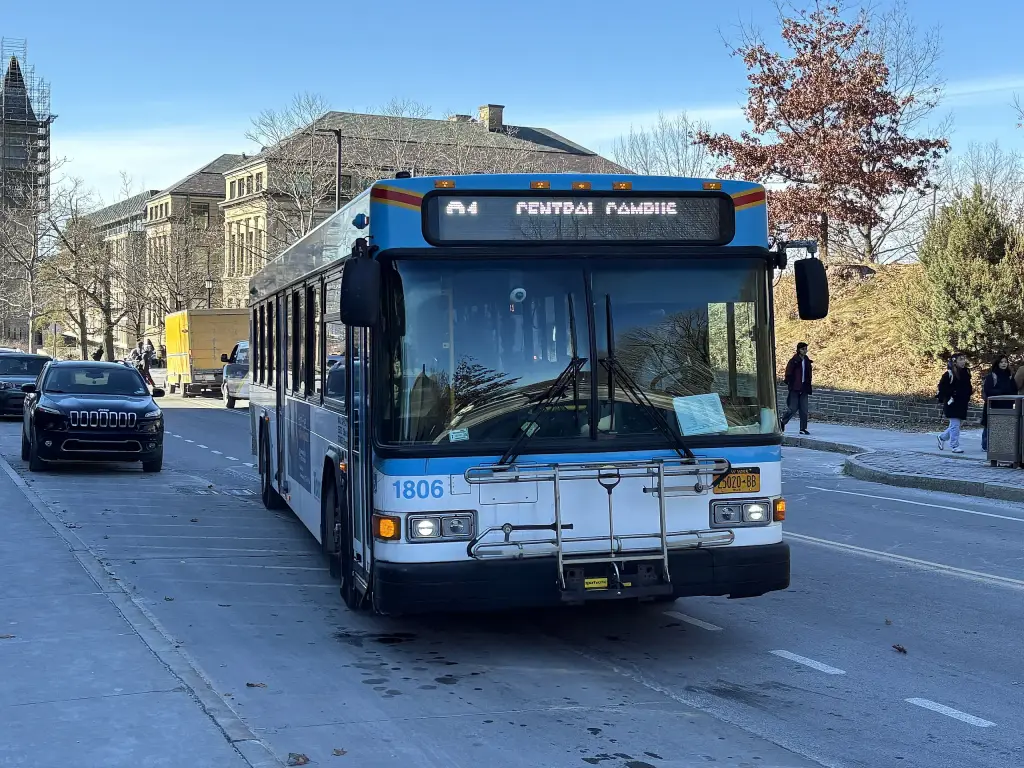

The Gillig Low Floor, alternatively known as the Gillig Advantage, is a low-floor transit bus built by Gillig for the United States market since 1997. It was the second low-floor bus sold in America, after the New Flyer Low Floor, and since 2008 it has been the company’s only product.
Gillig Low Floor at a glance
| Maker | Gillig, Hayward, California |
|---|---|
| Production | 1997 to present |
| Class | Low-floor transit bus |
| Lengths | 29, 35 and 40 ft (12.2 m) |
| Body styles | standard, BRT, BRT Plus, Low Floor Plus, Trolley Replica |
| Engines | Cummins B6.7 and L9 diesel, Cummins L9N compressed natural gas |
| Other powertrains | diesel-electric hybrid, battery-electric, hydrogen fuel cell |
| Seating | up to 40 passengers in the 40-foot bus |
| Interior | low floor over the front two-thirds to three-quarters, low-step entry, manual wheelchair ramp |
| Turning radius | 43 ft (13.1 m) for the 40-foot body |
| Predecessor in the range | Gillig Phantom (step entrance) |
Based on one source, the English Wikipedia article on the Gillig Low Floor. The Advantage and BRT names used on this site belong to the same model line.
History of the Gillig Low Floor
From airport shuttle to city bus
The Low Floor began in the mid-1990s, when Hertz asked Gillig for a shuttle bus for its airport locations to replace its GMC RTS fleet. The bus was to have a carpeted interior, luggage racks and a central entry door, and its main requirement was a low floor for passengers carrying luggage or with limited mobility. In 1996 the first buses, named the Gillig H2000LF, entered production and went into service with Hertz at Logan International Airport in Boston, later spreading to other American airports. Gillig built the H2000LF for Hertz until 2005.

The transit bus of 1997
In 1997 Gillig turned the H2000LF shuttle into a Low Floor transit bus. The doors were reconfigured, with dual-entry doors replacing the central entry of the shuttle, and the model was marketed alongside the step-entrance Gillig Phantom. The Low Floor was the second low-floor bus on the American market, following the New Flyer Low Floor, and by 2008 it had replaced the Phantom, leaving it Gillig’s sole product.
Changes through the years
The body was revised several times. In 2002 the windshield was enlarged, together with a smaller destination sign, and the side windows became narrower. After 2003 the rear side split windows, which had been fitted upside down, were turned the right way up, and frameless windows later became an option. In 2005 the range grew with the Low Floor BRT and the Trolley Replica. In 2008 the entry doors received larger glass panels with squared-off corners, and a suburban version without a rear door was added.
Compressed gas, hybrid and electric
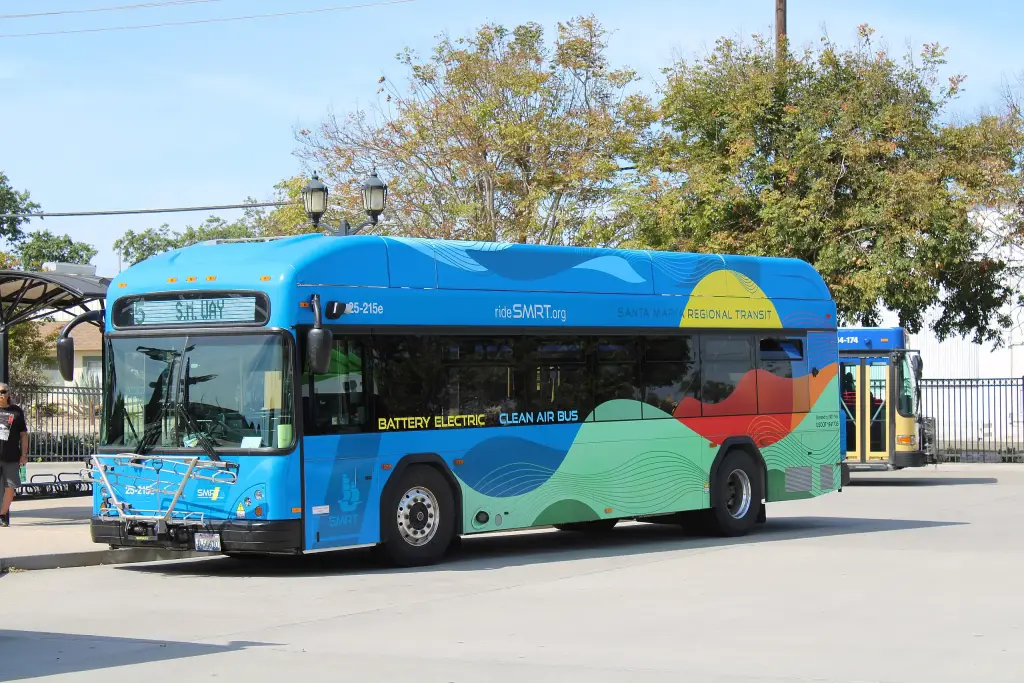
For 2011 Gillig introduced the BRT Plus, at the same time as compressed natural gas and diesel-electric hybrid powertrains; the Plus has a full-length roof fairing for the gas tanks and hybrid equipment. The Low Floor Plus followed in 2017, combining that fairing with the standard body. A Cummins battery-electric powertrain became available for the Low Floor Plus in 2019, the first customer being Big Blue Bus of Santa Monica, California; a 29-foot battery-electric bus had been tested at Altoona in 2018 with a drivetrain adapted from the BAE HybriDrive system. In April 2024 Gillig announced a hydrogen fuel cell version, with production to begin in 2026.
Design and features
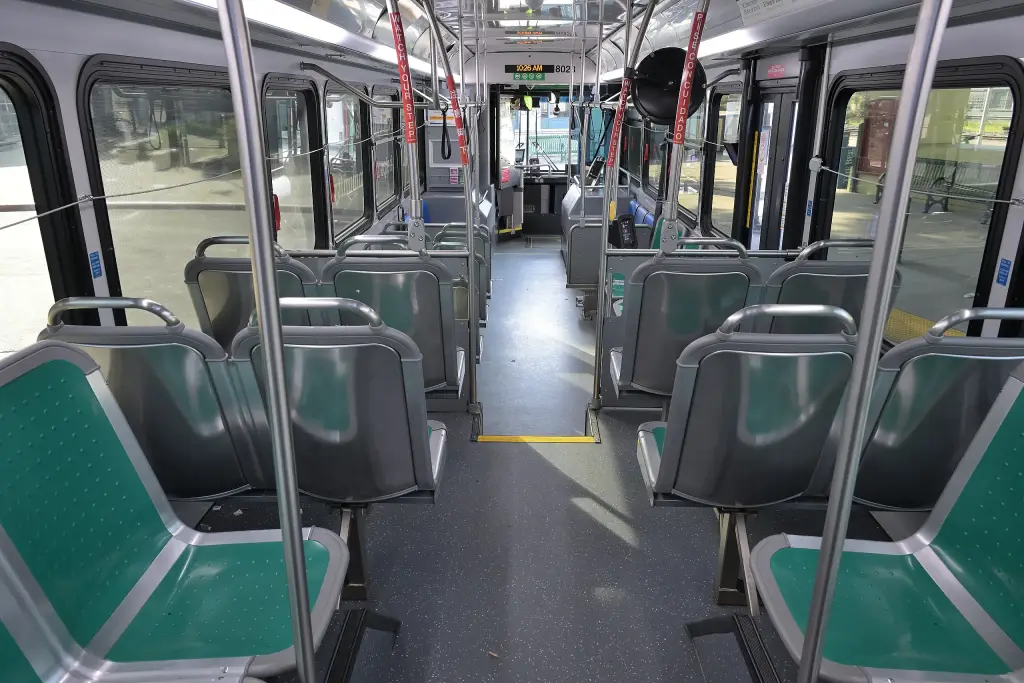
- Low-entry layout: the front two-thirds to three-quarters of the floor is low, with a step almost at curb height or lower, while the part behind the rear axle is raised to make room for the powertrain.
- Manual wheelchair ramp: built into the doorway, so no separate lift is needed.
- One structure, five bodies: the standard, BRT, BRT Plus, Low Floor Plus and Trolley Replica all share the same basic structure and chassis.
- Wide choice of fuel: diesel, compressed natural gas, diesel-electric hybrid, battery-electric and, from 2026, hydrogen fuel cell.
- Three lengths: 29, 35 and 40 feet, with up to 40 seated passengers in the longest bus.

Gillig Low Floor versions
- Low Floor (1997–): the original body, rectangular with sealed-beam headlamps.
- Low Floor BRT (2005–): curved front fascia, round projector headlamps, a modified rear and about a foot more length.
- Low Floor BRT Plus (2011–): BRT styling with a higher roofline and a full-length roof fairing.
- Low Floor Plus (2017–): flat front fascia with round headlamps and a raised roof; the only body offered with the battery-electric powertrain.
- Trolley Replica: a streetcar-styled bus on the standard body, built with Cable Car Classics of Healdsburg, California, with faux wood trim, wooden seats and brass and leather details.
- Suburban (2008–): no rear door, forward-facing seats, luggage racks and onboard Wi-Fi.
More buses and coaches are in the Gillig collection.
Sources
- Gillig Low Floor, English Wikipedia: history, body styles, powertrains, dimensions