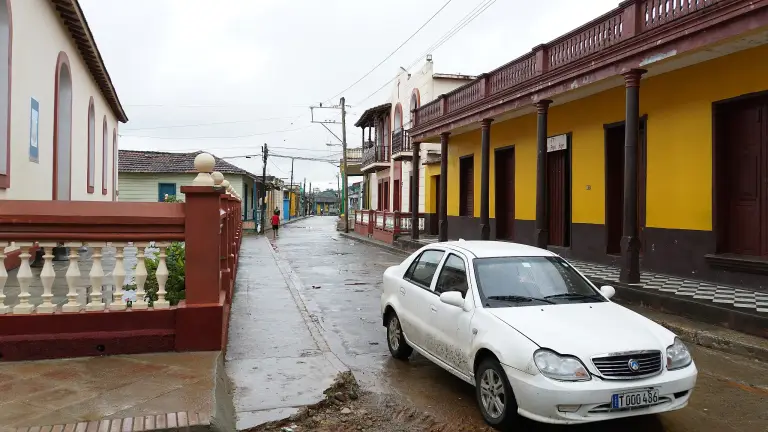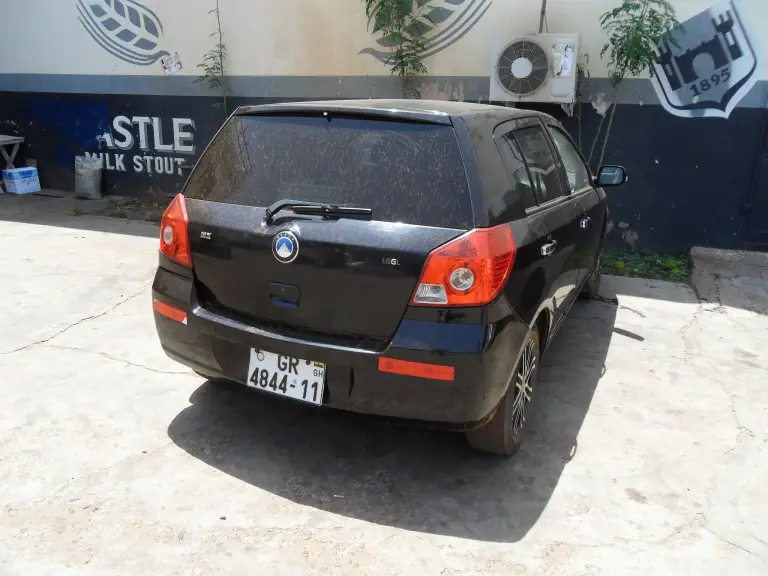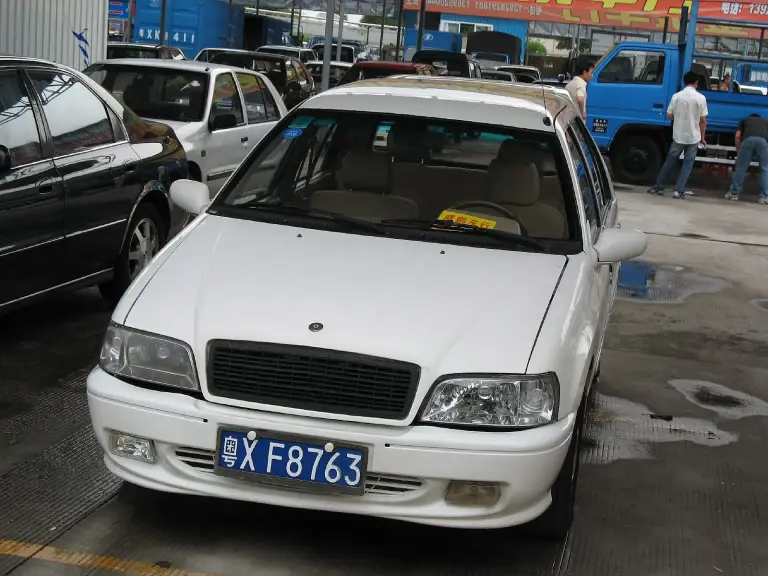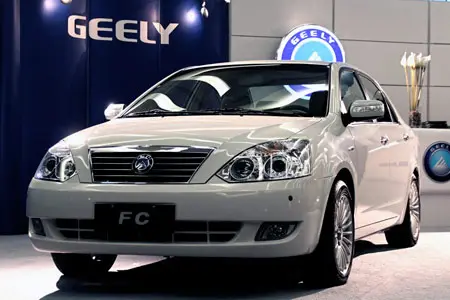
The Geely FC is the compact four-door saloon that Geely put on sale on 18 May 2007 after the car had been adjusted by Magna Steyr. It was later renamed Yuanjing, or Vision in export markets, and it carried the first CVVT engine designed and built in China. Two facelifts kept the same body and platform in production for fourteen years.
Geely FC at a glance
| Maker | Geely Auto, China |
|---|---|
| Also called | Geely Yuanjing, Geely Vision |
| On sale | 18 May 2007 |
| Development | adjusted by Magna Steyr before launch |
| First generation | FC1, 2007–2013 |
| Facelifts | FC2 from 2013, FC3 from late 2017 |
| Body | four-door compact saloon |
| Engine | first CVVT designed and made in China |
| Petrol units | 1.5-litre in China from 2009; 1.8-litre in Russia |
| Equipment | ABS and EBD on all models |
| Rivals | aimed at the Hyundai Elantra |
History of the Geely FC
From Tiger to Vision
The car was first shown in 2006 and passed through several names: Geely Tiger, Biaowang and Luhu before the company settled on Vision, or Yuanjing in Chinese. Before it went on sale on 18 May 2007 it was adjusted by Magna Steyr, the Austrian engineering firm that worked for several small makers at the time. In China it was positioned against the Hyundai Elantra, which then sold better than most models in the country.
The original FC was the first Geely to use a CVVT engine designed and manufactured in China. All versions came with ABS and EBD as standard, which was not a given in the Chinese compact class at the time. The car was sold in China, Russia and Syria; in Russia it was called Geely Vision and came with a stronger 1.8-litre petrol engine, while in Syria it had a 1.5-litre unit. In China both engines were offered, the 1.5-litre only from 2009.
Styling and criticism
The Yuanjing was criticised for resembling the Toyota Corolla of the E120 generation, because it had been developed with that car as its benchmark. Most early Geely products had the same tendency, since reverse engineering played a large part in the company’s past. The side profile stayed close to the Corolla through all three versions of the car.
FC2 and FC3
The first facelift, code-named FC2 and sold from 2013, brought a completely redesigned front and rear, which required new front and rear wings. Everything else, especially the side profile, stayed unchanged because the car still sat on the old FC platform; the result is sometimes called the second-generation Yuanjing. The second facelift, the FC3 of late 2017, changed the front only subtly and redesigned the tail lamp to sit horizontally within the boundaries set by the FC2, moving the rear number plate down onto the bumper. It is sometimes called the third-generation Yuanjing and stayed in production until 2021.
Design and features
- Chinese CVVT engine: the first variable-valve engine designed and made in China, according to Geely.
- Magna Steyr tuning: the car was adjusted by the Austrian engineering company before launch.
- ABS and EBD: fitted to every version, unusual in its class at the time.
- Three bodies, one platform: FC, FC2 and FC3 shared the original floorpan.
Geely FC versions
- FC1 (2007–2013): the original saloon, sold in China as the Yuanjing.
- FC2 (2013–2018): new front and rear ends, new wings, same platform.
- FC3 (late 2017–2021): revised front, horizontal tail lamps, plate moved to the bumper.
- Geely Vision 1.8: the Russian version with the larger engine.
- Syrian 1.5: export cars with the smaller engine.
The FC was a size above the Geely CK and below the Emgrand EC7 in Geely’s range. More cars are in the Geely collection.
Sources
- Geely Yuanjing, English Wikipedia: history, names, facelifts, equipment
- Geely FC, German Wikipedia: markets, engines by country