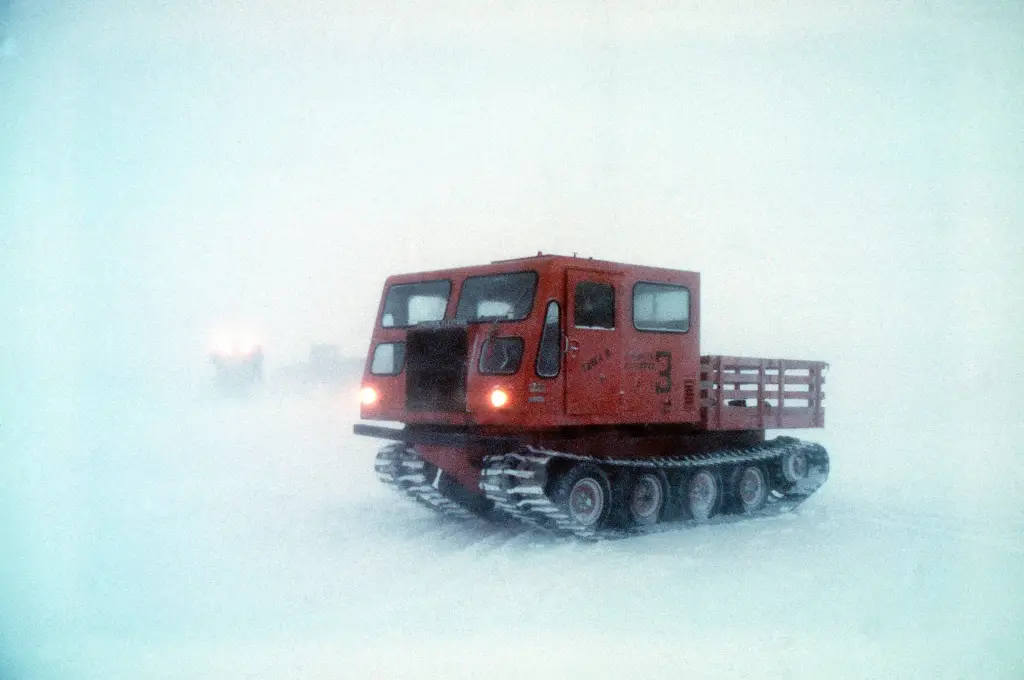

The Foremost Nodwell is the tracked carrier that grew out of Bruce Nodwell’s machines for the Alberta oil fields. Soft wide tracks, a double sprocket and a payload counted in 100-pound units turned a wartime idea into a vehicle that could cross muskeg, swamp, mud and snow where wheeled trucks could not follow.
Foremost Nodwell at a glance
| Maker | Robin-Nodwell Ltd.; Foremost Industries from 1965 |
|---|---|
| Also known as | Nodwell, Nodwell 110 |
| Type | multi-purpose tracked carrier |
| First vehicle | Scout Car, 1-ton capacity |
| Early trailer | 40-inch tracks, own engine, 5-ton load |
| Key invention | double sprocket, 1955 |
| Track layout | soft tracks on a single row of wheels |
| Steering | modified Oliver Tractor differential |
| Name | Nodwell 110, payload in 100-pound units |
| First export sale | Western Geophysical, Alaska |
| Foremost range | tracked and large-tired vehicles, 5 to 70 tonnes |
| Trade name | “Nodwell” returned to Foremost in 1976 |
Based on one source: the English Wikipedia article on Bruce Nodwell, which describes the development of his tracked vehicles and of Foremost Industries.
History of the Foremost Nodwell
Muskeg and the oil boom
After the Leduc No. 1 discovery of 1947 the Alberta oil industry moved north, into muskeg — wet, boggy ground that conventional equipment could not cross. Imperial Oil asked Bruce Nodwell, a Calgary contractor and inventor, to build two vehicles they had designed for the job. They were unsuccessful, but Nodwell had seen the need for large tracked vehicles. His first designs, which could be tracked or wheeled, were called North Kings; sixteen were sold, but they still lacked mobility and durability.
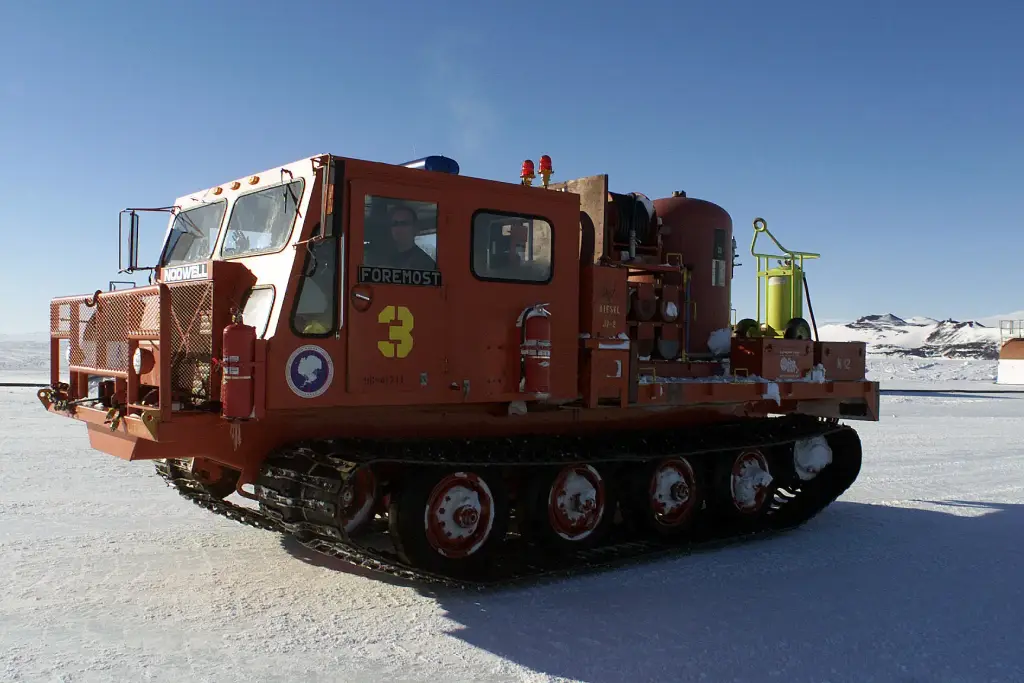

The wide track
Nodwell then concentrated on soft tracks supported by a single row of wheels. His double sprocket of 1955 made it possible to drive wide tracks and keep them in place on that single row, and together with a splice in the belt it allowed belts of any size or shape the vehicles needed. The “wide track” concept was born. The first machine built on it was a small 1-ton vehicle called the Scout Car. The oil industry needed more capacity to carry seismic drilling rigs, so Nodwell built a powered tracked trailer with 40-inch tracks, its own engine and a five-ton load. It was steered by a Scout Car attached to its front hitch, and Imperial Oil bought thirty trailers and thirty Scout Cars.
From Tracked Truck to Nodwell 110
Bruce Nodwell Ltd. then made the trailer self-sufficient, adding a cab and a steering differential. After several unsuccessful attempts the steering problem was solved by modifying an Oliver Tractor differential. The new vehicle was first called the Tracked Truck, but the industry knew its maker and called it simply the “Nodwell”; it later became the Nodwell 110, its name standing for a payload in 100-pound units. Canadian buyers were still wary after earlier failures, so the company turned to Alaska, where its first major sale supplied Western Geophysical with a complete geophysical crew including five drill carriers.
Foremost Industries
Robin-Nodwell Ltd. was formed in 1958; Bruce Nodwell left it in 1965 to join his son Jack in a new company, Foremost Industries. Foremost expanded the line to tracked and large-tired vehicles with load capacities from 5 to 70 tonnes, and sold heavily abroad: more than 700 vehicles of 30 tonnes went to the USSR and Russia. In 1976, when its rival folded, Foremost recovered the trade name “Nodwell”.
Design and features
- Wide soft tracks: the layout that gave the machine its grip on muskeg, mud and snow.
- Double sprocket: Nodwell’s 1955 invention, which drove wide belts and kept them in place on a single row of wheels.
- Payload in the name: the Nodwell 110 was rated in 100-pound units, so its name carried its capacity.
- Field-built steering: a modified Oliver Tractor differential made the tracked truck a self-sufficient vehicle.
- Arctic reach: Foremost carriers of 5 to 70 tonnes worked from Alaska to the Soviet North.
Foremost Nodwell versions
- Scout Car: the first wide-track machine, with a 1-ton capacity.
- Powered tracked trailer: 40-inch tracks, its own engine and a 5-ton load, steered by a Scout Car.
- Tracked Truck: the self-propelled development of the trailer, with a cab and steering differential.
- Nodwell 110: the production carrier whose name recorded its payload.
- Foremost heavy carriers: tracked and large-tired vehicles from 5 to 70 tonnes, including 30-tonne machines for the USSR.
More tracked and off-road machines are collected in the Foremost collection.
Video: Foremost Nodwell 110
Video by xgate.ie on YouTube.
Sources
- Bruce Nodwell, English Wikipedia: history, inventions, company history