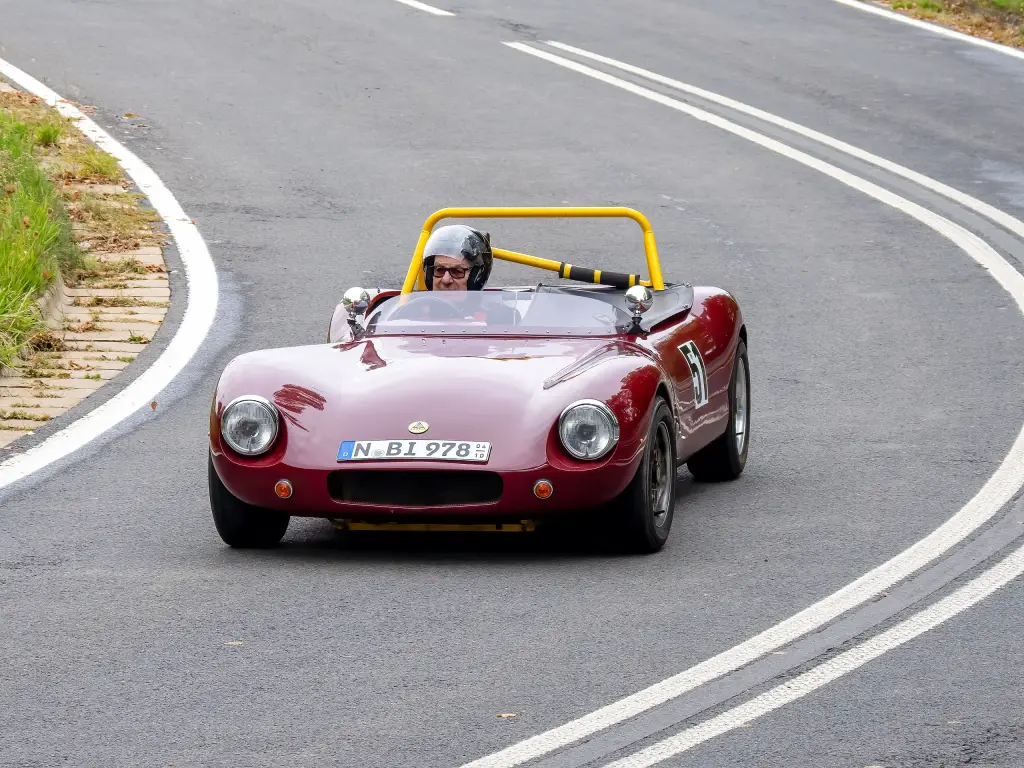

The Fisher Fury is a small two-seat kit car built around a tubular chassis and designed by the British firm Sylva Autokits, which launched it in 1991. The rights to the design passed to Fisher Sportscars in 1994, and the Fury has since been owned by Fury Sportscars, which bought them from BGH Geartech. The car has been raced for decades in the 750 Motor Club’s kit car championships.
Fisher Fury at a glance
| Maker | Sylva Autokits; Fisher Sportscars from 1994 |
|---|---|
| Launched | 1991, as the Sylva Fury |
| Design rights sold | to Fisher Sportscars in 1994 |
| Rights today | owned by Fury Sportscars, bought from BGH Geartech, Kent |
| Layout | two-seat open kit car, tube frame |
| Front suspension | rocker arms |
| Rear suspension | live axle (Ford Escort Mk II) or independent (Ford Sierra hubs) |
| Length, width, wheelbase | 3,250 mm / 1,370 mm / 2,180 mm |
| Weight, original with Crossflow engine | 576 kg |
| Engines | Ford Crossflow, Fiat Twin Cam, Toyota 4A-GE, Rover V8, Cosworth Turbo, motorbike engines |
| Racing | 750 Motor Club RGB and Kitcar series |
The Fisher Fury has no Wikipedia article of its own; this page uses the Fury section of the English Wikipedia article on Sylva Autokits, the company that designed the car. Based on one source.
History of the Fisher Fury
Sylva Autokits is a kit car manufacturer based in Lincolnshire, England, founded in 1981 by Jeremy Phillips. The company built a long line of small, light two-seat sports cars, and Sylva cars have won a number of 750 Motor Club Kit Car championships. The Fury was launched in 1991 with an original, 1960s-inspired shape that recalled a number of British sports cars of the period. Sylva later sold many of its older designs to other kit car manufacturers rather than keep them all in production, and the Fury went to Fisher Sportscars in 1994, the same way the Stylus went to Specialist Sports Cars and the Striker to Raw.
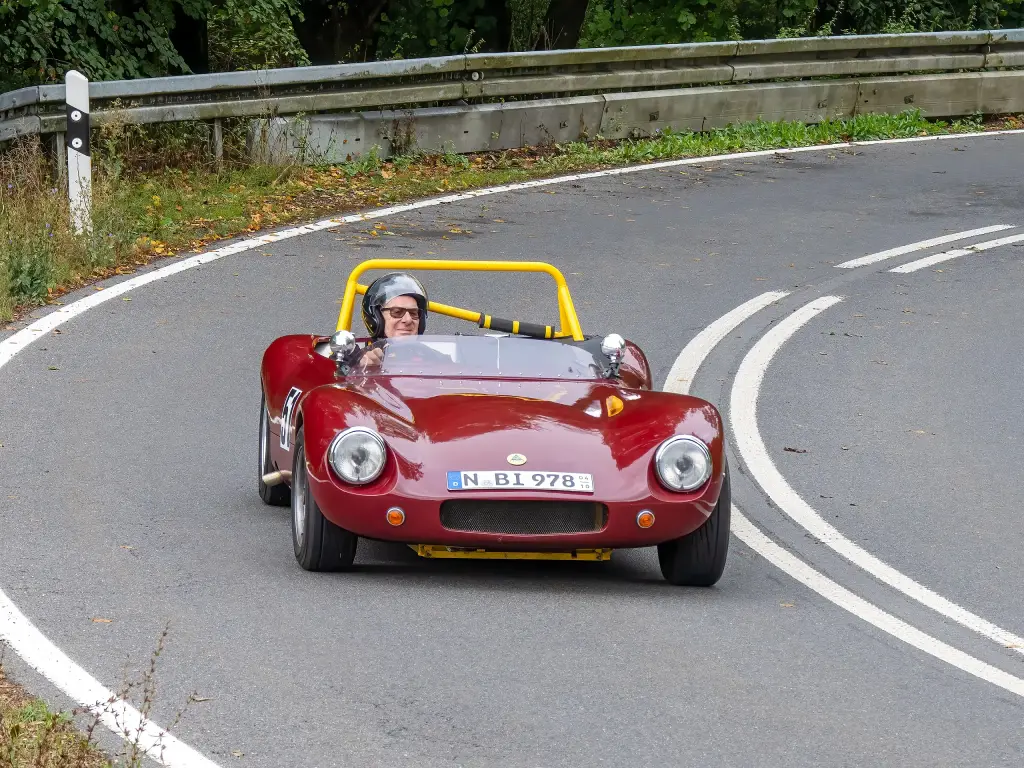

Since then the design has changed hands again: the Fury is currently owned by Fury Sportscars, which bought the rights from BGH Geartech, based in Kent. The car has been successful in competition, racing in many championships, among them the 750 Motor Club’s RGB (Road-Going Bike-Engined Kitcar) and Kitcar series. Its chassis was influential as well: the first Styluses, launched in 1994, used a modified Fury chassis that depended on Ford Escort Mark II parts, until a purpose-built chassis replaced it once those Escorts became harder to find.
The Fury has always been sold as a kit, built up around a tube frame with rocker arm front suspension. The original model used the transmission, rear axle, steering rack and certain other parts from the Ford Escort Mark II, which kept the cost of the donor parts low. Two versions of rear suspension were developed: a Live Axle version with the Escort rear axle located by two trailing links and a Panhard rod, and an Independent Rear Suspension version that uses the Ford Sierra rear hub assembly with purpose-built hub carriers forming the uprights between upper and lower wishbones. Both use coil-over shock absorbers for a compromise between ride comfort and grip. With a Crossflow engine the original car weighed 576 kg and measured 3,250 mm long, 1,370 mm wide, with a wheelbase of 2,180 mm.
Because the Fury is a kit, the engine bay was never tied to one power unit. Cars have been built with everything from the Ford Crossflow to a Rover V8 and a Cosworth turbo engine. Customers in the United States favoured Fiat’s Twin Cam engine or the Toyota 4A-GE, because both were already federalised for emissions there. Motorbike engines have also been fitted and are popular for track cars, thanks to the low weight, high power and the built-in sequential gearbox.
Design and features
- Tube frame and rocker arm front suspension: the layout the Fury was designed around from the start.
- Ford donor parts: Escort Mark II transmission, rear axle and steering rack on the original car; Sierra hubs for the independent rear end.
- Two rear suspension versions: a live axle with trailing links and a Panhard rod, or independent suspension with purpose-built uprights.
- Open engine choice: from a Ford Crossflow to a Rover V8, a Cosworth turbo, a Fiat Twin Cam, a Toyota 4A-GE or a motorbike engine.
- Low weight: 576 kg in the original Crossflow-engined car, which is why bike-engined versions suit track use.
Fisher Fury versions
- Sylva Fury (1991–1994): the original model, built by Sylva before the design was sold.
- Fisher Fury (from 1994): the same design produced under Fisher Sportscars.
- Live Axle: Escort rear axle on two trailing links with a Panhard rod and coil-over shocks.
- Independent Rear Suspension: Sierra rear hub assembly with purpose-built hub carriers between upper and lower wishbones.
- Bike-engined cars: motorbike power and a sequential gearbox, popular for track and sprint use.
The Fury belongs to the small, light British sports cars of its era; more cars of the marque are in the Fisher collection, and classic sports cars in general in the Classic Cars collection.
Video: Fisher Fury Kit Car Test Drive
Video on YouTube.
Sources
- Sylva Autokits, English Wikipedia: Fury history, chassis, suspension, dimensions, engines