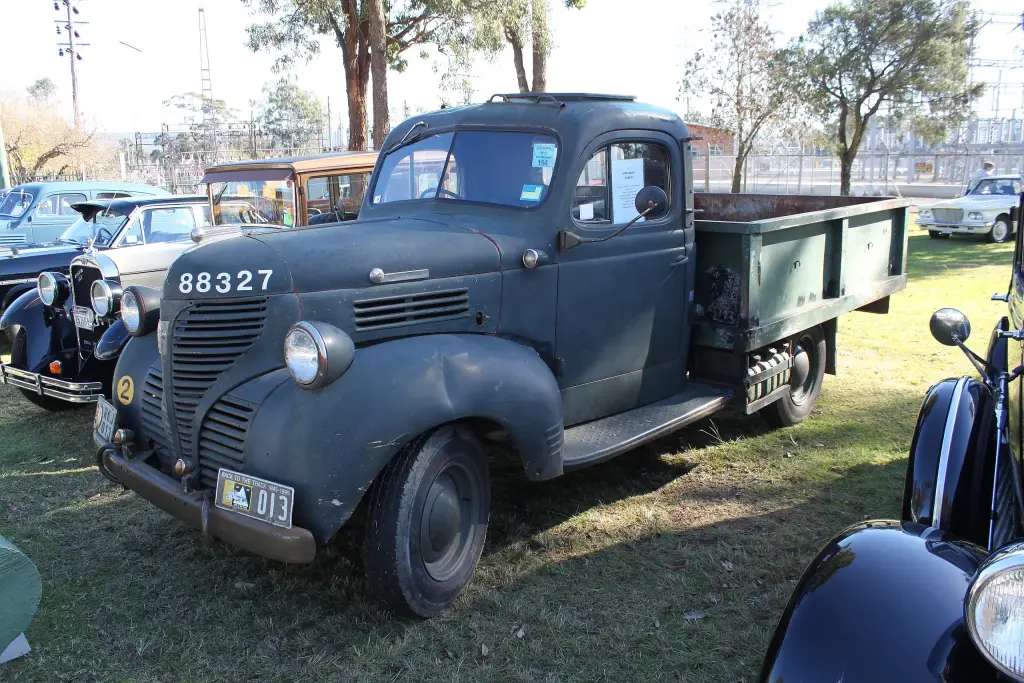

Fargo was a brand of trucks first produced in the United States in 1913 by the Fargo Motor Car Company. The name was dropped in 1922 and revived by the Chrysler Corporation in 1928; from then on Fargo trucks were almost identical to Dodge models, sold through Chrysler–Plymouth dealers at home and around the world.
Fargo Trucks at a glance
| Maker | Fargo Motor Car Company, then Chrysler Corporation |
|---|---|
| First production | 1913–1922, Pilsen, Chicago |
| Revived | 1928, under Chrysler |
| Relation to Dodge | almost identical models, differing in trim and name |
| Sold by | Chrysler–Plymouth dealers |
| US sales ended | 1930s; replaced by Plymouth-badged trucks in 1937 |
| Canada | Fargo name used until 1972 |
| Model codes | F for Fargo, a letter for the year, a digit for size (FC3, 1935) |
| FE-series engine | 3,574 cc six, 75 hp at 3,000 rpm (1937) |
| Overseas assembly | Detroit, Kew in Britain, Argentina, Australia, Spain (Barreiros) |
| Last use of the name | Turkey, until Askam closed in 2015 |
Based on one source, the English Wikipedia article on Fargo Trucks.
History of the Fargo Trucks
1913–1922: the first Fargo trucks
The first Fargo trucks were built in Pilsen, Chicago, by the Fargo Motor Car Company from 1913 until 1922. The brand then disappeared, until Chrysler bought the business in 1928 and created its own line of Fargo trucks.
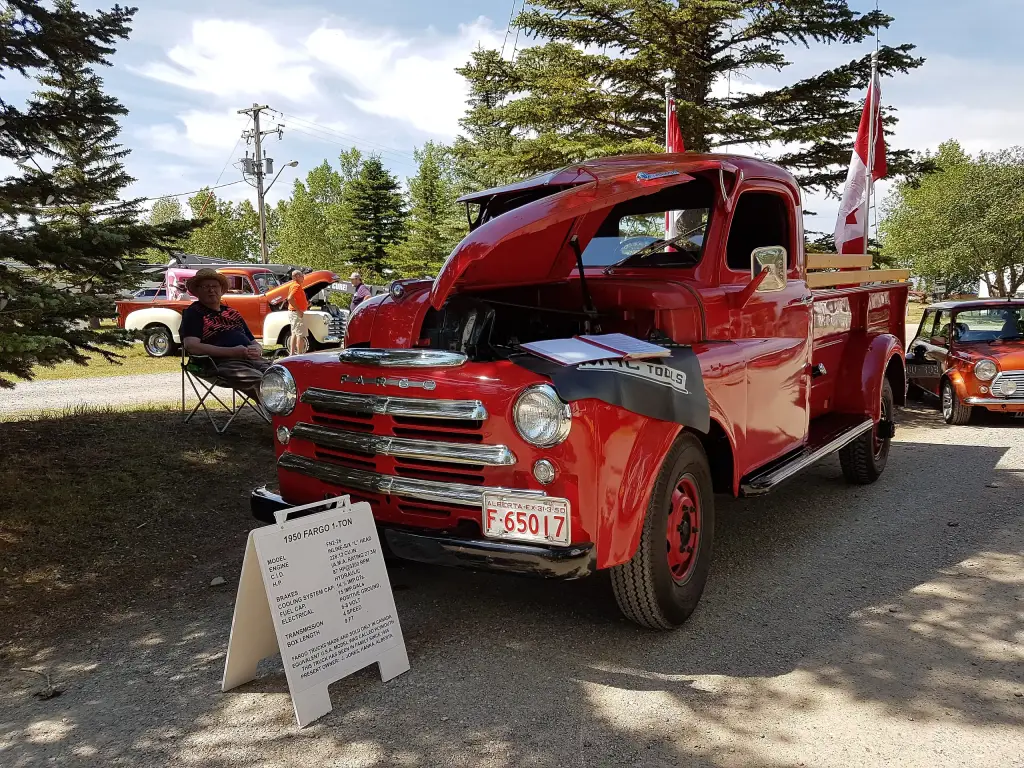

Chrysler and badge engineering
Shortly after its creation, Chrysler also bought the Dodge Brothers Company, adding Dodge- and Graham Brothers-badged trucks to its product line. From then on Fargo trucks were almost identical to Dodge models, save for trim and name, and were sold by Chrysler–Plymouth dealers – the same arrangement General Motors had with GMC and Chevrolet, and Ford with the Mercury truck brand in Canada. US sales of Fargo trucks were discontinued in the 1930s and replaced in the United States by Plymouth-badged trucks in 1937. In Canada the name stayed in use until 1972, to differentiate trucks sold by Chrysler–Plymouth dealers from the Dodge trucks offered at Dodge dealers. The modern-day descendant of Chrysler’s truck division is Ram Trucks.
Model designations
In 1935 a new designation for the vehicles began: the FC3 was the first vehicle with the new name, where F stood for Fargo, C for the year 1935 and 3 for the size of the vehicle. The following year was designated with the letter D for 1936. The 1937 FE-series trucks used a six-cylinder engine of 3,574 cc with a bore of 85.73 mm and a stroke of 103.2 mm, giving 75 hp at 3,000 rpm; the FE4 had a larger 3,740 cc unit of 78 hp and the FE6 a 3,959 cc six of 85 hp, all at 3,000 rpm. Earlier models carried names such as KF32, and the last of the series listed was the FL4 of 1946–1947.
Around the world
Fargo trucks were sold worldwide: in 1953, 194 new trucks were registered in Morocco, where the total number of Fargo trucks that year was 1,422. The brand lived longer in a variety of countries under Chrysler’s badge-engineering approach. Dodge trucks made in Detroit at the Lynch Road facility were offered under the Fargo or DeSoto names in most of Latin America, while in Europe and Asia they were mainly built at Chrysler’s Kew plant in Britain. In Argentina the Fargo make was used for the D-100 and D-400 pickups and the DP-400 diesel truck from 1960 to 1967; in Australia both American and British Dodge models, along with locally assembled units, were marketed by Chrysler Australia with Dodge, Fargo or DeSoto badges. Heavy trucks made in Spain by Barreiros, Chrysler’s Spanish subsidiary – including a 38-tonne tractor and rigid four-, six- and eight-wheelers sold in Britain as the Dodge 300 Series – were exported to several countries as Fargo vehicles.
The end of the name
The use of the Fargo trademark came to an end in the United States when Dodge pulled out of the American heavy truck business in 1976, and finally in 1978, when Chrysler Europe was sold to PSA Peugeot Citroën. In Turkey, however, the brand existed well into the 21st century: Fargo and DeSoto light and heavy trucks were made by Askam, with no technical or business connection with Chrysler in its final years. Askam was the descendant of Chrysler Kamyon Montaj Fabrikası, founded in Istanbul in 1964 with Chrysler holding a majority interest. Askam went out of business in 2015, which meant the LDV Maxus van, sold there as the Fargo Fora, was the last Fargo-badged vehicle offered in the world.
Design and features
- Badge engineering: after 1928 a Fargo was essentially a Dodge truck with different trim and a different name.
- Dealer network: sold through Chrysler–Plymouth dealers, which kept the two truck lines apart in Canada.
- Systematic model codes: from 1935 the letter F, a year letter and a size digit identified each truck, as in FC3 or FE4.
- Worldwide reach: assembled or sold in Latin America, Britain, Australia, Spain and Turkey, often as a DeSoto.
Fargo Trucks versions
- KF32 (before 1935): one of the trucks listed under the older naming scheme.
- FC3 and FC4 (1935): the first models with the new designation.
- FD1, FD3, FD4 (1936): the D series for the 1936 model year.
- FE1–FE6 (1937): six-cylinder trucks of 3,574 to 3,959 cc.
- FG (1938), FH (1939) and FL4 (1946–1947): the later pre-war and early post-war trucks.
- Argentinian D-100, D-400 and DP-400 (1960–1967): locally badged pickups and a diesel truck.
- Fargo Fora: the Turkish-built LDV Maxus van, the last vehicle to wear the badge.
Fargo trucks were Chrysler’s answer to the parallel Dodge range and, in the United States, were eventually replaced by Plymouth-badged trucks. More Fargos and other trucks are in the Fargo collection.
Sources
- Fargo Trucks, English Wikipedia: history, model designations, overseas production