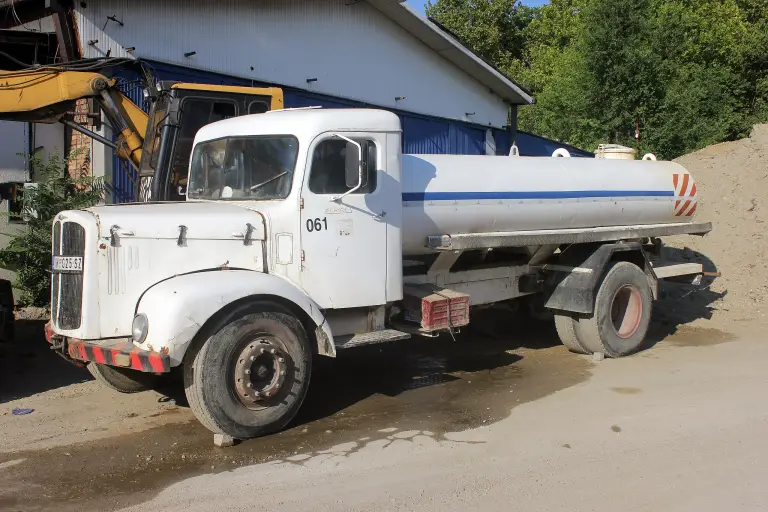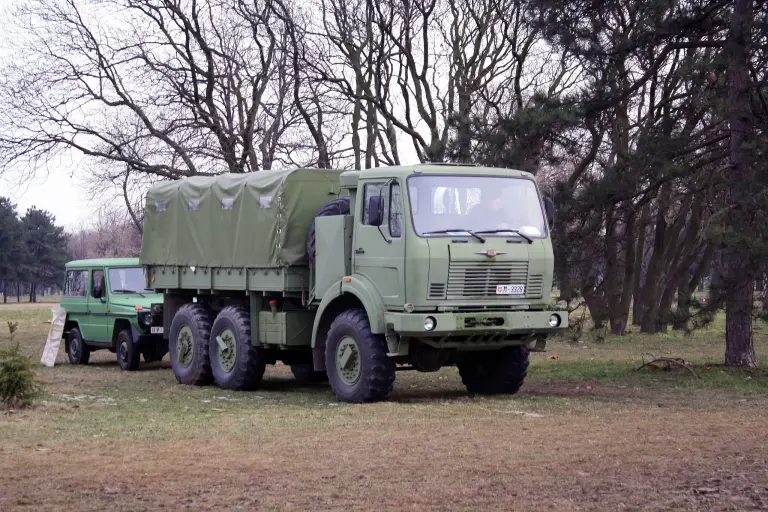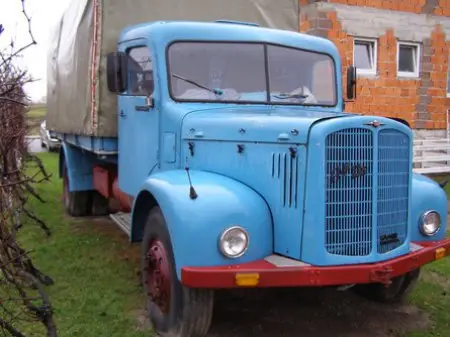
The FAP 2220 is not one vehicle but a name used for two different FAP projects. In the early 1970s it was the factory’s first 6-tonne 6×6 military lorry, the direct ancestor of the FAP 2026. Later the same number appeared on a rare three-axle 6×2 version of the civilian FAP 1620.
FAP 2220 at a glance
| Maker | Fabrika automobila Priboj, Yugoslavia |
|---|---|
| Name used for | two different FAP vehicles |
| Military model | FAP 2220 BDS/A, 6×6 |
| Military role | PM M71 pontoon bridge, M-77 Oganj prototype |
| Developed | early 1970s |
| Successor | FAP 2026 BS/AV, in service from 1978 |
| Civil model | three-axle 6×2 version of the FAP 1620 |
| Civil gross weight | 16 t (FAP 1620) |
| Civil engine | FAMOS diesel, 200 hp (FAP 1620) |
| Civil bodies | water tanker, rinsing truck, timber truck |
The 2220 has no article of its own: it is described in the Serbian Wikipedia articles on the FAP 1620 and FAP 2026. No free photograph of the model could be found, so the page keeps the record’s existing cover.
History of the FAP 2220
The first FAP 6×6
The Yugoslav People’s Army’s 1965 study of its unarmoured vehicles set out five classes for future development, among them a 6-tonne 6×6 off-road truck. That class was assigned to FAP in Priboj, which worked with the Military Technical Institute in Belgrade. At the beginning of the 1970s FAP developed its first vehicle of the class, the 6×6 FAP 2220 BDS/A, intended for carrying sections of the PM M71 pontoon bridge and for the prototype series of the M-77 Oganj self-propelled rocket launcher.
The 2026 that grew out of it
The FAP 2220 was further developed at the end of the 1970s. By then FAP had extended its Mercedes-Benz licence to the “New Generation” trucks, and the new vehicle took several solutions from them, including a Mercedes-Benz cab in place of the FAP-designed cab of the earlier military model and the OM 402 diesel engine. The result was the FAP 2026 BS/AV, which entered service in 1978 and was mass-produced through the 1980s. A more advanced 6×6, the FAP 2228, was developed later on the same architecture.
A second, civilian 2220
The number 2220 also appeared in the civilian programme. Beside the standard two-axle FAP 1620, FAP built a smaller series of three-axle vehicles in the 6×2 configuration; this version was sometimes marked FAP 2220, although it was also sold simply as a FAP 1620. It was used for specialised bodies such as water tankers, rinsing trucks and timber carriers. The 1620 itself was one of the most popular FAP models, with a FAMOS six-cylinder diesel of 200 hp, a gross weight of 16 tonnes and a payload of 8,700 kg.
Two vehicles under one number
The double use of the designation makes the 2220 easy to confuse with the later civilian range, where numbers such as 2226 and 2235 described 6×2 trucks of 22 to 26 tonnes. The military 2220 belongs to the earlier, separate line that began with the pontoon-bridge tractor and ended with the 2026 and 2228. Both stories explain why the number appears in FAP’s records with two quite different meanings.
Design and features
- First FAP 6×6: the military 2220 BDS/A was the factory’s first 6-tonne 6×6 and the starting point of the 2026 family.
- Military work: designed around the PM M71 pontoon bridge and the prototype M-77 Oganj launcher.
- Mercedes-Benz influence: its successor adopted the Mercedes-Benz NG cab and the OM 402 V8 diesel.
- Civil 6×2: the three-axle version of the 1620 was used for tankers, rinsing trucks and timber transport.
FAP 2220 versions
- FAP 2220 BDS/A: the military 6×6 of the early 1970s for the PM M71 bridge and the M-77 Oganj.
- FAP 2220 (6×2): the rare three-axle civilian version of the FAP 1620.
- FAP 2026 BS/AV: the 1978 successor with a Mercedes-Benz cab and the OM 402 engine.
- FAP 2228: the later, more advanced 6×6 built on the same architecture.
The military 2220 led directly to the FAP 2026, while the older FAP 1314 remained the factory’s best-known civilian truck. More vehicles are in the FAP collection.
Sources
- ФАП 1620, Serbian Wikipedia: three-axle 6×2 version marked 2220, 1620 technical data
- ФАП 2026 БС/АВ 6 x 6, Serbian Wikipedia: 2220 BDS/A for the PM M71 and Oganj, development of the 2026
- FAP 2026, English Wikipedia: first FAP 6×6, pontoon bridge and Oganj roles
- Fabrika automobila Priboj, English Wikipedia: Mercedes-Benz licence, 12 to 26 tonne range