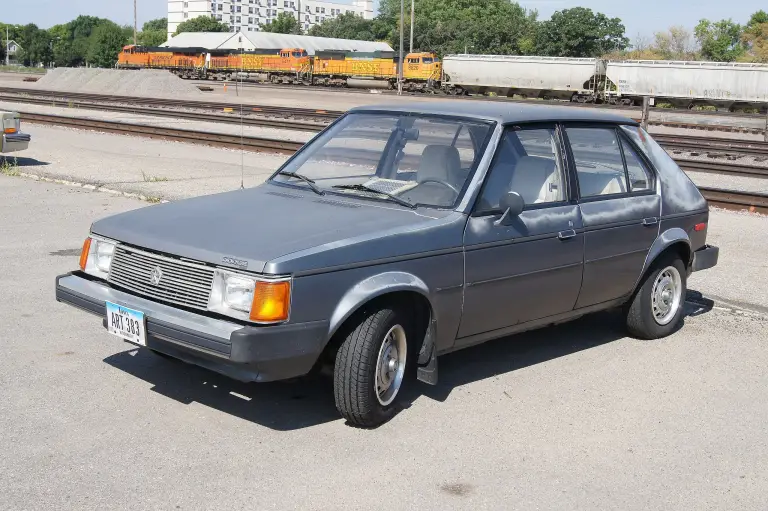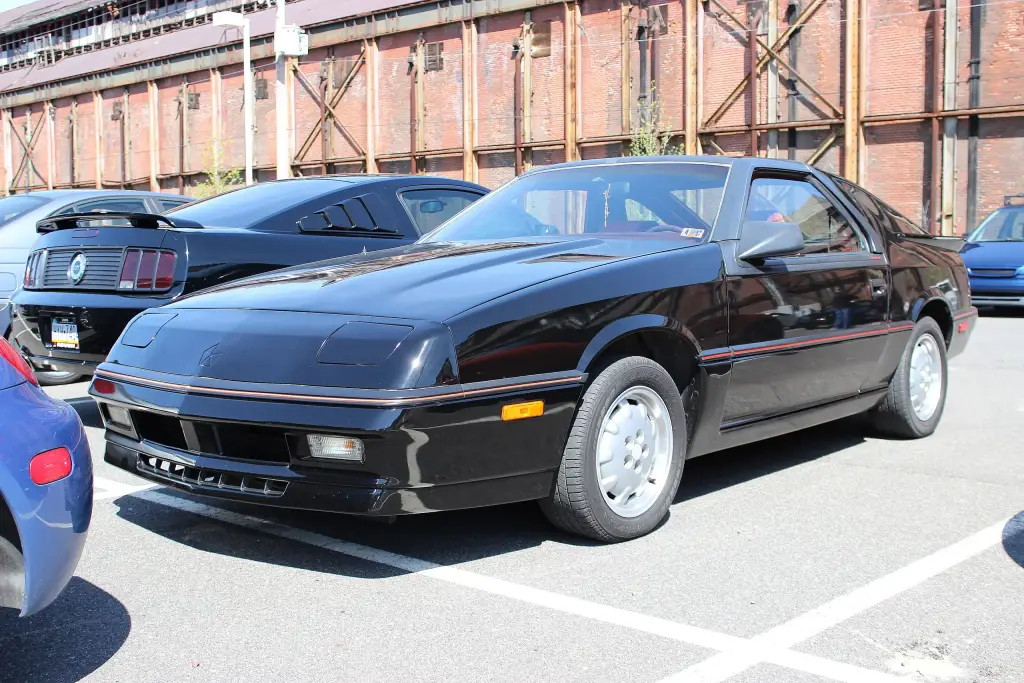
The Dodge Daytona is a front-wheel-drive hatchback coupe that Chrysler built under the Dodge brand from 1984 until 1993. Based on the Chrysler G platform derived from the K platform, it replaced the Mitsubishi Galant-based Challenger and sat between the Charger and the Conquest in the Dodge range.
Dodge Daytona at a glance
| Production | 1984-1993 |
|---|---|
| Class | front-wheel-drive sports coupe |
| Platform | Chrysler G, derived from the K platform |
| Twin model | Chrysler Laser |
| 1984 engines | 2.2 L naturally aspirated, 93 hp; 2.2 turbo, 142 hp |
| 1986 addition | 2.5 L four, 100 hp |
| 1987 update | restyle with pop-up headlights; Shelby Z with 174 hp |
| 1984 production | 49,347 cars |
| Award | Car and Driver 10Best for 1984 |
| Replaced by | Dodge Avenger (1995) |
Based on one source: the English Wikipedia article on the Dodge Daytona.
History of the Dodge Daytona
The Daytona debuted for 1984 with the 2.2-litre Chrysler K engine in naturally aspirated form with 93 hp or turbocharged with 142 hp. It was available in three trim lines: standard, Turbo and Turbo Z, and total production for the first year was 49,347 cars. The Daytona Turbo made Car and Driver magazine’s 10Best list for 1984, and both the Daytona and the upscale Chrysler Laser offered Chrysler’s electronic voice alert system through 1987. Many Turbo Z models were more luxurious than later cars, with Mark Cross leather, illuminated speakers and rear amplifier switches, options that were dropped after 1984.
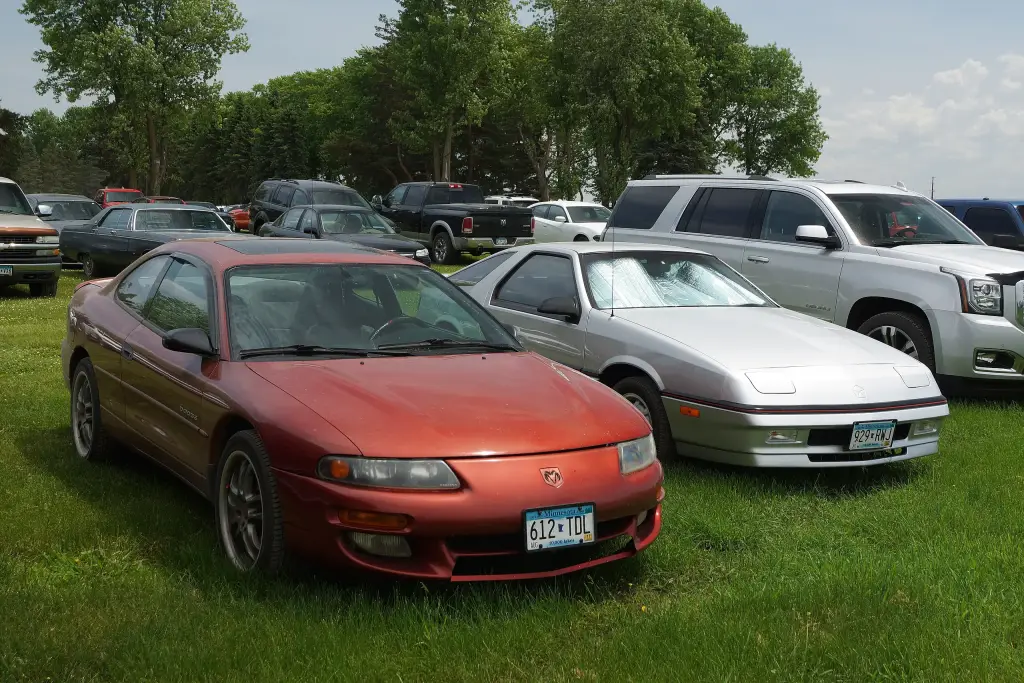
Changes were minimal for 1985. The Turbo Z was no longer a package but a model in its own right, the wraparound spoiler previously exclusive to it was offered on all three models, the 2.2 turbo gained four horsepower for 146 hp, and the optional “Swiss cheese” wheels gave way to “pizza” wheels. All wheels now had five lug nuts instead of four, and production reached 47,519 cars. For 1986 the middle Turbo model was dropped, leaving the base and Turbo Z; a new 2.5-litre 100 hp four became the base engine, a T-roof package was chosen by 5,984 buyers, and the C/S (Carroll Shelby) suspension package with thicker anti-roll bars, tuned struts and Goodyear Eagle Gatorback tyres was added as an option on the Turbo Z, chosen by 7,704 owners. Production that year was 44,366.
For 1987 the Daytona was restyled outside and gained pop-up headlights. A new Shelby Z trim arrived with an optional intercooled Turbo II version of the 2.2-litre engine producing 174 hp and 200 lb-ft, a heavy-duty A555 transaxle with Getrag gears, a larger front anti-roll bar and four-wheel disc brakes; it was sold in Europe as the Chrysler GS Turbo II. A luxury-oriented Pacifica trim replaced the Chrysler Laser, which was dropped in mid-1986, and options included a leather interior, an eight-way power driver’s seat, a digital instrument cluster and a twelve-button trip computer. In 1988 the C/S package returned, this time only on the base Daytona and without the ground effects, with the Turbo I engine and a choice of automatic or manual transmission.
After Chrysler took over Lamborghini, product programmes manager Jack Stavana started a project to fit a Lamborghini Jalpa V8 into a Daytona, linked to an all-wheel-drive system designed by Lotus UK, and the car was called the Decepzione. Despite media attention the project was dropped because the tall engine block left the oil pan with only 1.5 inches of ground clearance. For 1989 Dodge added the ES appearance and equipment group with silver ground effects and “snowflake” alloy wheels, replaced the 2.2 Turbo I with a 2.5-litre unit rated at 150 hp and 180 lb-ft, and introduced the C/S Competition model with the intercooled Turbo II and a manual gearbox only; a driver’s side airbag was standard in the United States and optional in Canada. The Daytona was restyled again for 1992 and replaced by the 1995 Dodge Avenger, which was built by Mitsubishi.
Design and features
- Turbo K engine: 2.2 and later 2.5-litre fours with outputs from 93 to 174 hp.
- Pop-up headlights: part of the 1987 restyle that gave the car its wedge look.
- Shelby Z: the 1987 performance model with the intercooled Turbo II engine.
- Decepzione: a one-off project with a Lamborghini V8 and all-wheel drive, abandoned.
Dodge Daytona versions
- Base and Turbo Z (1984-1986): the original trim lines, with the Turbo Z as the sporty one.
- Shelby Z (1987-): the Turbo II model with upgraded suspension and brakes.
- Pacifica: the luxury trim that replaced the Chrysler Laser.
- C/S and C/S Competition: the Shelby-inspired packages of 1986, 1988 and 1989-1991.
The Daytona was replaced by the Dodge Avenger, and its turbo coupe role in the Dodge range was shared with the Dodge Conquest. More Dodge models are in the Dodge collection.
Sources
- Dodge Daytona, English Wikipedia: model years, engines, trims, Decepzione