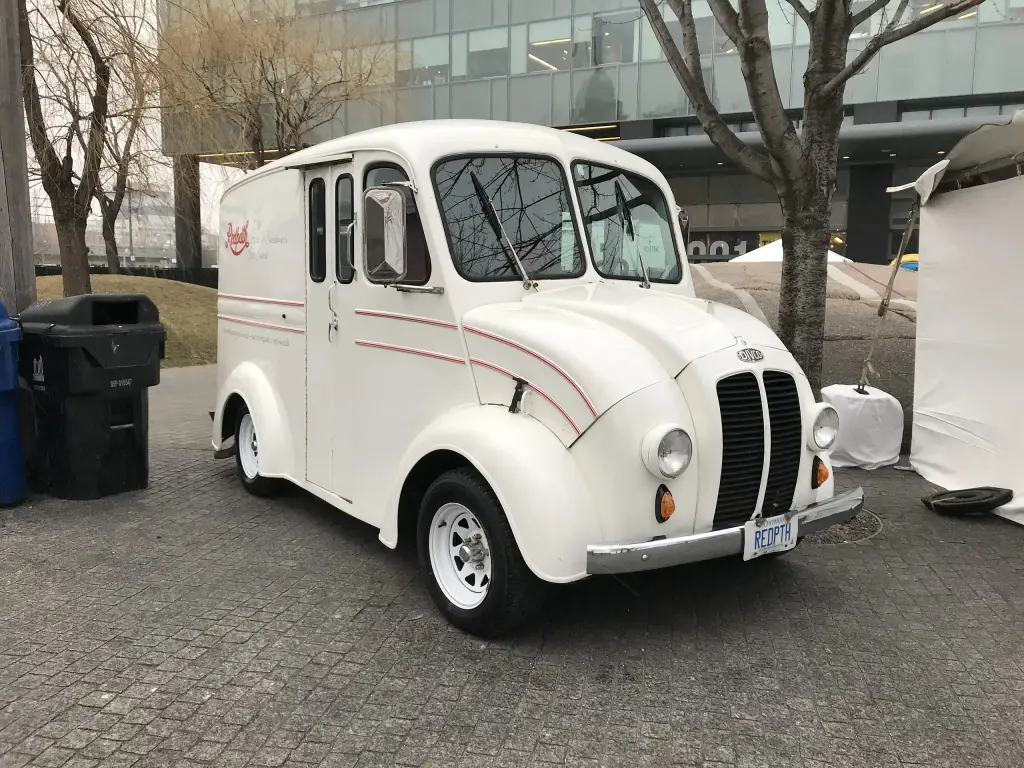

Divco was the brand name of delivery trucks built and sold in the United States by the Detroit Industrial Vehicles Company. The company became known above all for its multi-stop vans, which dairy producers used for home delivery of milk. From 1926 until 1986 Divco produced trucks of various sizes and job descriptions.
Divco delivery truck at a glance
| Maker | Detroit Industrial Vehicles Company (Divco) |
|---|---|
| Founded | 1926, Detroit |
| Production | 1926–1986 |
| Best known for | multi-stop delivery vans and milk floats |
| First model | Model A, 1926 |
| Steel-bodied design | introduced in 1937 |
| Driving position | standing, with throttle and brake on the steering column |
| Ownership | Continental Motors, Twin Coach, Wayne Works |
| Mergers | Divco-Twin, then Divco-Wayne in 1957 |
| Production moved | to Delaware, Ohio, in 1969 |
| Built for | home delivery fleets, especially dairies |
Based on one source, the English Wikipedia article on Divco.
History of the Divco delivery truck
The company grew out of the Detroit Electric Vehicle Company. Its chief engineer, George Bacon, suggested fitting a gasoline engine to the firm’s line of delivery vehicles to overcome the limits on their range and on their performance in cold weather. His bosses refused, so Bacon left and, with a group of investors, established the Detroit Industrial Vehicle Company in 1926. The name Divco is an acronym of that company title.
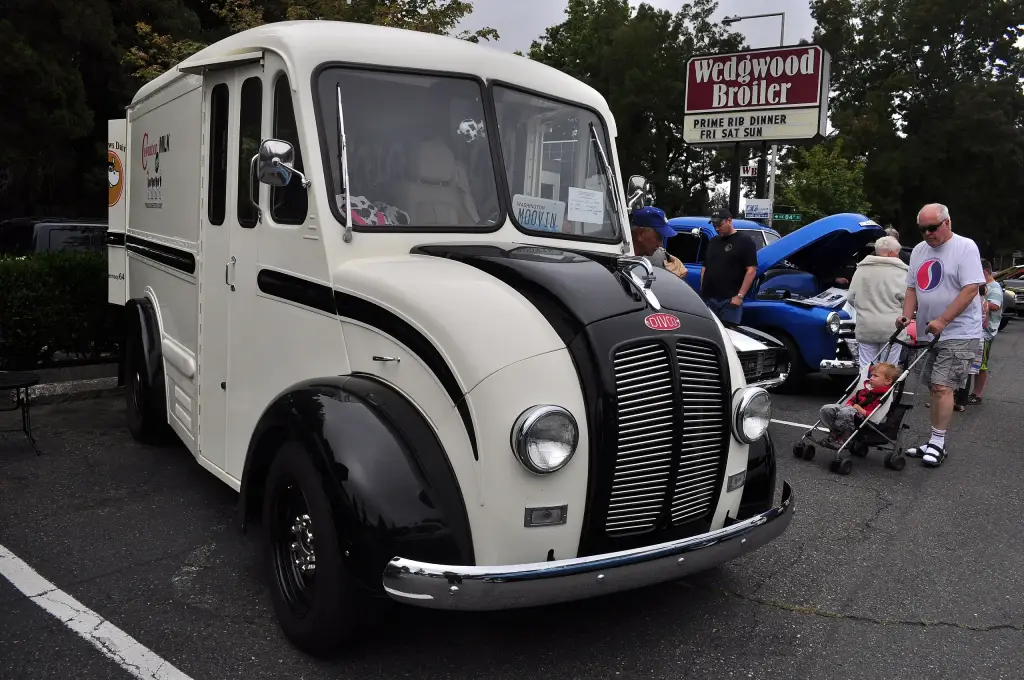

The first Divco, the Model A of 1926, was a boxy and practical vehicle. High organisational costs pushed the young company into a reorganisation in 1927, and in 1928 a larger, more conventional Model G was introduced. It evolved into the Model S, which was manufactured into the 1930s. During the Great Depression the company was bought by the Continental Motors Company, which supplied most of the engines fitted to Divco trucks, and in 1936 it was spun off from Continental and acquired by Twin Coach, becoming Divco-Twin.
A new design arrived in 1937 with a welded all-steel van body and a snub-nosed hood. This model was manufactured with almost no changes until the end of the line in 1986. Alongside the new Model U the company built a new production facility on the outskirts of Detroit.
In 1957 Divco merged with the Wayne Works of Richmond, Indiana, to form Divco-Wayne. In that era some Divco trucks were modified with seats and windows from Wayne Works to create the Divco Dividend Bus, though very few were built between 1959 and 1961. Truck manufacture continued through the Divco side of the business. Divco was spun off again in 1968 and production moved from Detroit to Delaware, Ohio, in 1969, where it ended in 1986. Wayne itself carried on building buses until bankruptcy and liquidation in 1992.
Design and features
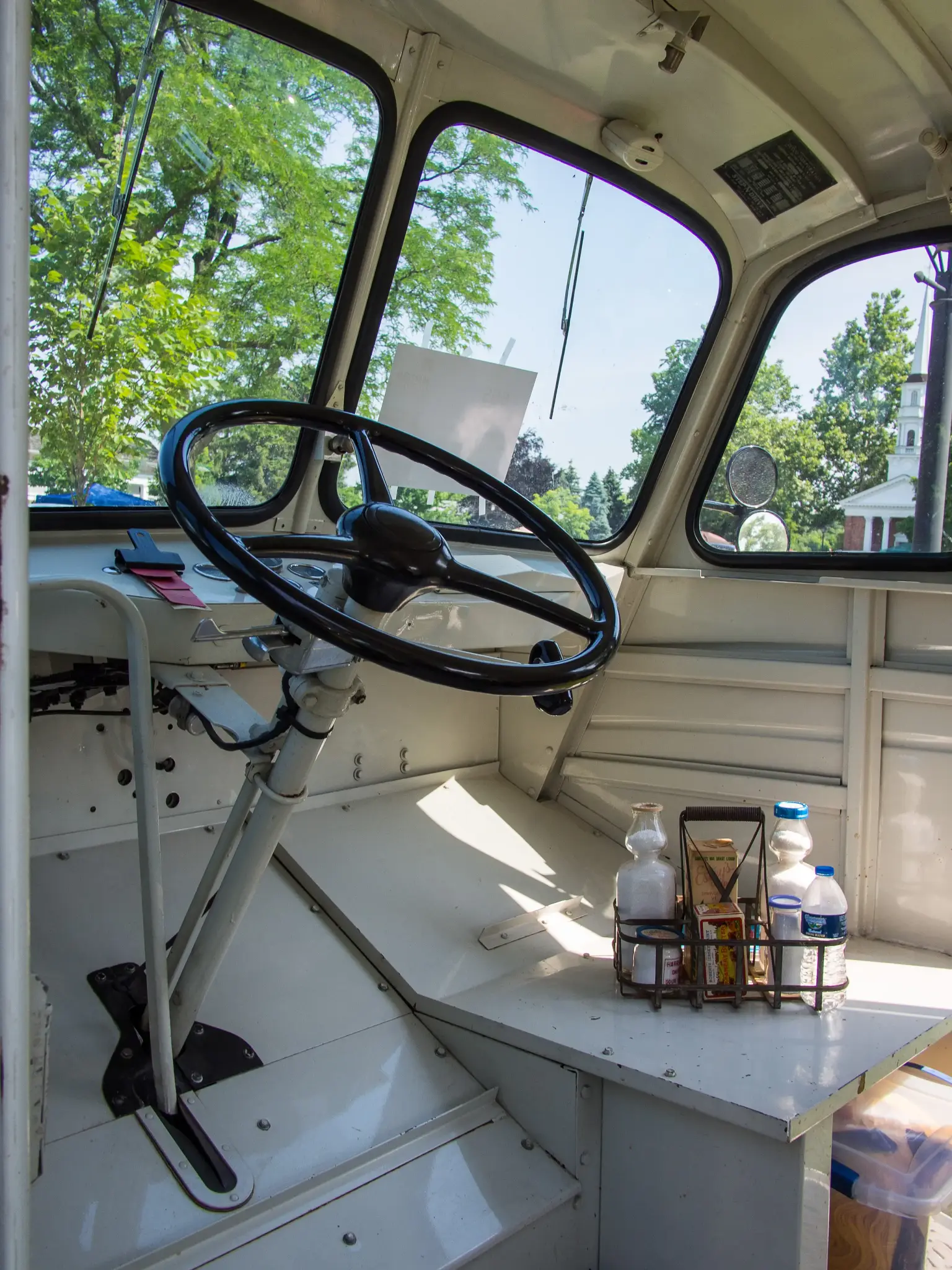
- Stand-up driving: on most Divco trucks the controls allowed the driver to work standing, with throttle and brake mounted on the steering column.
- Multi-stop layout: the vans were shaped around repeated stops, with the driver stepping out and back in many times a day.
- Snub nose: the short hood of the 1937 design gave a compact footprint and good visibility in narrow streets.
- Simple steel body: the welded all-steel van body of 1937 stayed essentially unchanged for five decades.
- Ice-cooled loads: early models were not refrigerated; perishable loads such as milk crates were covered with ice.

Divco delivery truck versions
- Model A (1926): the first Divco, boxy and practical.
- Model G (1928): larger and more conventional, developed into the Model S.
- Model S (1930s): the Depression-era truck built before the steel-bodied design.
- Model U (1937 onwards): the welded all-steel, snub-nosed van made almost unchanged until 1986.
- Divco Dividend Bus (1959–1961): a bus-bodied conversion using Wayne Works seats and windows, built in very small numbers.
Divco vans belong with the working vehicles of the twentieth century; more pictures are in the Divco collection, and the Classic Cars collection has older cars of the same period.
Video: 1966 Divco Milk Truck in Action
Video on YouTube.
Sources
- Divco, English Wikipedia: history, models, ownership, production