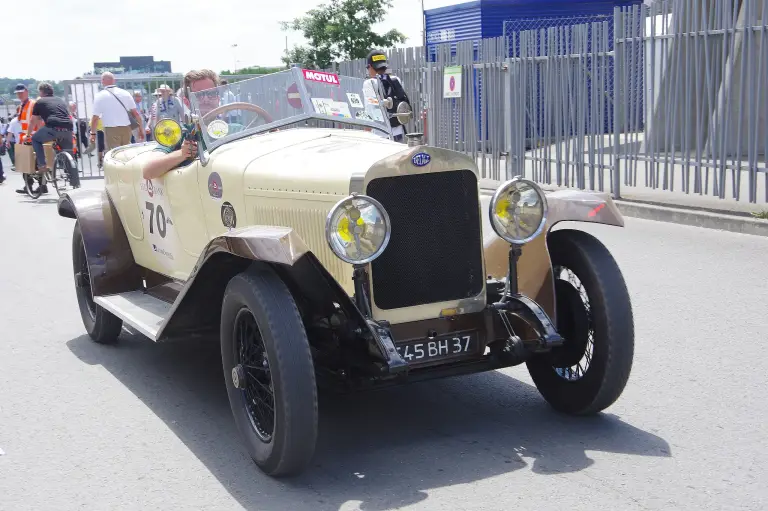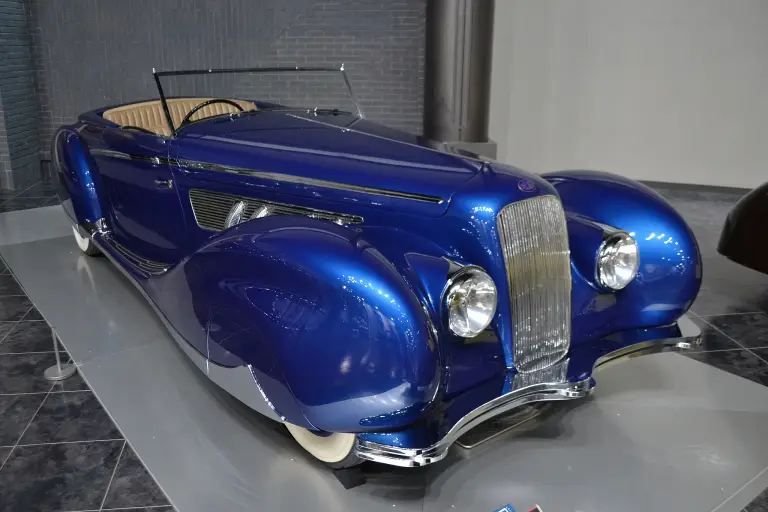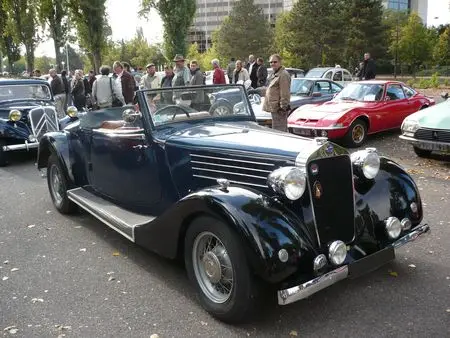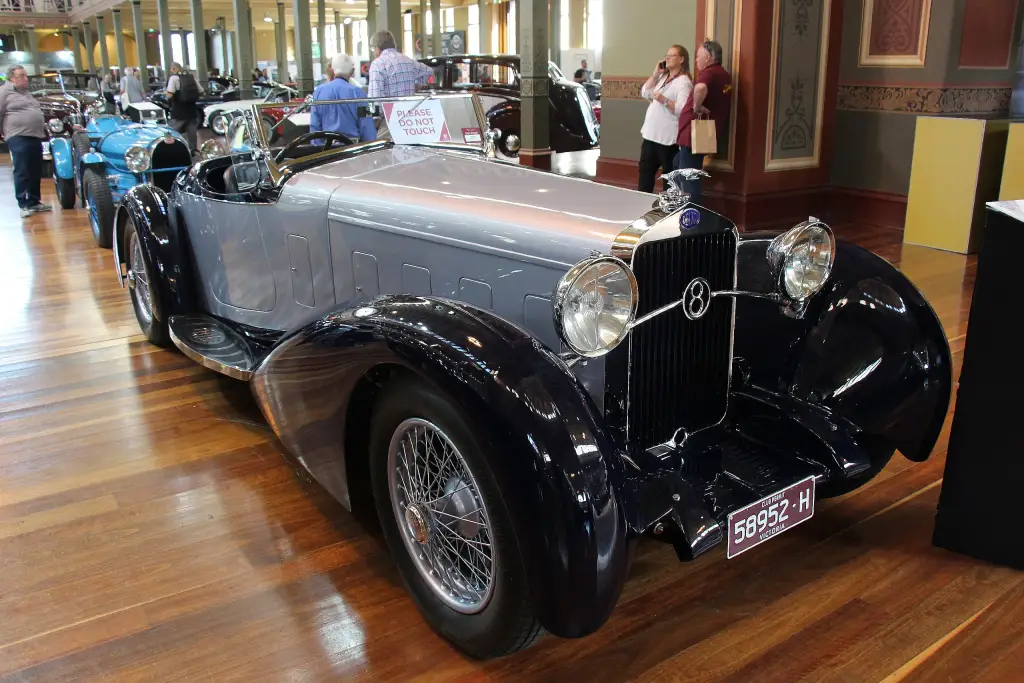
The Delage D8 was an eight-cylinder luxury car produced by Delage between 1929 and 1940. It was introduced late in 1929 as a replacement for the opulent Delage GLS and became one of the best-known products of what is remembered as a golden age for low-volume French luxury cars.
Delage D8 at a glance
| Maker | Delage, Courbevoie; Delahaye from 1935 |
|---|---|
| Production | 1929–1940 |
| Engine, original | 4,061 cc straight eight, 102 hp |
| Engine, D8 S | 4,061 cc, 120 hp |
| Tax band | 23CV |
| Chassis, Normale | 3,167, 3,467 or 4,066 mm wheelbase |
| Chassis, D8 S | short wheelbase, sports bodywork |
| Top speed | 120 km/h Normale, 130 km/h D8 S |
| Gearbox | four-speed manual, synchromesh on top two ratios |
| Suspension | rigid axles, leaf springs, friction dampers |
| Brakes | drums on all four wheels |
History of the Delage D8
1929: a straight eight for the top of the range
The D8 was introduced late in 1929 as the replacement for the Delage GLS, though with its wide choice of bodies and, later, engines it also stood in for some versions of the Delage DM. Its straight-eight engine was a first both for Delage and for the French motor industry. With a bore of 77 mm and a stroke of 109 mm it displaced 4,061 cc and placed the car in the 23CV tax band. It was launched just as the European economy was reeling from the 1929 crash, but cars at this level were never intended to sell in large numbers, and by taking sales from Bugatti and other top-end makers the D8 became one of Delage’s best-known models.
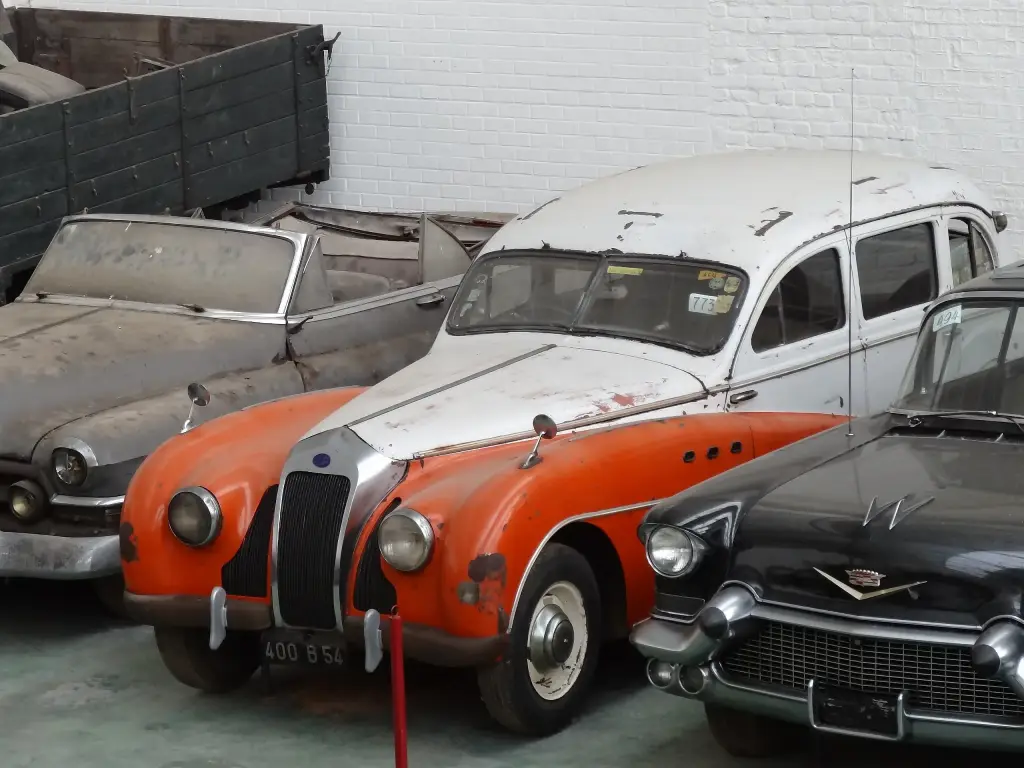
Chassis and engines
Two versions were launched, the D8 Normale and the short-wheelbase D8 S. The Normale came in three wheelbase lengths of 3,167, 3,467 and 4,066 mm, the last able to carry bodies more than five metres long; the S was optimised for handling in sporting use. The overhead-camshaft engine produced 102 hp at 3,500 rpm in the Normale and 120 hp in the D8 S, driving through a four-speed gearbox with synchromesh on the upper two ratios. Top speeds were listed at 120 km/h and 130 km/h respectively. Brakes were drums on all four wheels and the suspension was traditional, with rigid axles, semi-elliptic leaf springs and friction dampers.
Further developments, 1933–1940
In 1933 the D8-15 cut the engine to 2,668 cc and moved the model into the 15CV class, downmarket towards volume makers; it was withdrawn by the end of 1934. The D8-85 and D8-105 of 1934–1935 used a 3,570 cc engine with 85 or 105 hp, and both went out of production when the Courbevoie works closed in April 1935. From 1936 the D8 was built at Delahaye’s Paris plant: the D8-100 used a 4,302 cc engine of 90 hp, later quoted at 105 hp, on Delahaye chassis, and the Cotal pre-selector gearbox became standard equipment. The Delage D8 remained the top model produced under either name.
Design and features
- First French straight eight: the 4,061 cc engine was a first for Delage and for the French industry.
- Coachbuilt bodies: rolling chassis went to Letourneur & Marchand, Chapron and other Paris coachbuilders, so coupés, cabriolets, saloons and roadsters all existed.
- Normale and S: a long, formal chassis or a short, sporting one.
- Changed hands, not character: after 1935 the D8 was built by Delahaye but kept its Delage engine and identity.
Delage D8 versions
- D8 (1929–1934): 4,061 cc, 102 hp, three wheelbase lengths.
- D8 S (1929–1933): short wheelbase, 120 hp, 130 km/h.
- D8-15 (1933–1934): 2,668 cc, 15CV, sold as Normale and S.
- D8-85 and D8-105 (1934–1935): 3,570 cc, 85 or 105 hp.
- D8-100 (1936–1940): 4,302 cc on Delahaye chassis, Cotal gearbox standard.
The eight-cylinder Delage was joined in the range by the six-cylinder D6, and its last and fastest development was the D8-120. The model that came before it at the top of the range is described on the Delage DI page. More cars are in the Delage collection.
Sources
- Delage D8, English Wikipedia: engines, chassis, later versions
- Delage D8, French Wikipedia: range, coachbuilders, model list