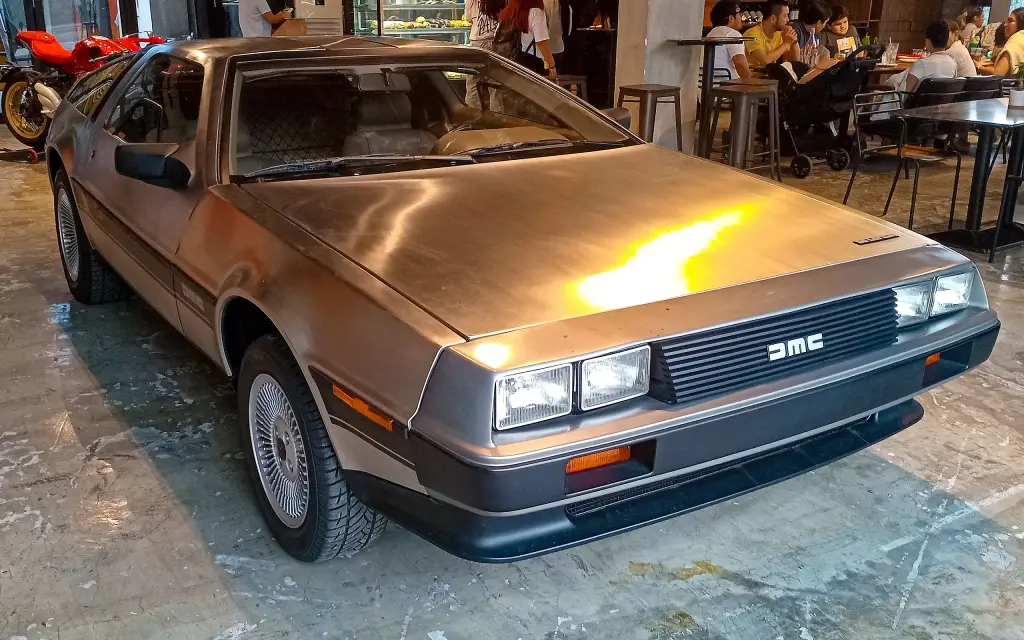

The DeLorean DMC-12 is a rear-engined, two-seat sports car built by John DeLorean’s DeLorean Motor Company for the American market from 1981 until 1983. It was the only car the young company ever brought to market. Its brushed stainless-steel body, gull-wing doors and modest performance made it famous, and the Back to the Future films made it iconic.
DeLorean DMC-12 at a glance
| Maker | DeLorean Motor Company, Dunmurry, Northern Ireland |
|---|---|
| Production | December 1980 – December 1982 |
| Designer | Giorgetto Giugiaro |
| Body | brushed stainless-steel outer panels |
| Doors | gull-wing |
| Engine | fuel-injected V6 PRV (Peugeot-Renault-Volvo), rear-mounted |
| Layout | rear engine, rear-wheel drive |
| Seats | two |
| Chassis | steel backbone, engineered with Lotus |
| Price at launch | about $25,000 |
| Built | about 9,000 |
| Still on the road | about 6,500 estimated in 2015 |
Based on one source: the English Wikipedia article on the DMC DeLorean.
History of the DeLorean DMC-12
John DeLorean left General Motors in 1973 and formed his own company, the DeLorean Motor Company. Its first vehicle was to be a two-seat coupé sports car, and early announcements in the mid-1970s promised advanced features: a plastic unibody made by Elastic Reservoir Moulding, a mid-engine layout, a driver-side airbag, 10-mph bumpers and very wide Pirelli P7 tyres. None of these reached the production car.
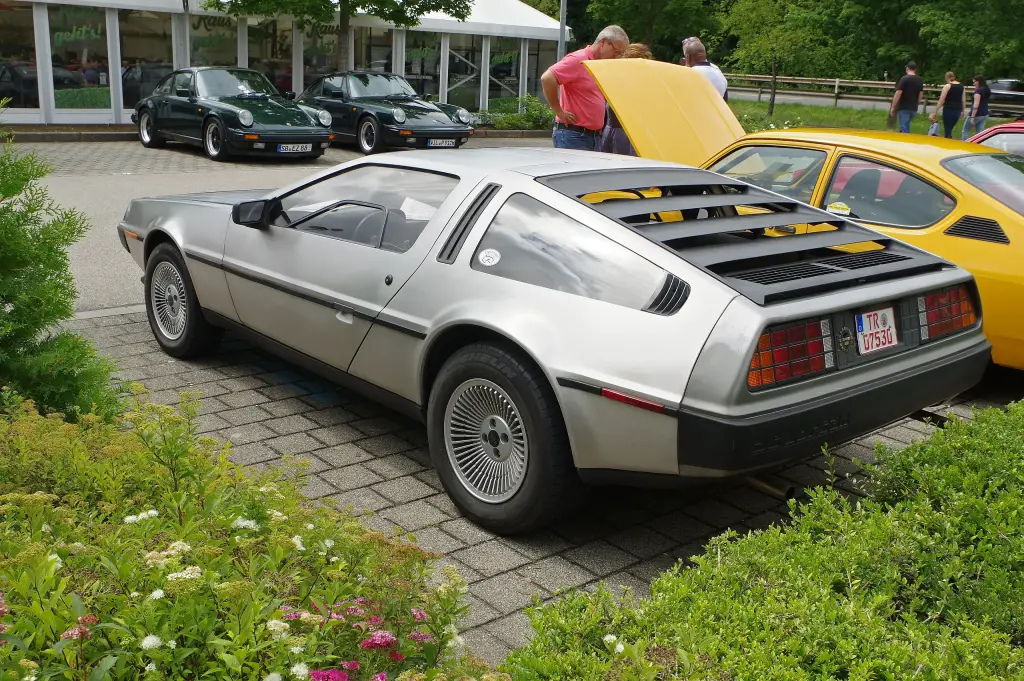

The first prototype appeared in October 1976. It was known first as the DSV-1, or DeLorean Safety Vehicle, then as the DSV-12 and finally as the DMC-12, the number coming from a target price of $12,000. The engineering proved far more difficult than expected, and the design was largely re-engineered by Colin Chapman of Lotus, who replaced the unproven materials and techniques with Lotus practice, including a steel backbone chassis. A small number of fibreglass-bodied development cars, known as ‘black cars’ or mules, were used during testing.
Stainless steel was chosen for the outer panels largely because the plastic body could not be painted satisfactorily. Instead of solving the painting problem, DeLorean used a bare stainless skin, and the extra cost was offset by saving the normal cost of painting a car. Promotional stainless-steel cars built for Ford in the 1970s showed that the idea could work.
The engine changed several times during development. A centrally mounted Wankel rotary was considered first, then the Ford Cologne V6, then the complete drivetrain of the Citroën CX 2000. The 1,985 cc Citroën four was judged underpowered, and when Citroën learned of plans to turbocharge it the company suggested DMC look elsewhere. In the end the fuel-injected PRV V6 was chosen, which moved the engine from the mid-engined position of the first prototype to a rear-engined layout carried over to production.
Production at the new Dunmurry factory near Belfast finally began in late 1980. By then the price had risen to $25,000 and the DMC-12 name was dropped in favour of simply ‘DeLorean’. The first production car was announced on 21 January 1981. The company went into receivership in February 1982 and filed for bankruptcy on 26 October 1982, days after John DeLorean’s arrest on drug-trafficking charges. Consolidated International bought the unsold and partly finished cars and assembled about 100 more, finishing on 24 December 1982. Total production is estimated at about 9,000 cars.
Design and features
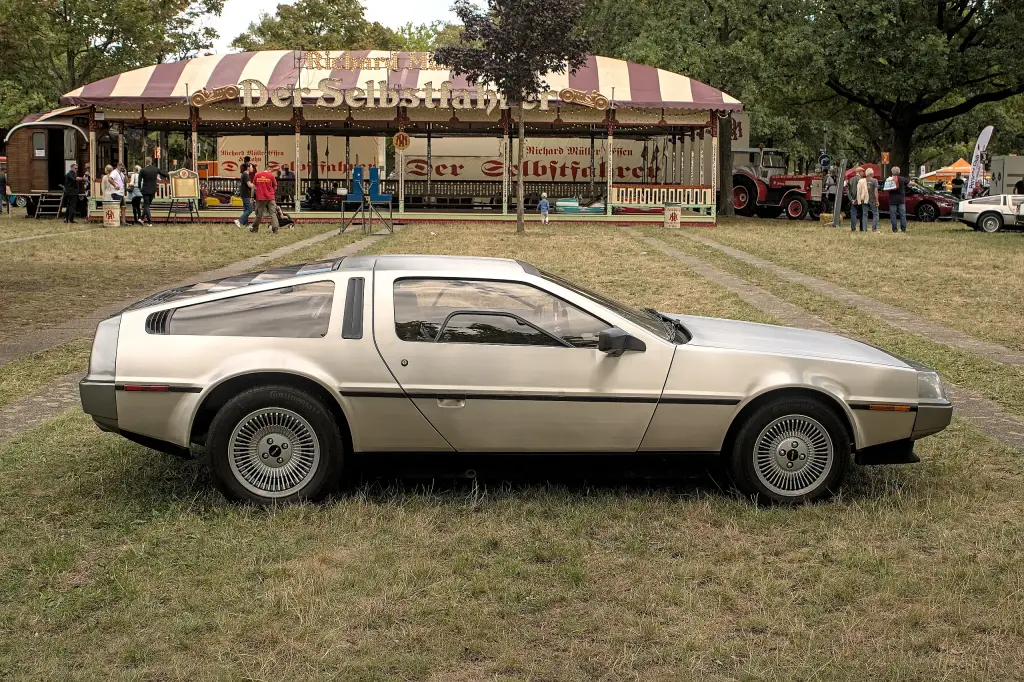
- Gull-wing doors: hinged at the roof centre, they need little side clearance and are the car’s signature.
- Brushed stainless steel: unpainted outer panels that cannot rust in the usual way and show fingerprints instead of paint chips.
- PRV V6: a fuel-injected 2.8-litre V6 shared with Peugeot, Renault and Volvo, mounted behind the rear axle.
- Giugiaro styling: a low, wedge-shaped two-seater drawn by Giorgetto Giugiaro.
- Lotus-developed chassis: a steel backbone frame after Colin Chapman re-engineered the project.

DeLorean DMC-12 versions
- Prototype-1 / DSV-1 (1976): mid-engined safety study with a full-width knee bar and Stewart-Warner instruments.
- ‘Black cars’: fibreglass-bodied development mules used by Lotus.
- 1981 production car: the first cars, announced in January 1981.
- 1982 production car: revised hood, wheels and interior details before production ended in December 1982.
More cars of this marque are in the DeLorean collection.
Video: 1982 Delorean DMC-12 Start Up, Exhaust, and In Depth Review
Video on YouTube.
Sources
- DMC DeLorean, English Wikipedia: design, development, production, sales