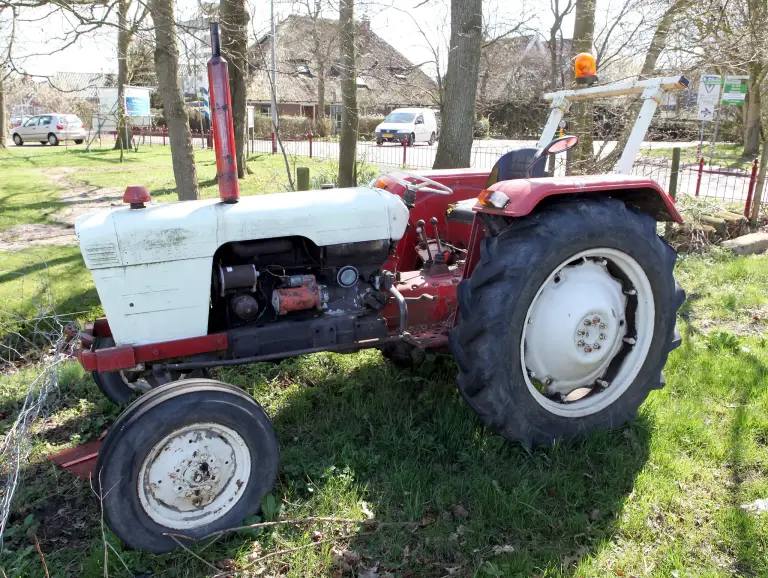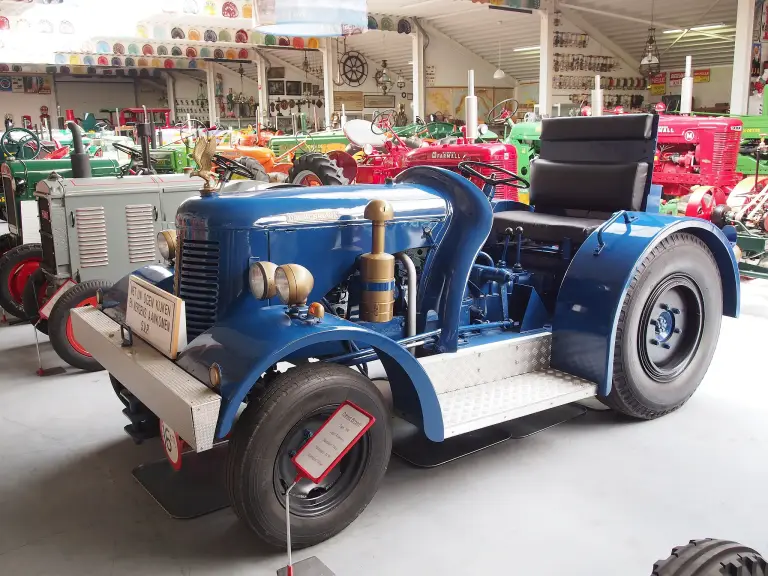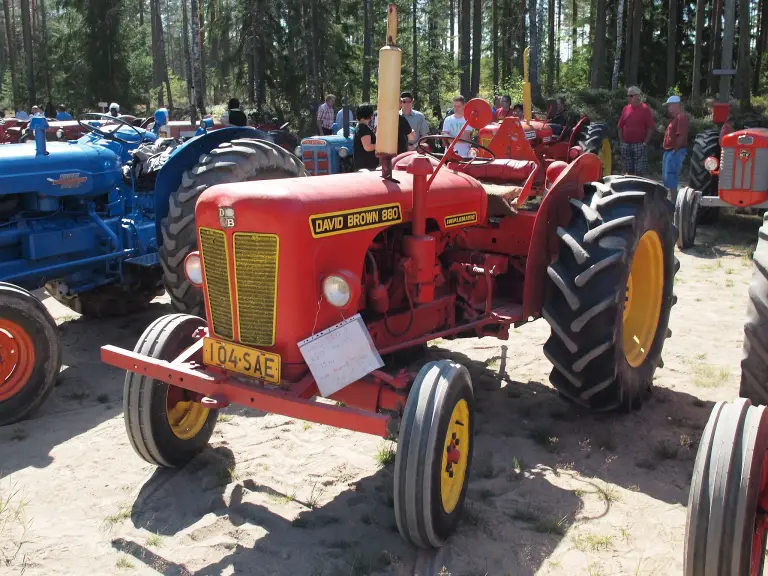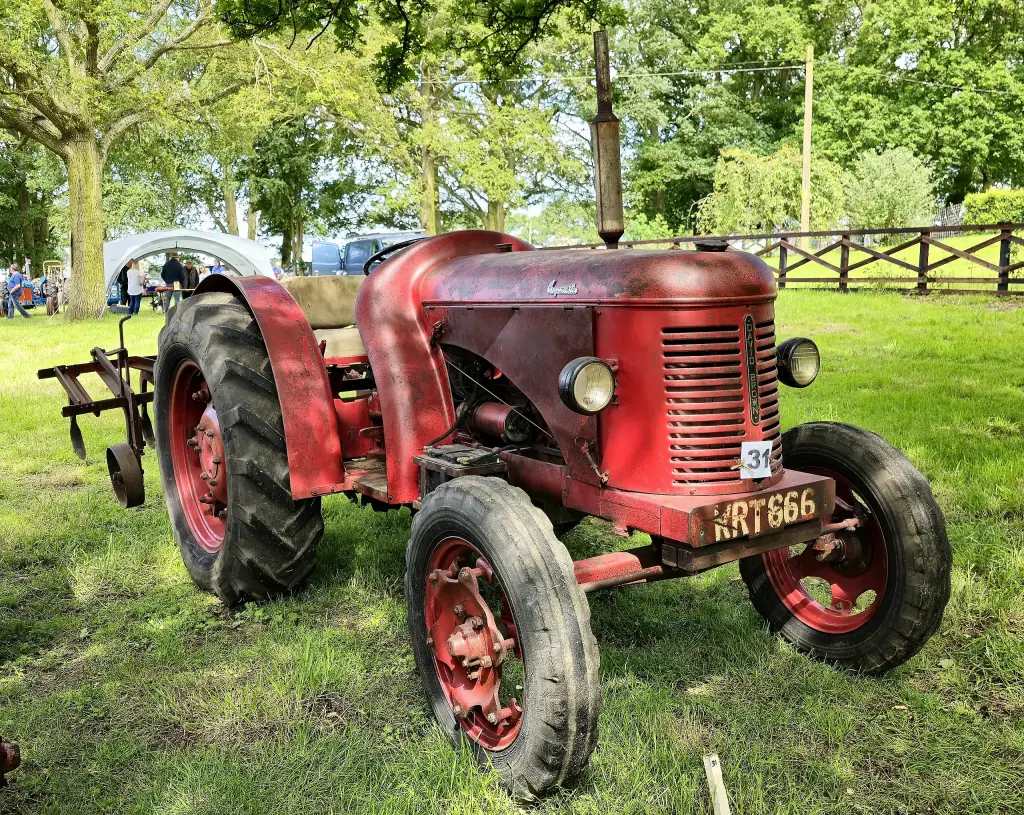
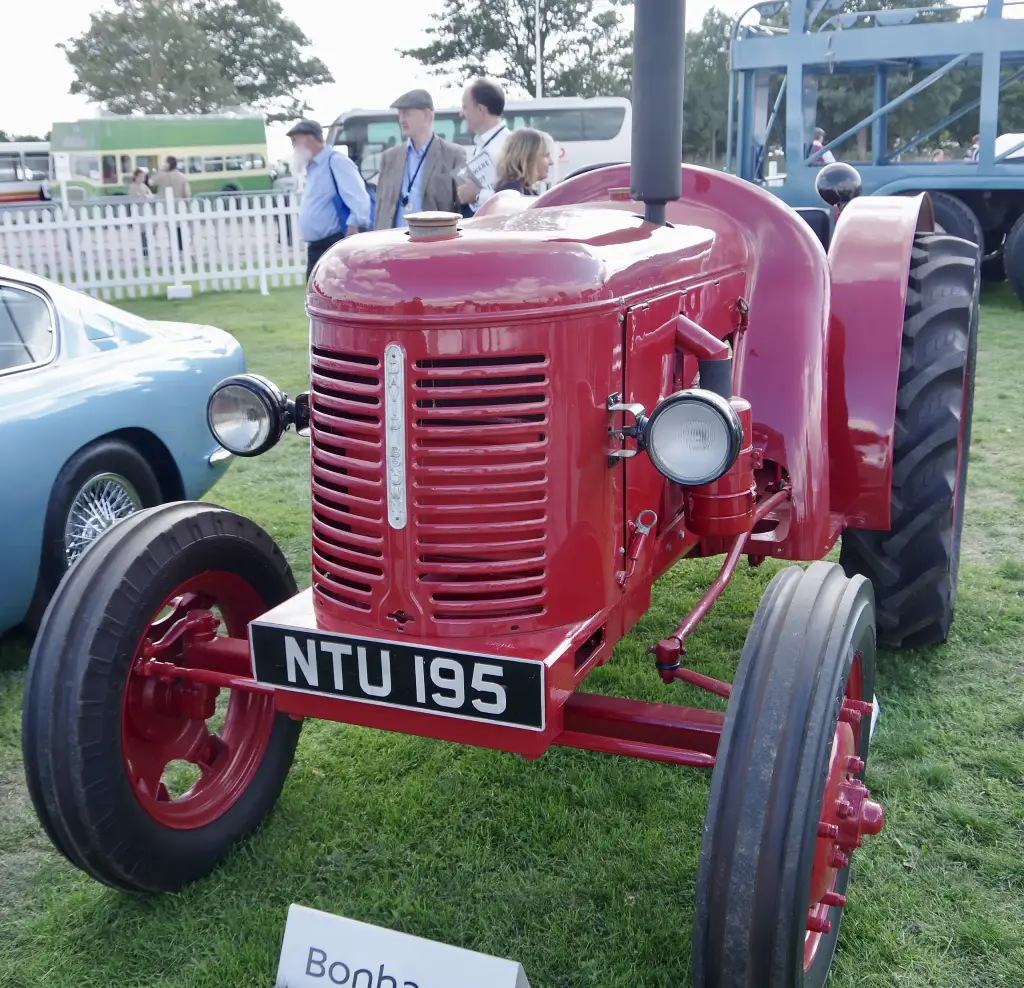
The David Brown Cropmaster, listed by the maker as the VAK1C of 1947–1954, was the post-war tractor that followed the wartime VAK1. It was built at Meltham, the Yorkshire works where David Brown had started tractor production with Harry Ferguson in 1936.
David Brown Cropmaster at a glance
| Maker | David Brown Tractors, Meltham, Yorkshire |
|---|---|
| Maker’s designation | VAK1C |
| Production | 1947–1954 |
| Predecessor | VAK1, launched at the 1939 Royal Show |
| VAK1 sales | over 7,700 |
| Successor generation | 950 Implematic from 1958 |
| Works | Meltham, West Riding of Yorkshire |
| Company | David Brown, founded 1860; tractors from 1936 |
| Company sold | to Tenneco (J.I. Case) in 1972 |
No Wikipedia page exists for the Cropmaster itself. This article is based on the maker’s page, David Brown Ltd., which lists the model and its production years; it is based on one source.
History of the David Brown Cropmaster
Ferguson, Brown and the VAK1
David Brown began in Huddersfield in 1860 and became a gear maker, moving to Park Works in 1902. In 1934 the firm took over an old silk mill at Meltham, on the south side of Huddersfield, and in 1936 it started building tractors there in a joint project with Harry Ferguson. The Ferguson-Brown used a Coventry Climax engine for the first 350 tractors, after which Brown’s own engine was fitted; total production was 1,350, plus one more built from parts in 1940 after production had ended. Brown and Ferguson disagreed over design details in the late 1930s, and Brown designed his own tractor, the VAK1, in secret. It was launched at the 1939 Royal Show, and during the Second World War it was produced in large numbers: over 7,700 were eventually sold, making Brown a wealthy man.
The Cropmaster years
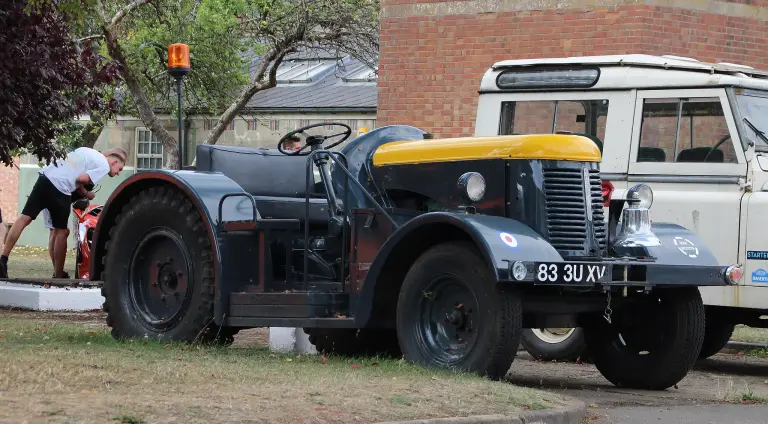
The Cropmaster was the VAK1C, listed from 1947 to 1954. It came after the VAK1A of 1945–1947 and the VAK1 itself, and it was sold alongside the Taskmaster, which was listed from 1948 to 1965. David Brown tractors were said to be the only ones built on a sturdy cast-iron chassis, where other makers bolted components together into a chassis-less construction that was weaker. The company also built VIG aircraft tugs for the Royal Air Force and, from 1942, the DB4 tracklayer for army engineers, with a 38 h.p. Dorman diesel and a five-speed gearbox; the DB4 was replaced in 1950 by the Trackmaster 30.
What came after
The Cropmaster was followed in the range by the 950 Implematic of 1958–1961 and the 850, 880 and 990 Implematic tractors of 1961–1965. The tractor division had ten subsidiaries around the world and at one stage exported 80% of production through 2,508 agents in 100 countries. In 1972 the operations were sold to Tenneco of America, owner of J.I. Case, and Case kept the David Brown name on British-market tractors until the early 1980s.
Design and features
- Post-war model: the VAK1C was the Cropmaster version of the pre-war VAK1 design.
- Cast-iron chassis: David Brown tractors were said to be the only ones built on a sturdy cast-iron chassis.
- Wartime pedigree: it came from the VAK1, of which over 7,700 were sold.
- Sold with the Taskmaster: the two models shared the Meltham range in the late 1940s.
David Brown Cropmaster versions
- Cropmaster, VAK1C (1947–1954): the model covered by this article.
- VAK1A (1945–1947): the version before the Cropmaster.
- VAK1 (1939–1945): the wartime tractor it developed from.
- Taskmaster (1948–1965): the stablemate of the Cropmaster’s early years.
The Cropmaster was sold with the Taskmaster, and the later 950 and 850 followed it in the range. More machines are in the David Brown collection.
Sources
- David Brown Ltd., English Wikipedia: VAK1 and Cropmaster production years, company history, cast-iron chassis claim