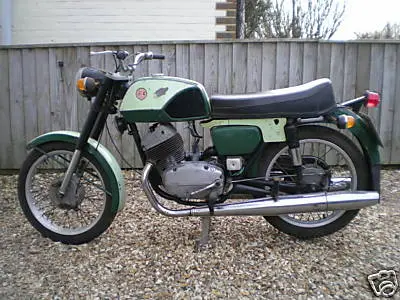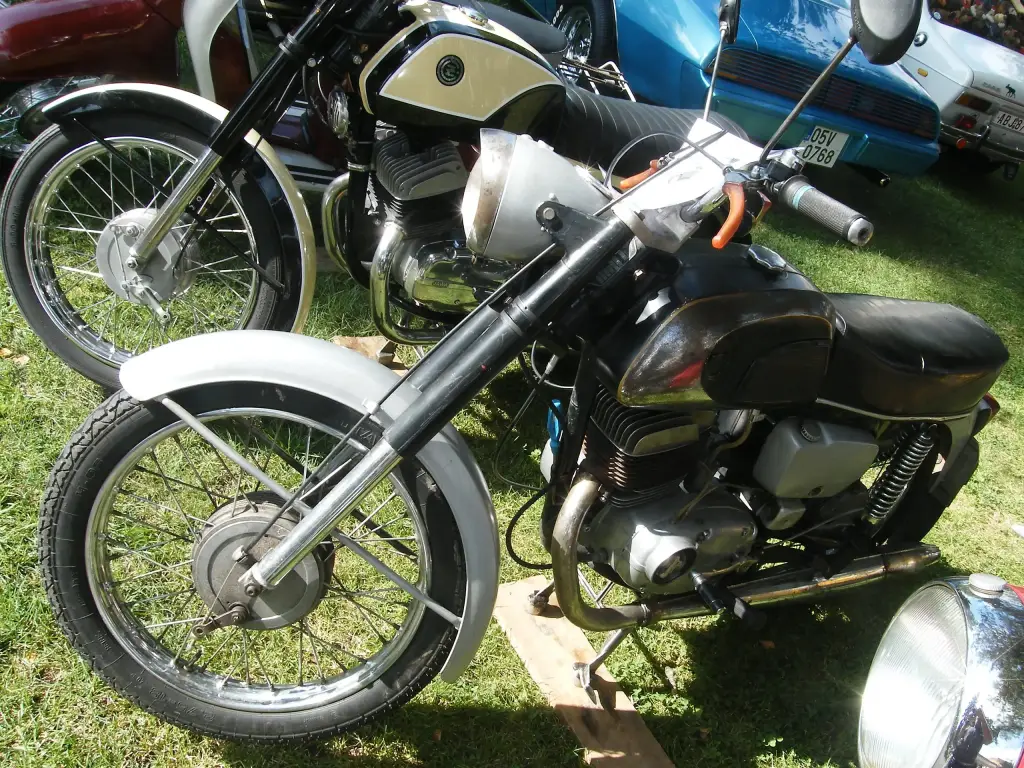
The ČZ 125 typ 476 is a two-seat motorcycle developed by Česká zbrojovka in Strakonice and built from 1968 to 1977. Its chassis was shared with the ČZ 175 typ 477 and came from the works motocross machines, which gave the little roadster a tougher look than the models it replaced.
ČZ 125 typ 476 at a glance
| Maker | Česká zbrojovka, Strakonice |
|---|---|
| Model | ČZ 125 typ 476 |
| Production | 1968–1977 |
| Chassis | shared with the ČZ 175 typ 477, derived from motocross machines |
| Wheels | 18 inch |
| Brakes | as on the Jawa 350/633 Bizon and Jawa 350/634 |
| Engine | derived from the ČZ 175 typ 450, with higher output |
| Frame | tubular steel |
| Dry weight | 112 kg |
| Top speed | 100 km/h |
| Fuel consumption | 3 l at 60 km/h |
| Lubrication option | Posilube separate lubrication on some versions |
The typ 476 is described only in the Czech Wikipedia; this article is based on that page and on the model list in the article about the Strakonice works.
History of the ČZ 125 typ 476
Česká zbrojovka in Strakonice had been building motorcycles since the 1930s and returned to selling them under the ČZ name in 1960, after the years of the joint Jawa-ČZ brand. The 125 typ 476 arrived in 1968 as the replacement for the 125/473 Sport, and it stayed in production until 1977, one of the longest runs of the 125 cc roadsters.
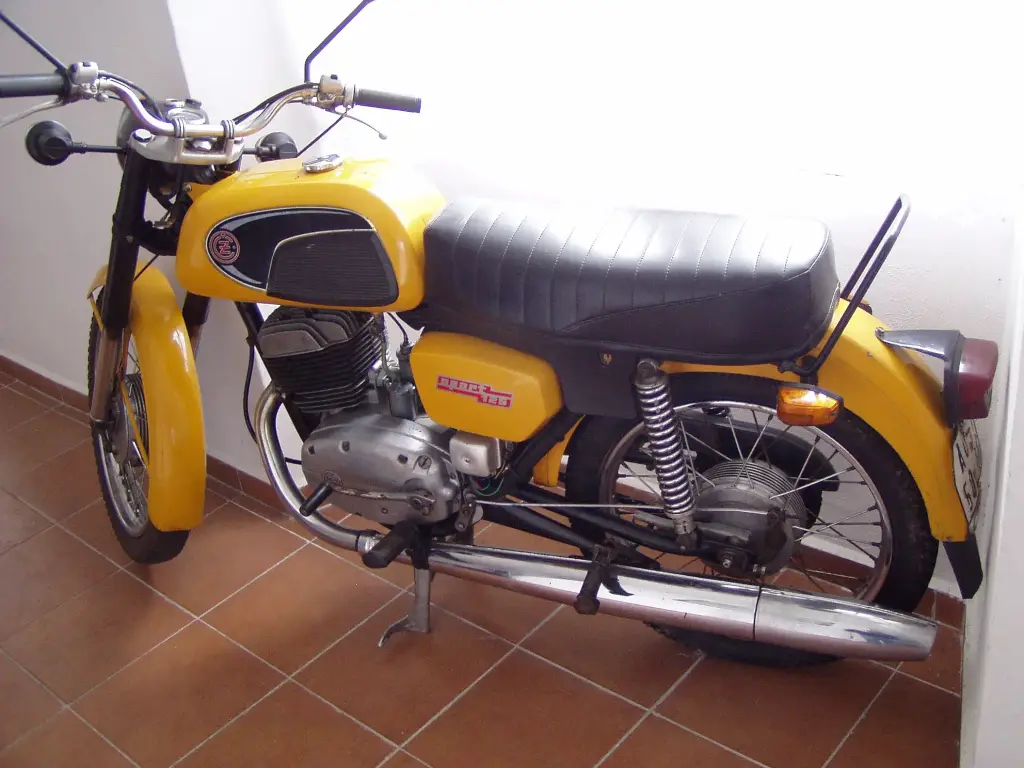
The chassis of the 476 was the same as that of the ČZ 175 typ 477 and was derived from the works motocross machines. It ran on 18-inch wheels, and the brakes were the same as those of the Jawa 350/633 Bizon and the Jawa 350/634. The engine came from the swinging-arm ČZ 175 typ 450 but was given a higher output, smaller flywheels on the crankshaft and a gudgeon pin running on a needle bearing. The crankshaft was lubricated with gearbox oil, and the sprocket was carried on two bearings instead of one.
Some versions were fitted with Posilube, ČZ’s separate lubrication system and the equivalent of the Oilmaster used by Jawa, which mixed oil with the fuel automatically instead of relying on pre-mixed petrol. As standard the machine had a round fuel tank and a round headlamp, though the later export versions moved to a rectangular lamp. Dry weight was 112 kg and the quoted top speed 100 km/h, with fuel consumption of about 3 litres at 60 km/h.
Design and features
- Motocross chassis: the frame and running gear of the 175 typ 477, derived from ČZ competition machines, on 18-inch wheels.
- Upgraded 125 engine: based on the 175 typ 450 unit with higher output, lighter flywheels and a needle-bearing gudgeon pin.
- Posilube: separate lubrication on several versions, ČZ’s answer to the Jawa Oilmaster.
- Light and simple: 112 kg dry, a tubular steel frame and a top speed of 100 km/h.
ČZ 125 typ 476 versions
- 476 prototype (1967–1968): the pre-production form.
- 476.1 (1969–1972): first series version.
- 476.0 (1972–1974): revised production type.
- 476.1 de luxe (1972–1974): Posilube, sometimes an enclosed chain cover and Velorex indicators.
- 476.2 (1974): USA version with a round tank and separate lubrication.
- 476.3 and 476.4 (1974–1975): European versions with a rectangular headlamp, the 476.3 with Posilube and the 476.4 without it.
- 476.5 (1975–1977): Europe and above all the USA, Lucas lights, round tank, Posilube.
- 476.6 and 476.7 (1975–1977): the 476.7 for Europe without separate lubrication.
The 476 replaced the ČZ 125 typ 473 Sport and shared its chassis with the 175/477, a development of the ČZ 175 typ 450. More motorcycles are in the ČZ collection.
Video: CZ 476 de 1972
Video on YouTube.
Sources
- ČZ 125 typ 476, Czech Wikipedia: dates, chassis, engine, versions, technical data
- Česká zbrojovka Strakonice, Czech Wikipedia: company history, model list