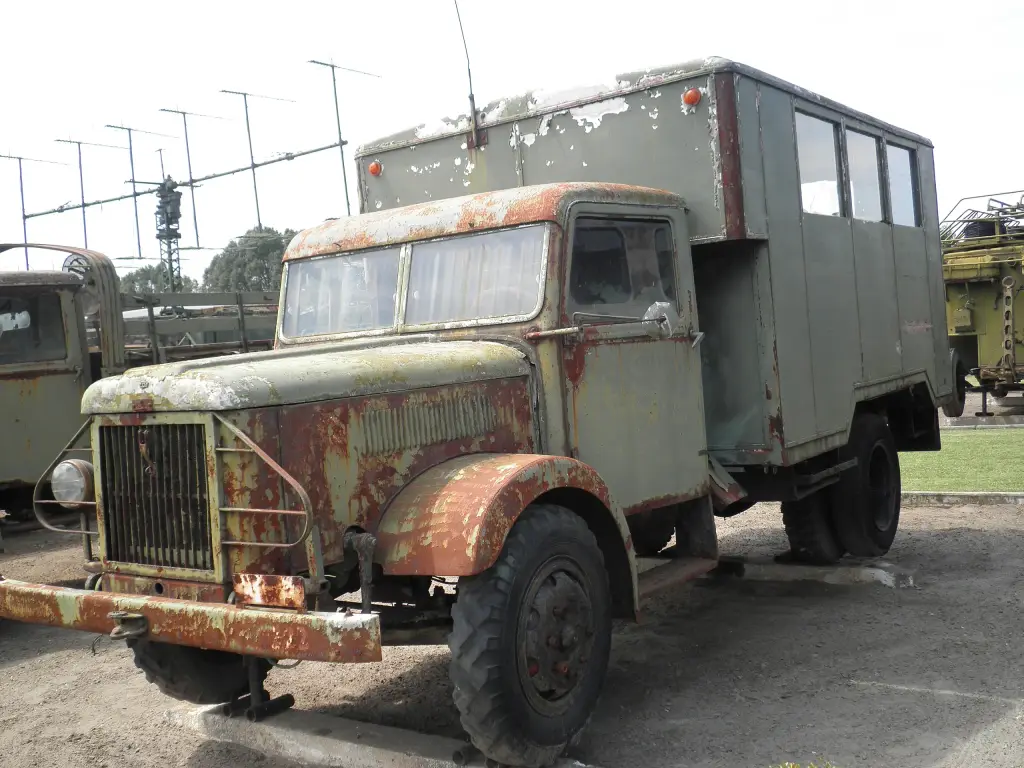

The Csepel D-350 was the first lorry built in series by the Hungarian manufacturer Csepel Autógyár, produced from 1950 until 1958. It was a licence-built copy of the Austrian Steyr 380 and the vehicle that put postwar Hungary’s new lorry factory on Csepel Island to work.
Csepel D-350 at a glance
| Maker | Csepel Autógyár, Szigethalom |
|---|---|
| Production | 1950–1958 |
| Based on | Steyr 380, built under licence |
| Engine | Csepel D 413 four-cylinder diesel, 5,322 cm³ |
| Power | 85 PS (63 kW) at 2,200 rpm |
| Torque | 30 kp·m (294 N·m) at 1,400 rpm |
| Gearbox | five-speed manual, non-synchromesh |
| Top speed | 73.2 km/h in fifth gear |
| Mass | 3,200 kg |
| Payload | 3,500 kg |
| Wheelbase | 3,710 mm (long-wheelbase flatbed) |
| Length | 6,735 mm |
Based on one source, the English Wikipedia article on the Csepel D-350.
History of the Csepel D-350
A licence from Steyr
After the Second World War the Hungarian Center of Heavy Industry (Nehézipari Központ, NIK) acquired a licence for the Steyr 380 lorry, the Steyr WD-413 and WD-613 diesel engines and the Steyr industrial four-cylinder petrol engine. The Steyr factory then lay in the Soviet-occupied zone of Austria and was under Soviet control; the historian Dezső Rankasz argues that the plans for the Steyr 380 were effectively “taken over”. The contract was originally meant to include a licence for the Steyr 180 agricultural tractor, but NIK took the WD-613 8-litre six-cylinder diesel instead because its power output suited military vehicles. A clause transferred the licensed Steyr patents to the Hungarian state from 1959 onwards for a fee of US$380,000, which later allowed Csepel Autógyár to build modified versions of the original WD-413 engine.

The Szigethalom factory
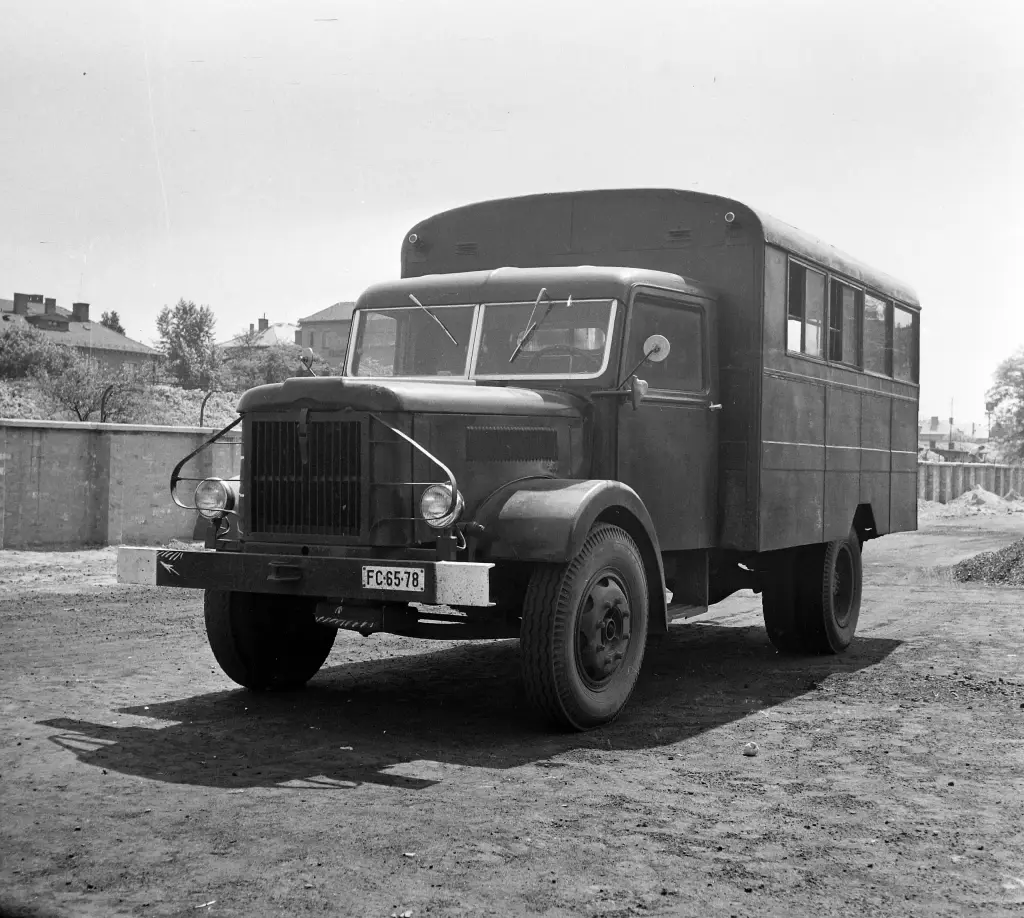
On 3 November 1949 it was officially decided to establish a lorry factory at Szigethalom on Csepel Island, in a former 180-hectare aircraft factory. Mihály Zsofinyecz, the Hungarian minister of heavy industries, formally accepted the plans on 18 November 1949, and the company was registered as a national company on 21 November 1949. The wife of Ferenc Bíró, herself an engineer, became the factory’s first managing director.
Into production
The first engine, a Csepel D 413 four-cylinder diesel, was assembled on 21 December 1949, and the first three lorries left the factory on 4 April 1950. At that stage the vehicle was still largely hand-made: the chassis was supplied by MVG in Győr and the cab by Ikarus, and about the first 1,000 engines were assembled from Austrian-made parts. Production ended in 1958.
Design and features
- Steyr 380 underneath: the D-350 copied the Austrian lorry closely, so it shared its conventional body-on-frame layout, two axles and front-mounted engine.
- Csepel D 413 diesel: a direct copy of the Steyr WD 413, a naturally aspirated four-cylinder with reverse-flow cylinder head and pre-combustion chamber injection.
- Working proportions: 3,200 kg empty and a 3,500 kg payload, with the same 3,500 kg permitted for a trailer.
- Constant development: the Hungarian Vehicle Development Institute (JÁFI) proposed running changes, including stronger pistons with a relocated upper ring groove and better pushrod sealing.
- Frugal by the standards of the day: a 1951 test recorded 20.3 L/100 km on average and 15.39 L/100 km at a steady 50 km/h on flat concrete.

Csepel D-350 versions
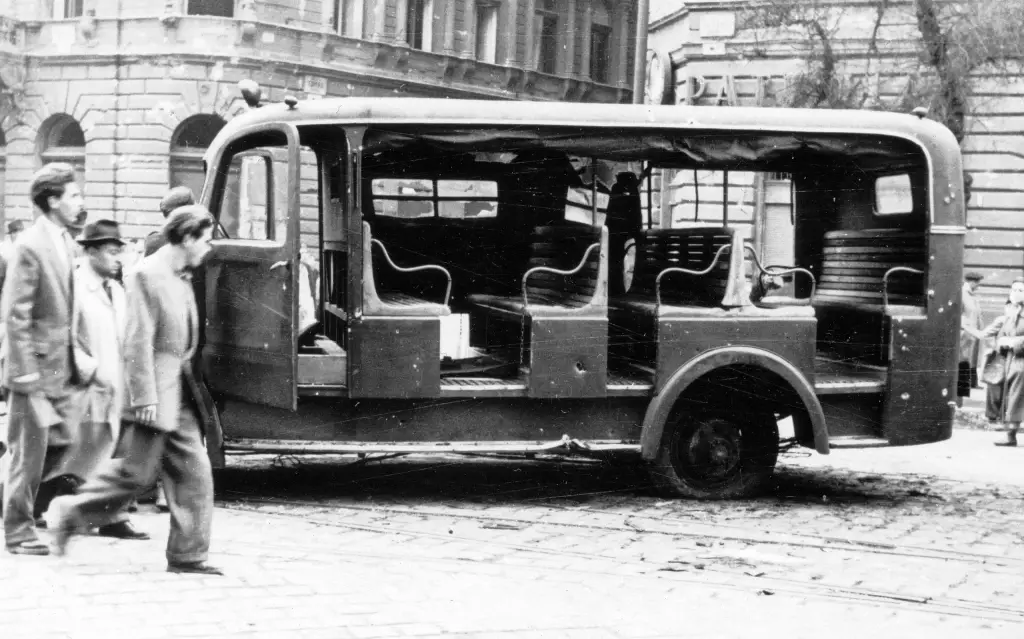
- Long-wheelbase flatbed: the most common version, with a 3,920 by 2,100 mm load bed.
- Short-wheelbase chassis: the other main wheelbase offered alongside the long version.
- Diesel and Otto versions: Csepel Autógyár built the lorry with compression-ignition and spark-ignition engines, though the diesel was far more common.
- Rear-wheel drive: used on every lorry except a single prototype.
The D-350 was the first of the Csepel lorries; more vehicles from the Hungarian maker are gathered in the Csepel collection.
Sources
- Csepel D-350, English Wikipedia: history, factory, technical description, performance