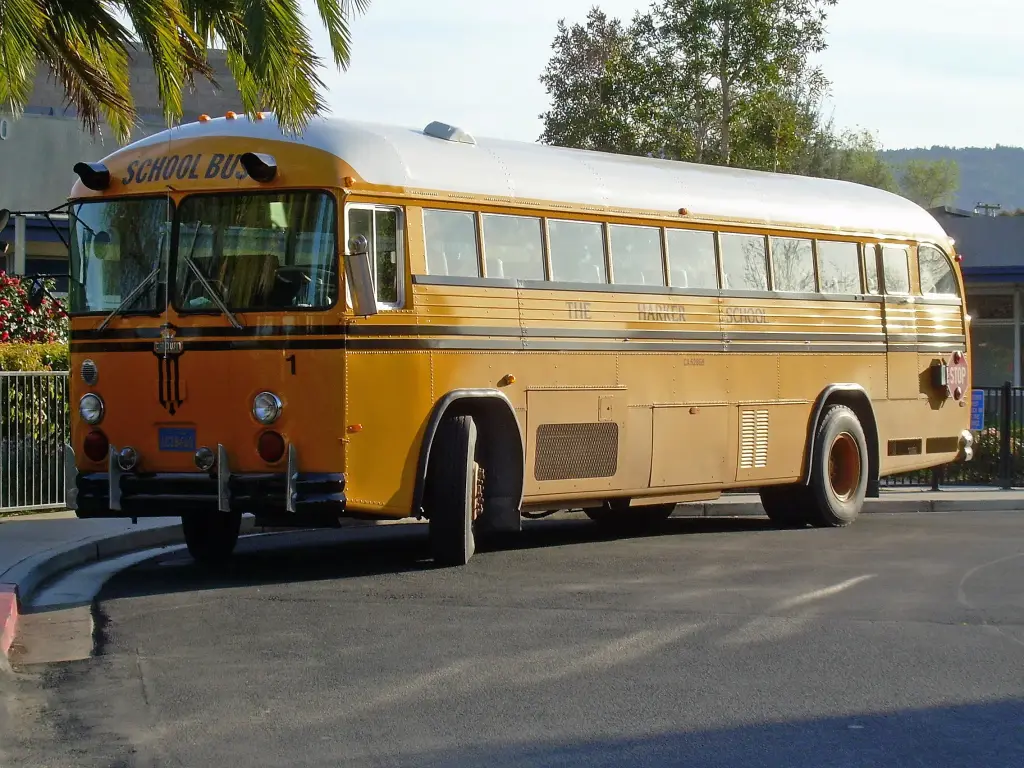

Crown Coach Corporation was an American bus manufacturer founded in Los Angeles in 1904 as a carriage works. Its Supercoach school buses, built in cab-forward form from 1932, supplied California almost exclusively alongside Gillig until the 1980s. The company closed in March 1991.
Crown Coach at a glance
| Founded | 1904, as Crown Carriage Company |
|---|---|
| Founder | Don M. Brockway |
| Headquarters | Los Angeles, California; Chino from 1984 |
| Main products | Supercoach school buses and motorcoaches |
| Also built | Firecoach fire apparatus, delivery vans, aircraft |
| Cab-forward Supercoach | 1932 |
| Mid-engine Supercoach | 1949, unit-body with aluminium panels |
| Firecoach | prototype 1951 |
| Moved to Chino | 1984 |
| Closed | March 1991 |
Based on one source, the English Wikipedia article on Crown Coach Corporation. The article covers the company rather than one model, because the surviving record is a Crown school coach.
History of the Crown Coach
Don M. Brockway worked at the first hardware store in Los Angeles, which sold wagon and carriage parts to supplement its income. In 1904 he founded Crown Carriage Company to build horse-drawn carriages, first in a wooden shed and from 1910 in a brick factory. As carriages became horseless, Crown experimented with truck bodies; in 1916 it built its first bus body for transit use, an open-air design close to wagon practice, and after the First World War came its first school bus body. In 1921 Brockway’s son, Murillo M. “Brock” Brockway, took charge of school bus production and stopped wagon building altogether; a larger Los Angeles factory opened in 1923.
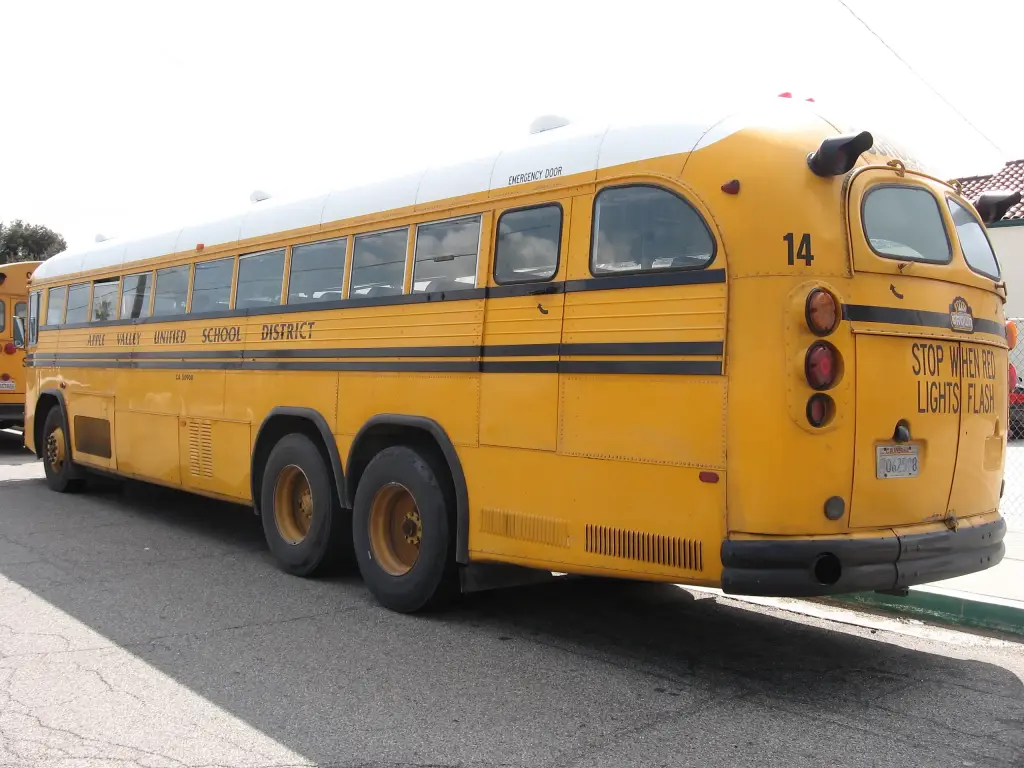

Crown pursued heavier and larger school buses. In 1927 it introduced the first school bus with dual rear wheels, on a Reo chassis, and in 1930 its first all-metal body, seating 43 on a Mack chassis. The company was renamed Crown Motor Carriage Company in 1927 and Crown Body and Coach Corporation in 1933. The decisive change came in 1932, when M. M. Brockway introduced a cab-forward school bus body with the driver sitting beside the engine and radiator for better forward visibility. It also had an integral chassis, mesh-reinforced safety glass and two backup braking systems alongside the standard brakes. Named the Supercoach in 1935, the design gained an all-steel body, air brakes and a combined body and chassis, and a mid-engine version with a horizontally mounted Hall-Scott petrol engine raised capacity to 79 passengers.
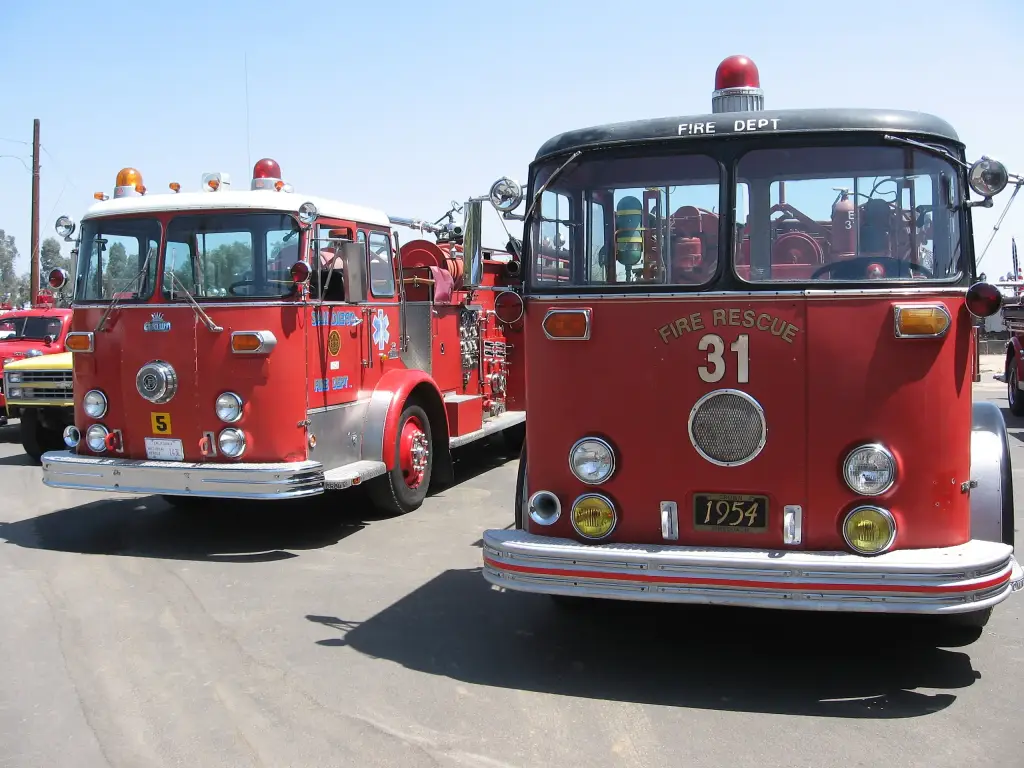
In 1939 Crown bought the Moreland Motor Truck Company and moved into its Los Angeles factory, where it stayed until the 1980s; the company became Crown Coach Corporation. The Moreland purchase brought a rear-engine layout for 1940, a rear exit window and a side emergency exit door. Wartime production was limited to a few fire engine bodies on four-wheel-drive chassis. Afterwards Crown returned to buses and, as post-war suburbs filled with new schools, developed a new Supercoach for 1949. It used unit-body construction in high-strength steel instead of a separate chassis, with aluminium body panels against corrosion, and Crown backed the body with a 20-year, 100,000-mile warranty. The same mid-engine chassis served as the basis of the Crown Firecoach fire engine, whose prototype was finished in 1951; pumpers, water tenders, tiller and ladder trucks and quints followed.
Crown remained in Los Angeles for eighty years, competing with the Gillig Transit Coach; between them the two firms supplied California with school buses almost exclusively into the 1980s. In 1984 the company moved its headquarters and manufacturing to Chino, California. By then a subsidiary of GE Railcar, Crown Coach ended operations in March 1991, struggling against falling demand for school buses.
Design and features
- Cab-forward body: the driver sat beside the engine and radiator, which gave a short bonnet and better forward visibility for a school bus.
- Integral construction: body and chassis were combined, and the 1949 Supercoach went further with a unit-body in high-strength steel and aluminium panels.
- Safety equipment: mesh-reinforced safety glass, two backup braking systems from 1932, and air brakes later in the decade.
- Long body warranty: a 20-year, 100,000-mile guarantee was offered to prove the Supercoach’s durability.
- One chassis, many bodies: the mid-engine Supercoach chassis also carried fire apparatus, delivery vans and intercity coaches.

Crown Coach versions
- Supercoach school bus: the core product, cab-forward from 1932 and mid-engined from the late 1930s.
- Mid-engine Supercoach (1949): unit-body construction with aluminium panels and a long body warranty.
- Intercity motorcoach: built alongside school buses, among the first air-conditioned designs.
- Firecoach: fire apparatus on the Supercoach chassis from 1951, including pumpers, water tenders, ladder trucks and quints.
- Custom vehicles: delivery vans and other bodies derived from the bus range.
- B-3 aircraft: the Crown B-3, a licence-built Kinner Airster airframe made between 1930 and 1933.
Crown’s school buses are collected in the Crown section. More American commercial vehicles are in the Classic Cars collection.
Sources
- Crown Coach Corporation, English Wikipedia: history, products, dates