
A concept car is a promise made in clay, aluminium or plastic. The car that reaches the showroom has to be built in thousands, pass crash and emissions rules and sell at a price. This guide follows four show cars on that journey and shows what each one gave up.
The short version
Concept cars never go into production directly. Before launch the design is changed for practicality, safety, regulatory compliance and cost. Some arrive almost untouched, some are redrawn, and some are only a name.
What a concept car is, and what it is not
A concept car, also called a show vehicle, is made to showcase new styling or technology. Makers exhibit them at motor shows to gauge how customers react to radical designs that may or may not be built. General Motors designer Harley Earl is generally credited with inventing the concept car, and GM’s travelling Motorama shows of the 1950s did much to popularise it.
The cars themselves range widely. Some use exotic materials from carbon fibre to refined alloys, others have gullwing doors or an unusual number of wheels. Many never get past scale models or drawings. Inoperative mock-ups are made of wax, clay, metal or fibreglass, and when a concept does drive, its drivetrain is often borrowed from a production model. A very small proportion are functional to any useful extent, and some cannot move safely above 10 mph.
| Stage | Purpose | Typical state |
|---|---|---|
| Concept car | Show new styling or technology and test reaction | Mock-up or one-off, exotic materials, borrowed drivetrain |
| Production-intent prototype | Finalise the design for practicality, safety, regulations and cost | A pre-production vehicle that serves to finalise the design |
| Production car | Be built in volume and sold | Priced, certified and compromised |
Four journeys from show stand to showroom
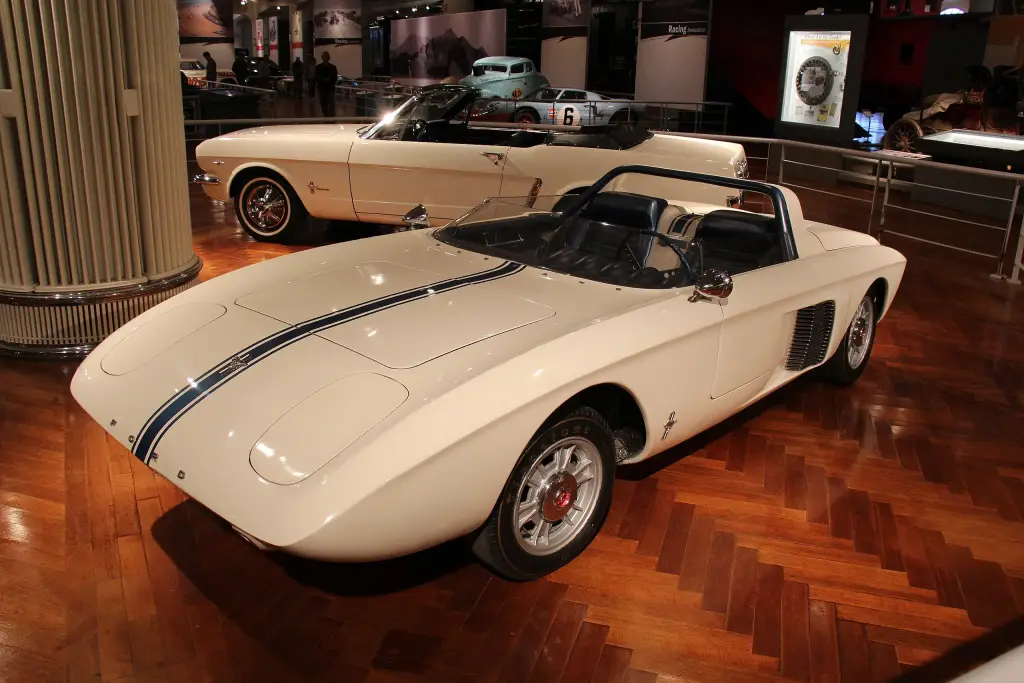
1962 Ford Mustang I: the concept that only lent its name
Ford built the Mustang I in 1962 as a small, mid-engined, open two-seater with aluminium bodywork. Roy Lunn, a racing designer, laid out its chassis with four-wheel independent suspension, rack-and-pinion steering and front discs, and it was powered by a compact 1,500 cc V4. It made its public debut at the United States Grand Prix at Watkins Glen on 7 October 1962, where racing driver Dan Gurney lapped the track in a demonstration. It was fully functional, and the buzz it created was just what Ford’s Lee Iacocca had hoped for.
Then reality arrived. The Mustang I was too complex for regular production, and reaction from customers and focus groups showed that its original concept had limited appeal. A completely new concept, the Mustang II, appeared in 1963. Ford’s Advanced Design group went on to develop 13 Mustang concepts in all.
Show car, 1962
- Mid-engined open two-seater
- 1,498 cc 60° V4 with 89 hp at 6,600 rpm, 4-speed transaxle from the Ford Taunus
- Aluminium body on a tube frame, about 1,200 lb
- 90 in wheelbase, independent suspension, hand-built in Culver City
The road car
- A different car: it shared few design elements with the production Mustang
- Only the name and the emblem carried over
- Judged too complex for regular production

1953 Chevrolet Corvette: rushed to the showroom
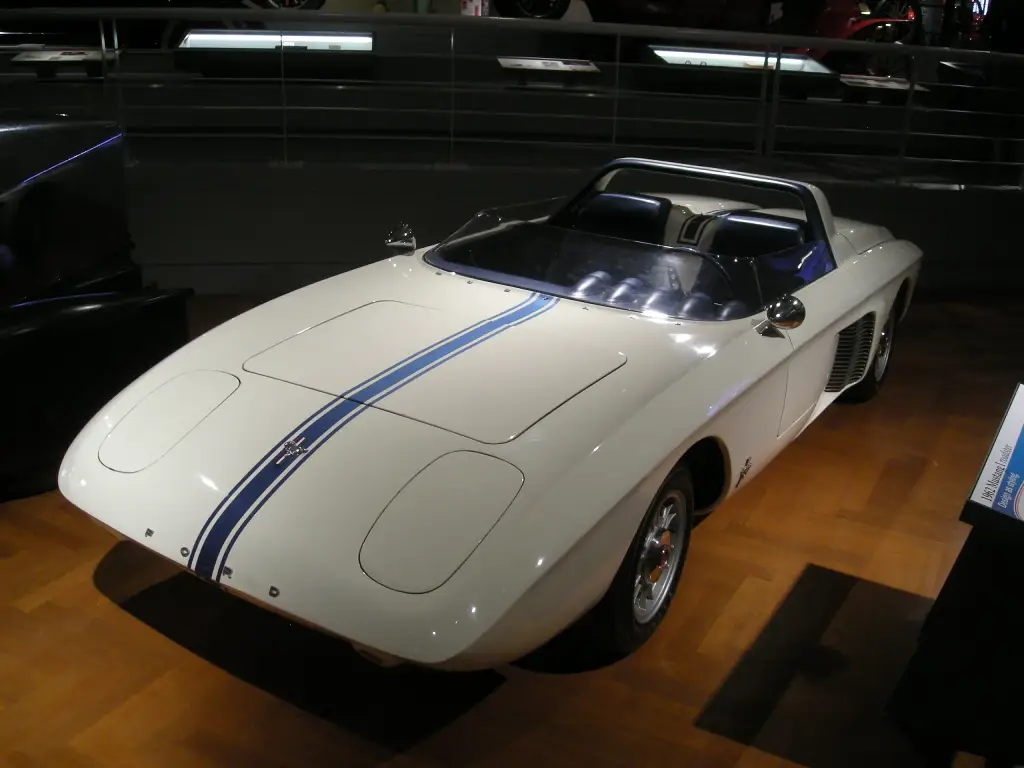
Harley Earl pushed GM to build an all-American two-seat sports car and his team began work in late 1951. The hand-built EX-122 prototype was first shown at the 1953 General Motors Motorama at the Waldorf-Astoria in New York on 17 January 1953. When production started six months later it had become a considerably costlier car than the basic $2,000 roadster Earl had originally imagined.
The body is the famous example of a show-car shortcut becoming the answer. Body engineer Ellis Premo explained that the show car’s plastic body was an expedient to get the job done quickly, and that the team had actually been preparing a steel body for 1954. Public enthusiasm for fibreglass, and what the plastics industry told them, decided it. Underneath were standard Chevrolet parts: the “Blue Flame” six, boosted to 150 hp with three carburettors, and a two-speed Powerglide because no available manual gearbox could take that power.
Show car, January 1953
- Hand-built EX-122 prototype shown at the Waldorf-Astoria
- Reinforced-plastic body made “purely as an expedient” to get a car rolling quickly
- Long “Corvette” script below the front badge, fender spear pointing down, air scoops on the fenders
- Aimed at a basic roadster of about $2,000
Showroom car, from June 1953
- 300 cars hand-built on a makeshift line in Flint
- Fibreglass kept after Chevrolet had planned a steel body for 1954
- Script became a big red “V”, spear pointed up, fender scoops dropped
- About $3,500 (sources give $3,513 and $3,498)
- 235 six, 150 hp, two-speed Powerglide only; 0–60 mph in 11.5 s
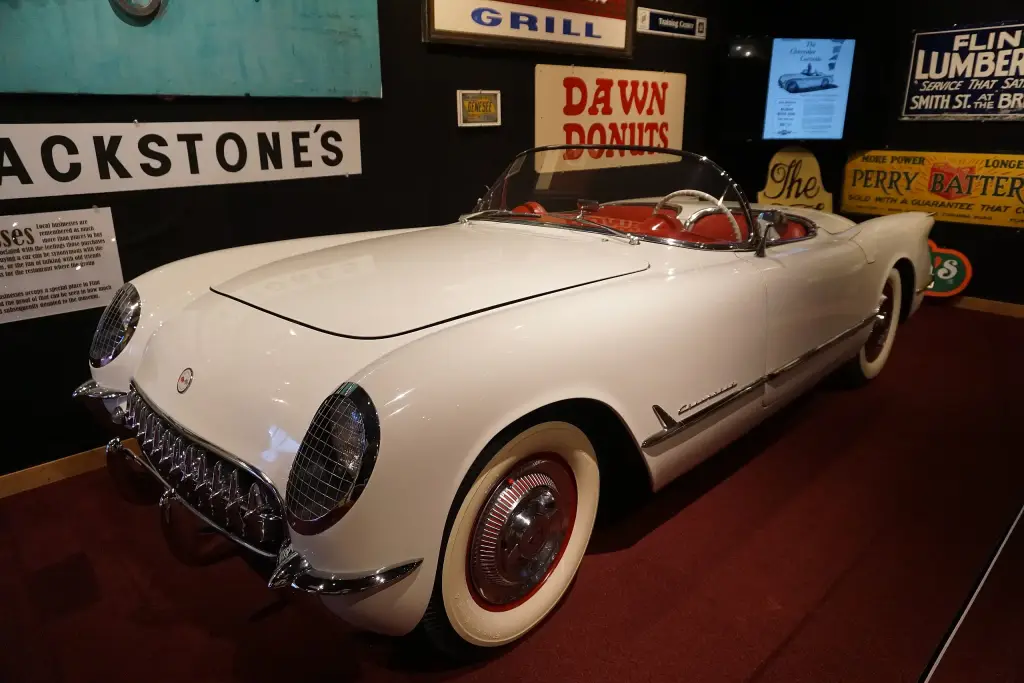

Reviews were mixed and sales fell far short of expectations; GM nearly cancelled the programme, and kept it partly because Ford was developing a two-seater of its own.
1989 Dodge Viper: a concept that was built almost as shown
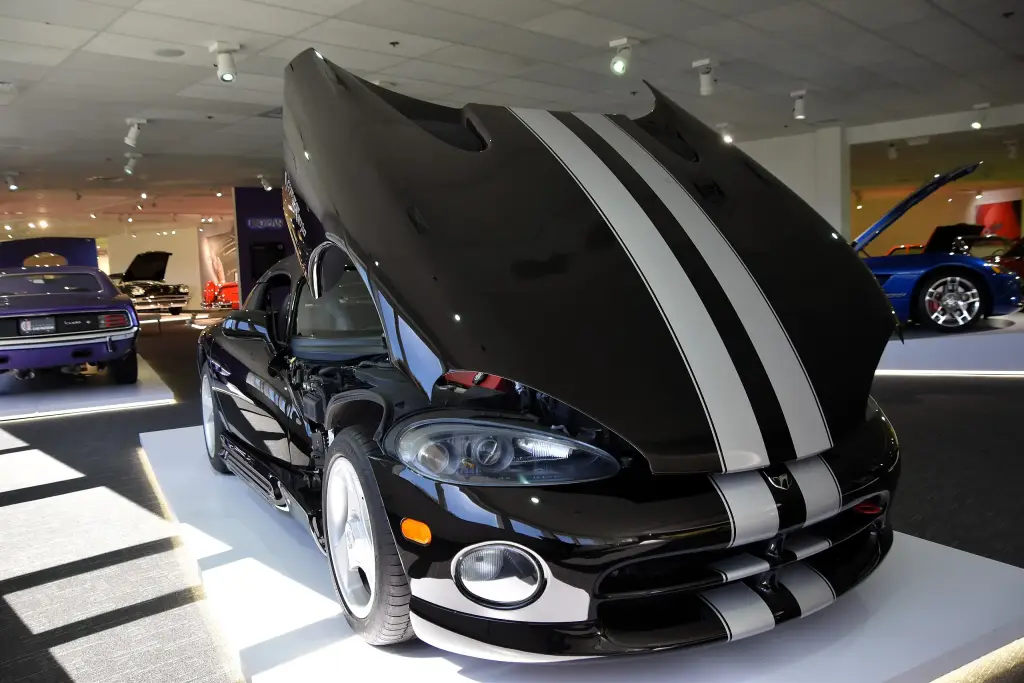
The Viper was conceived at Chrysler’s Advanced Design Studios as a modern-era AC Cobra. A clay model went to Chrysler president Bob Lutz, and a sheet-metal concept appeared at the 1989 Detroit show. Public reaction was so enthusiastic that chief engineer Roy Sjoberg was told to turn it into a production car. About $70 million was needed, which chairman Lee Iacocca was reluctant to approve; accounts differ on how long he hesitated, but official approval is dated May 1990.
What changed on the way was mostly engineering. A V8 powered the test mule, and the V10 intended for production, developed with help from Lamborghini, was ready in February 1990. Because it was engineered first as a performance car, the production Viper had no exterior door handles, no airbags and a canvas roof, and air conditioning arrived only as an option in 1994–95.
Show car, 1989
- Clay model shown to Chrysler’s president a few months earlier
- Sheet-metal concept by Metalcrafters at the 1989 Detroit show
- Pitched as a modern-era AC Cobra
Production car, from 1992
- Official approval came in May 1990; “Team Viper” of 85 engineers started in March 1989
- V8 in the test mule, V10 ready in February 1990
- 400 hp at 4,600 rpm; tubular steel frame with resin-transfer-moulded fibreglass panels
- No exterior door handles, canvas roof, vinyl zip-up windows, no airbags; air conditioning only as an option from 1994–95
- $52,000

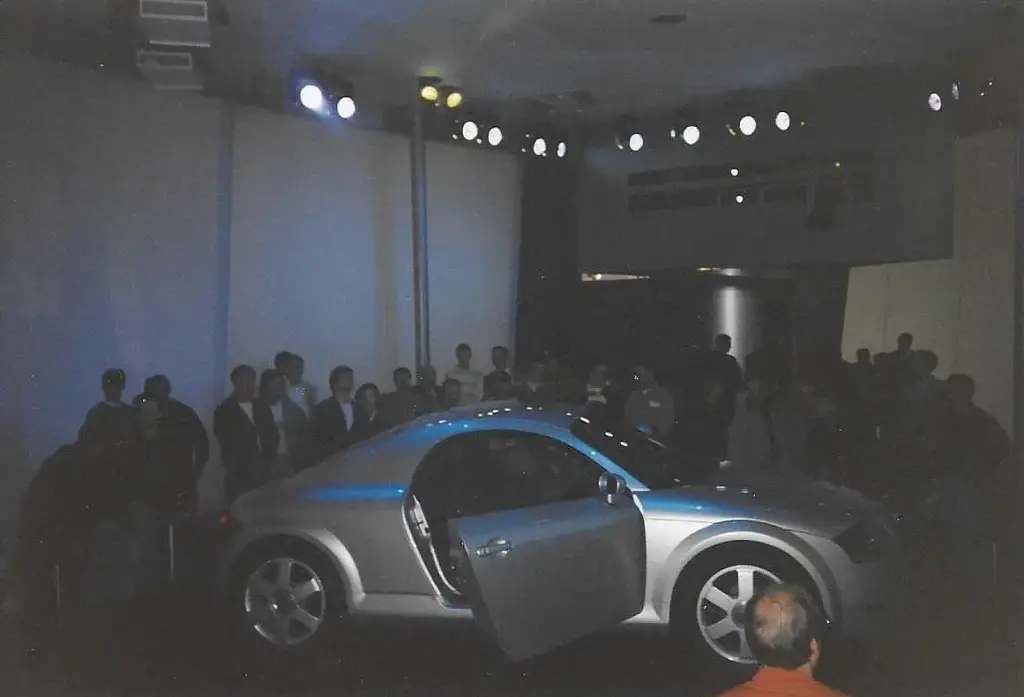
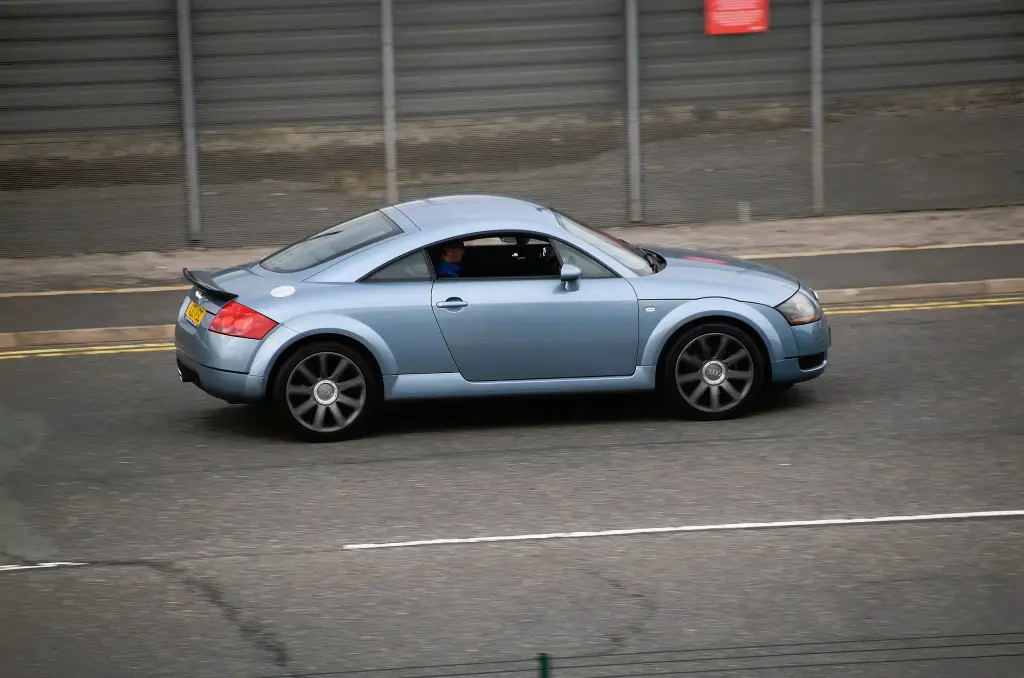
1995 Audi TT: faithful to the show car, then fixed
The TT’s styling began in spring 1994 at the Volkswagen Group Design Center in California, credited to J Mays and Freeman Thomas, and the concept was shown at the 1995 Frankfurt Motor Show. The production car, launched in September 1998, was famously close to it: slightly reprofiled bumpers and the addition of rear quarterlight windows behind the doors were the main visible changes. Making that smooth shape needed laser-beam welding, which delayed the launch.
The lesson came after sale. Early TTs were linked to a series of fatal accidents at speeds over 112 mph, in abrupt lane changes or sharp turns, and both coupé and roadster were recalled in late 1999 or early 2000 to make their high-speed handling more predictable. Electronic stability control, a rear spoiler and suspension changes were added and went into all later cars.
Show car, 1995
- Styling began in spring 1994 at the Volkswagen Group Design Center in California
- Credited to J Mays and Freeman Thomas
- Shown at the 1995 Frankfurt Motor Show
Production car, 1998
- Coupé launched in September 1998, roadster in August 1999
- Styling differed little: slightly reprofiled bumpers and added rear quarterlight windows
- Built on the Volkswagen Group A4 (PQ34) platform shared with the Golf Mk4 and the Audi A3
- Laser-beam welding for seamless body lines delayed its introduction
- Recalled in late 1999 or early 2000 for high-speed handling: ESP or ASR, a rear spoiler and suspension changes


From show to showroom: how long it took
Approximate intervals from the sources above. The Corvette went from Motorama on 17 January 1953 to production six months later; the Viper from the 1989 Detroit show to first retail shipments in January 1992; the TT from the 1995 Frankfurt show to the September 1998 launch. The Mustang I never led to a production car.
What usually changes
- The price. The Corvette ended up at about $3,500 against a $2,000 dream.
- The materials and how they are made. A one-off plastic body had to become a body that can be made by the hundred, or the thousand.
- The engine and drivetrain. Concepts borrow; production cars have to be designed for years of use, as the Viper’s V10 and the Corvette’s off-the-shelf six show.
- The details. Badges, scoops and trim are easy to drop, as on the 1953 Corvette.
- Safety and handling. The TT’s recall shows that a design that looks right can still need electronic aids and a spoiler once real drivers use it.
- The decision itself. The Mustang I and the Viper show that audiences, not drawings, decide what is built, and that the money has to be approved.
Our Concept Cars collection shows many cars that stayed on the show stand.
Concept car questions and answers
Do concept cars ever go into production as shown?
Not directly. Even the most faithful, like the Audi TT, changed bumpers and windows, and a “production-intent” prototype usually sits between the show car and the road car.
Why do concept cars use clay or plastic?
Mock-ups are made of wax, clay, metal, fibreglass or plastic because they exist to show a shape. Many have no working engine.
Who invented the concept car?
General Motors designer Harley Earl is generally credited with it, and the Motorama shows of the 1950s popularised the idea.
What changed most between the 1953 Corvette show car and the road car?
The price, mostly: from a roadster of about $2,000 envisaged by Harley Earl to about $3,500 in showrooms. The look changed in small details such as the script, the fender spear and the scoops.
The Viper and Audi TT figures come mainly from English Wikipedia. Other accounts agree on the dates but differ on details, such as how long Chrysler’s chairman hesitated over the Viper budget.
Sources
- Concept car, English Wikipedia: definition, design, mock-ups, production-intent prototypes
- Ford Mustang I, English Wikipedia: layout, debut, relation to the production Mustang
- The first Mustang prototype: Mustang I, MustangSpecs: engine, weight, dimensions, debut
- Chevrolet Corvette (C1), English Wikipedia: EX-122, price, body material, production
- The EX-122 Corvette, Hobbycar Corvettes: show car versus production car details
- Dodge Viper, English Wikipedia: concept, development, first-generation specification
- Audi TT, English Wikipedia: design, concept, production changes, recall