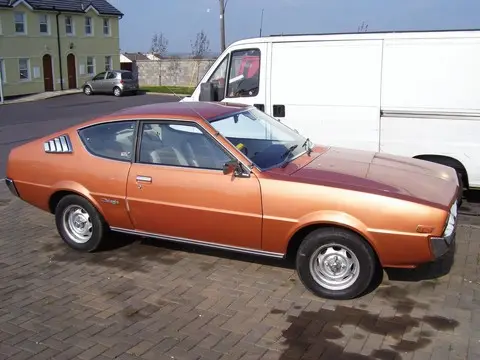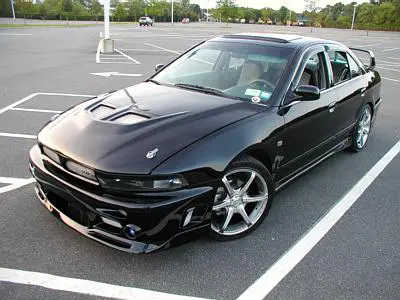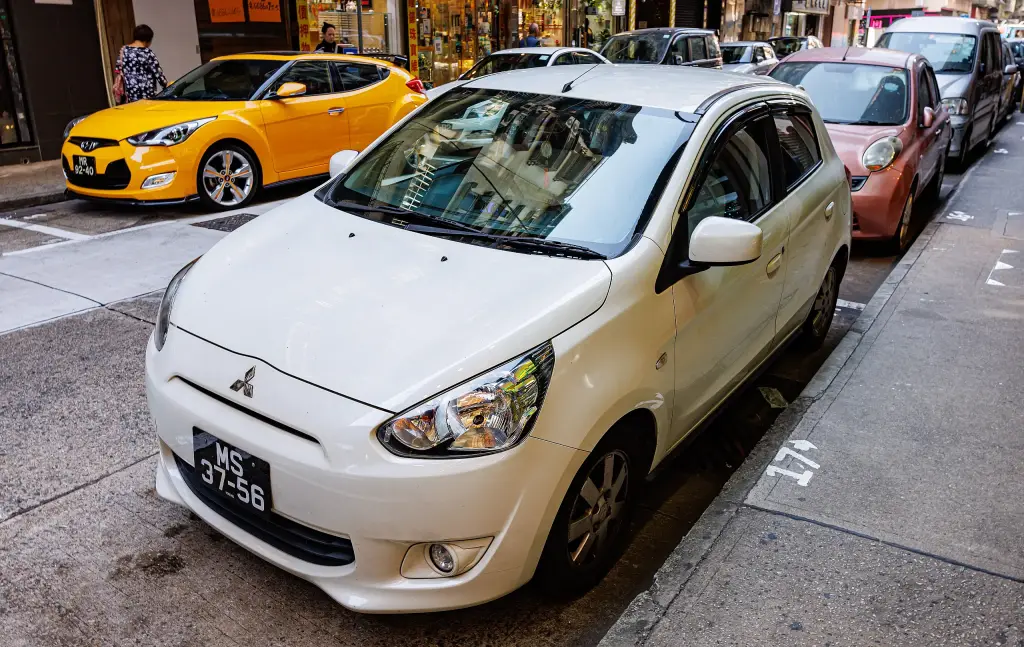
The Mitsubishi Mirage was launched in March 1978 as a front-wheel-drive three-door hatchback, designed as Mitsubishi’s answer to the oil crisis of 1973. In Japan it was sold at the Car Plaza dealerships; in Europe and many other markets the same car carried the Colt name, and in the United States and Canada it was sold through Chrysler as the Dodge Colt and Plymouth Champ. The nameplate ran until 2003 and was revived in 2012.
Colt Mirage at a glance
| Maker | Mitsubishi Motors, Japan |
|---|---|
| Production | 1978–2003, again 2012–2024 |
| Also sold as | Mitsubishi Colt, Dodge Colt, Plymouth Champ and Colt, Eagle Vista and Summit |
| Layout | front-wheel drive |
| Body styles, 1978 | three-door hatchback (A151–153), five-door on a longer wheelbase (A155 and up) |
| Engines, 1978 | 1,244 cc and 1,410 cc Orion, 72 and 82 PS |
| Engine added 1979 | 1.6-litre Saturn, 88 PS, for the 1600 GT |
| Transmission | four-speed manual with a second “Super Shift” lever for low and high range |
| Chassis | four-wheel independent suspension, rack-and-pinion steering, front disc brakes |
| Facelift | February 1982: flush headlamps, new grille and larger tail lights |
| Japanese network | Car Plaza |
Based on one source: the English Wikipedia article on the Mitsubishi Mirage.
History of the Colt Mirage
Mitsubishi launched the Mirage as a front-wheel-drive three-door hatchback in March 1978, as a response to the 1973 oil crisis. A five-door hatchback on a longer wheelbase arrived in September. Because most overseas markets did not have the Minica kei car, the Mirage was usually sold there as Mitsubishi’s entry-level model. Chassis codes ran from A151 to A153 for the three-doors, with A155 and up used for the longer five-door version. The car had four-wheel independent suspension, rack-and-pinion steering and front disc brakes.
Power initially came from 1,244 and 1,410 cc versions of the familiar Orion engine, putting out 72 and 82 PS respectively. The 1,410 cc variant featured “modulated displacement”, a system that could shut down cylinders under cruising or idle conditions to reduce fuel consumption. In March 1979 Mitsubishi added the moderately more powerful 1.6-litre Saturn engine to the range, for the 88 PS 1600 GT model.
Super Shift
The Mirage also debuted Mitsubishi’s Super Shift transmission, a four-speed manual with a second lever for “low” and “high” range, which effectively made it an eight-speed unit. The system was not originally planned. The Orion engine had been designed for rear-wheel-drive applications with a longitudinal layout, but the front-wheel-drive layout of the Mirage required it to be mounted transversely, which in turn put the gearbox beneath the engine. Mitsubishi solved this with an extra “idle” transfer shaft, and realised that, for no more than the cost of developing a new five-speed gearbox, the shaft could be modified as a separate two-speed transmission controlled by a secondary lever beside the main one. The ratios worked as underdrives: the lower setting was marked “power” and the higher overdrive setting “economy”. Mitsubishi promoted it as a unique selling proposition.
Facelift and later names
In February 1982 Mitsubishi facelifted the Mirage range. The revised cars were distinguished by flush-fitting headlamps that extended into the fender panels, a new grille insert and larger tail lights; new firmer engine and transmission mounts were fitted, a new lighter and more rigid transmission case was developed, and the dashboard was updated with rotating “satellite” buttons mounted within fingertip reach. The Mirage name continued through several generations, while sedan versions were widely sold as the Lancer. In Japan a separate domestic model called the Mirage Dingo was sold from 1999 to 2003, and New Zealand received a rebadged Dutch-built Space Star as the Mirage Space Star from 2002 to 2003.
End of the first line
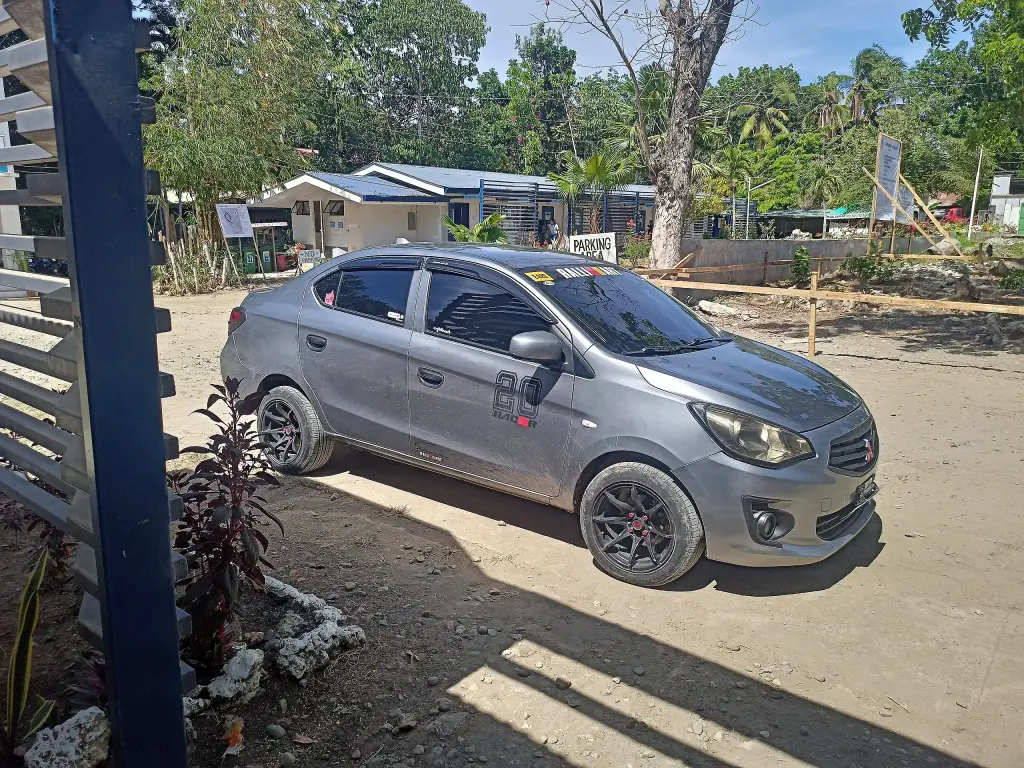
The Mirage and its derivatives had been phased out of mainstream Japanese production by 2003, the hatchback role passing to a new Colt in 2002. For that Colt’s replacement in 2012, Mitsubishi revived the Mirage name internationally for a new sixth generation, which remained on sale until 2024.
Design and features
- Front-wheel drive: a first for this class at Mitsubishi, with four-wheel independent suspension and front disc brakes.
- Orion engines: 1,244 and 1,410 cc units of 72 and 82 PS, the larger with modulated displacement.
- Super Shift: an eight-speed effectively, using a second lever for low and high range.
- Light and economical: conceived as the answer to the 1973 oil crisis.
- Many names: Colt in Europe, Dodge Colt and Plymouth Champ in North America, Lancer for the sedans.
Colt Mirage versions
- Three-door hatchback (1978): the original A151–153 body.
- Five-door hatchback (1978): longer wheelbase, A155 and up.
- 1600 GT (1979): 1.6-litre Saturn engine with 88 PS.
- 1982 facelift: flush headlamps, new grille and lights, revised dashboard.
- Mirage Dingo (1999–2003): separate Japanese domestic model.
- Sixth generation (2012–2024): the revived international Mirage.
The Mirage followed the rear-wheel-drive Colt Galant in Mitsubishi’s range and shared its market with the Colt Celeste coupé. More cars are in the Colt collection.
Video: Quickest Mitsubishi Colt AWD in germany 978HP & 871Nm
Video on YouTube.
Sources
- Mitsubishi Mirage, English Wikipedia: launch, engines, Super Shift, facelift, nameplate history