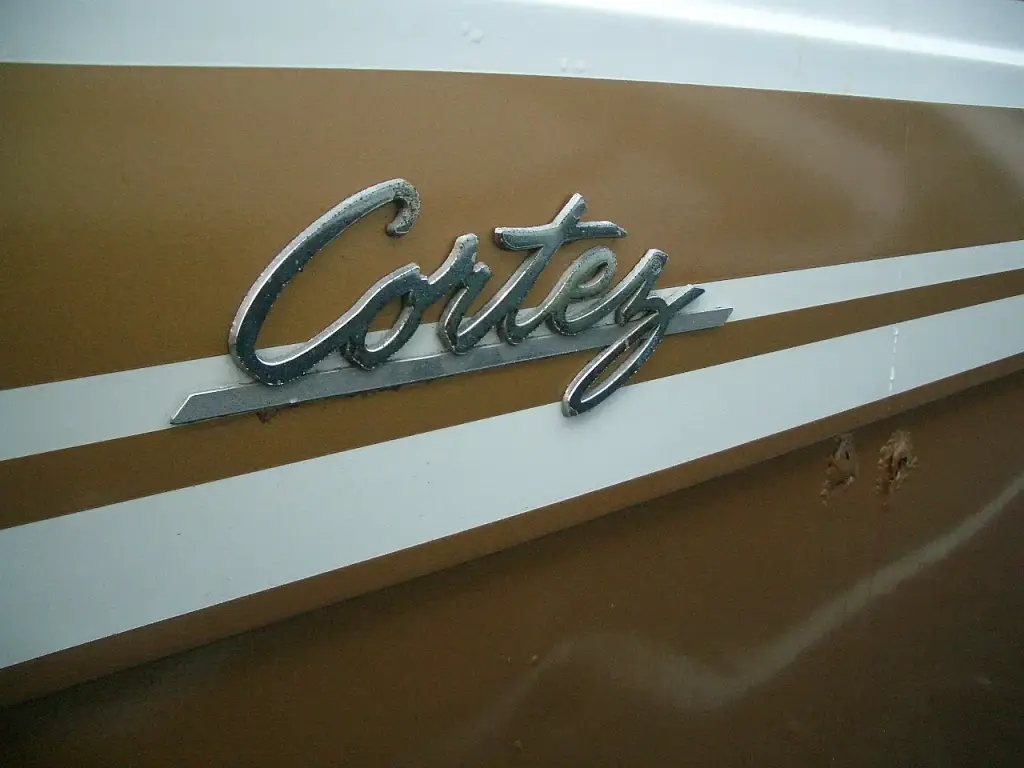
The Clark Cortez was a small Class-A motorhome built by the Clark Forklift Company in Battle Creek, Michigan, from 1963 to 1979. It used front-wheel drive to free the floor of a driveshaft tunnel, and over its life it passed from a Chrysler slant-six to Ford and Oldsmobile V8 power. A total of 3,211 units were built.
Clark Cortez at a glance
| Maker | Clark Forklift Company, Battle Creek, Michigan |
|---|---|
| Production | 1963–1979 |
| Built | 3,211 units |
| Class | Class-A motor coach (motorhome) |
| Layout | front-wheel drive with a four-speed manual transaxle |
| Early engine | Chrysler 225 cu in industrial slant-six |
| From 1969 | Ford 302 cu in V8, four-speed manual transaxle |
| From 1971 | Oldsmobile Toronado 455 cu in V8 with GM three-speed automatic |
| Built as | motorhomes, mobile offices, classrooms and ambulances |
| Notable use | NASA astronaut transfer, Apollo 7 to STS-6 |
| Later names | Kent Cortez from 1971; Cortez Inc. parts and conversions from about 1980 |
Based on one source, the English Wikipedia article on the Cortez Motor Home; it does not give dimensions, weights or prices.
History of the Clark Cortez
A motorhome from a forklift maker
The Clark Forklift Company began making these small motorhomes in 1963 in Battle Creek, Michigan, and they are commonly called Clark Cortez motorhomes. The entire body of a Class-A motor coach is built as a recreational vehicle, unlike a Class-B motorhome, which uses a van body, or a Class-C, which adds a coach body to a truck chassis and cab. A four-speed manual front-wheel-drive transaxle was chosen to eliminate the driveshaft tunnel that would otherwise have increased the height of the vehicle or reduced interior headroom. Early units used a Chrysler 225 cu in industrial slant-six engine.
Ford and Oldsmobile power
In 1969 a V8 engine was introduced, the Ford 302 cu in, still with the four-speed manual transaxle. In 1971 the Cortez adopted the Oldsmobile Toronado front-wheel transaxle with a 455 cu in engine and a GM three-speed automatic, a combination that set the pattern for the later coaches.
Kent Cortez and the end of production
In 1970 Clark Forklift sold the Cortez Motorhome division to Alco-Standard’s Kent Industries of Kent, Ohio, and the motorhomes produced from 1971 are commonly called Kent Cortez motorhomes. In 1975 the company was acquired by 26 owners of Cortez coaches, and production continued through 1978, when the company folded; a final batch of units was completed by a bank in 1979.
Parts, service and conversions
James Krantz purchased the tooling, spare parts and a few unfinished units around 1980 and moved the operation to Lafayette, Louisiana. There, as Cortez Inc., he sold parts, performed service and carried out drivetrain conversions of earlier Clark Cortez units to the V8 automatic transaxle used from 1971. Operations ceased in Lafayette around 1990, and the remaining parts and drawings were scrapped by the late 1990s.
What the Cortez was used for
Clark management had envisaged a variety of uses for the Cortez, and they were made as mobile offices, classrooms and ambulances. NASA used a Cortez to take astronauts from Apollo 7 through STS-6 to the launch pad; that vehicle is now in a museum at the Kennedy Space Center Visitor Center. The surgeon Walter Freeman toured the United States in a Cortez, and the vehicle earned the public name of the “lobotomobile”. The actor Vincent Price was a devoted owner, and Cortez motorhomes still have a following: enthusiasts value the all-steel body despite its rust problems, the smooth ride and the moderate size.
Design and features
- Front-wheel drive: the transaxle removed the need for a driveshaft tunnel, keeping the floor low and headroom intact.
- All-steel body: owners still prize the steel construction, although rust is a known weakness.
- Smooth ride and moderate size: the qualities that keep the Cortez popular with enthusiasts.
- Engine options over time: Chrysler slant-six, Ford 302 V8 and Oldsmobile 455 V8.
- Working roles: the same body served as a motorhome, mobile office, classroom and ambulance.
Clark Cortez versions
- Early Clark Cortez (1963–1968): Chrysler 225 cu in slant-six with the four-speed manual transaxle.
- Ford V8 Cortez (1969–1970): Ford 302 cu in V8, still with the four-speed manual transaxle.
- Kent Cortez (1971–1979): Oldsmobile Toronado transaxle, 455 cu in V8 and three-speed automatic.
- Cortez Inc. conversions (from about 1980): earlier Clark Cortez units converted to the V8 automatic transaxle.
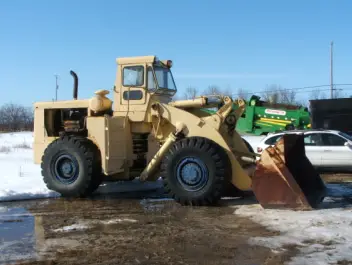
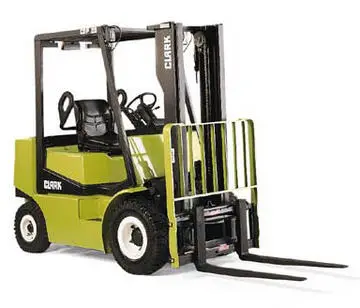
The Cortez came from the same company as Clark Michigan, its earthmoving division, while Clark’s forklift business is covered in the Clark CGP 20 article. More Clark machines are in the Clark collection.
Sources
- Cortez Motor Home, English Wikipedia: production, engines, ownership history and users