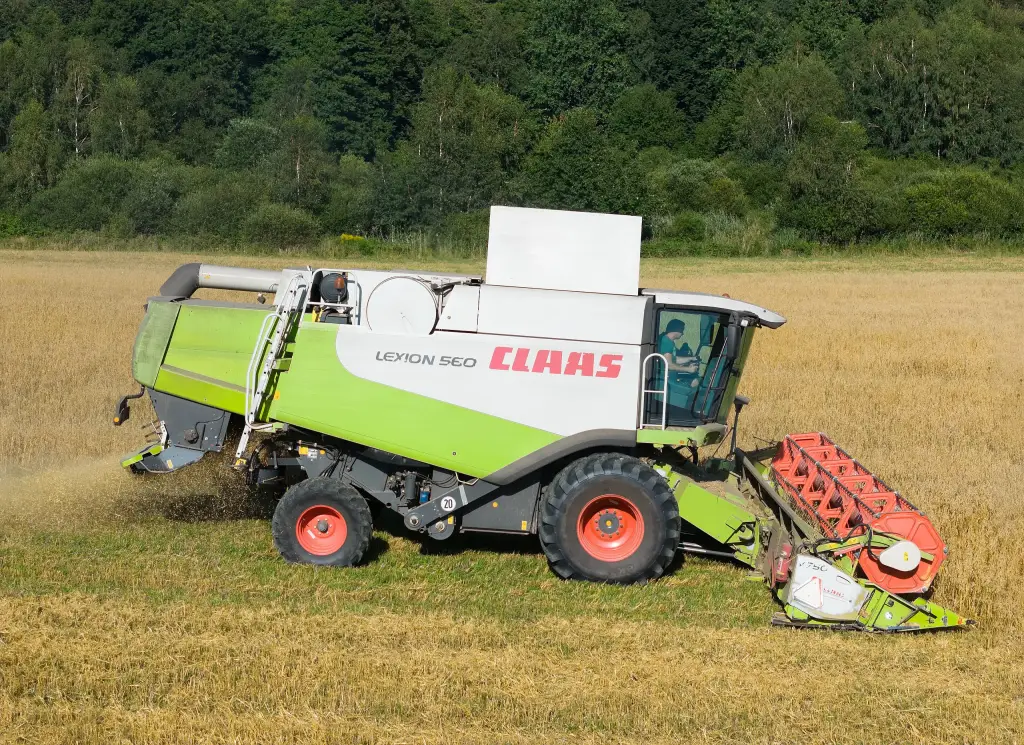
The Claas Lexion is a range of combine harvesters built by Claas in Harsewinkel, Germany, and first presented in 1995. The line has carried the title of the world’s most powerful combine twice, with the Lexion 480 at its launch and the Lexion 600 in 2005.
Claas Lexion at a glance
| Maker | Claas, Harsewinkel, Germany |
|---|---|
| Also built | by Claas Omaha Inc. in the United States |
| Introduced | 1995, with the Lexion 480 |
| Lexion 480 output | 40 tonnes of grain per hour |
| Threshing | two separation rotors in the 400, 700, 7000 and 8000 series |
| Straw-walker versions | six walkers in the 500, 600 and 6000 series; five in the 5000 series |
| North America | sold as the CAT Lexion under the Caterpillar brand from 1999 |
| Lexion 600 (2005) | up to 12 m cutting width, 12,000 litre grain tank, 60,000 kg per hour |
| Lexion 700 | presented in 2010 |
| Tier 4 engines | introduced in 2013 |
| Lexion 8900 (2019) | 581 kW (779 hp) MAN D42 engine |
History of the Claas Lexion
The Lexion 480 (1995)
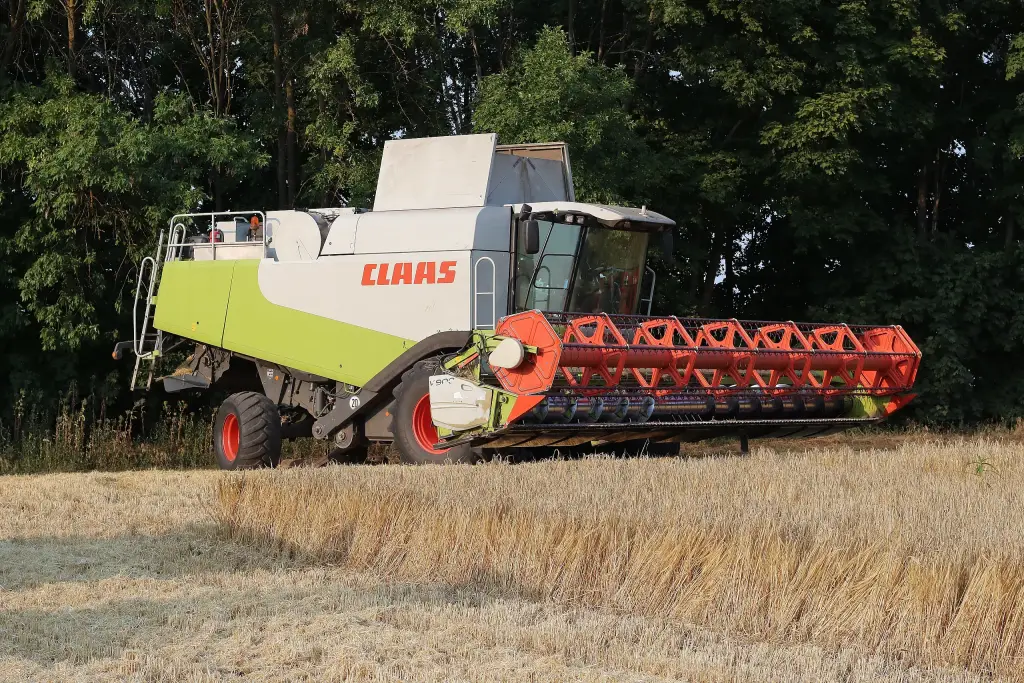
The Lexion was presented in 1995 and its first model was the Lexion 480. It could harvest 40 tonnes of grain an hour and was at the time the most powerful combine harvester in the world. It kept the accelerator drum in front of the threshing drum that Claas had used on the Mega, but with a larger threshing drum: 600 mm in diameter and 1,700 mm wide instead of 450 mm and 1,580 mm. Instead of straw walkers the machine had two separation rotors, which made it run smoothly and gave a much higher throughput than a conventional straw-walker combine.
The Caterpillar years
From 1999 Claas worked with the American manufacturer Caterpillar and sold Lexion combines in North America under the CAT brand. In 2002 Claas took over 50 per cent of the joint venture with Caterpillar and the combine harvester production in the United States, and the machines built there were still marketed as CAT Lexion. In Europe the combines kept the Claas name.
Lexion 600, 700 and 8900
At Agritechnica in 2005 Claas showed the Lexion 600, with a cutting width of up to 12 metres, a grain tank of 12,000 litres and a performance of up to 60,000 kilograms per hour; it was again the most powerful combine harvester in the world. The Lexion 700 followed in 2010, and in 2013 Claas introduced engines to the Tier 4 emission standard. The Lexion 8900 of 2019 uses a 581-kilowatt MAN D42 engine and belongs to the same ten-tonne class as the Fendt Ideal presented in 2020.
Two ways of separating the grain
The Lexion range has always been split between machines with straw walkers and machines with two separation rotors. The rotors carry the grain backwards and shake it out of the straw, while walkers let the straw travel over a series of steps. Claas has built both kinds side by side, and the series numbers tell them apart: the 400, 700, 7000 and 8000 have two rotors, while the 500, 600 and 6000 have six straw walkers and the 5000 has five.
Design and features
- Accelerator drum and threshing drum: the layout was carried over from the Mega with a larger drum on the Lexion 480.
- Separation rotors: two rotors instead of straw walkers gave a smoother run and higher throughput.
- Record capacity: 40 tonnes an hour in 1995 and 60,000 kilograms an hour with the Lexion 600 in 2005.
- American production: combines built in the United States after the Caterpillar joint venture.
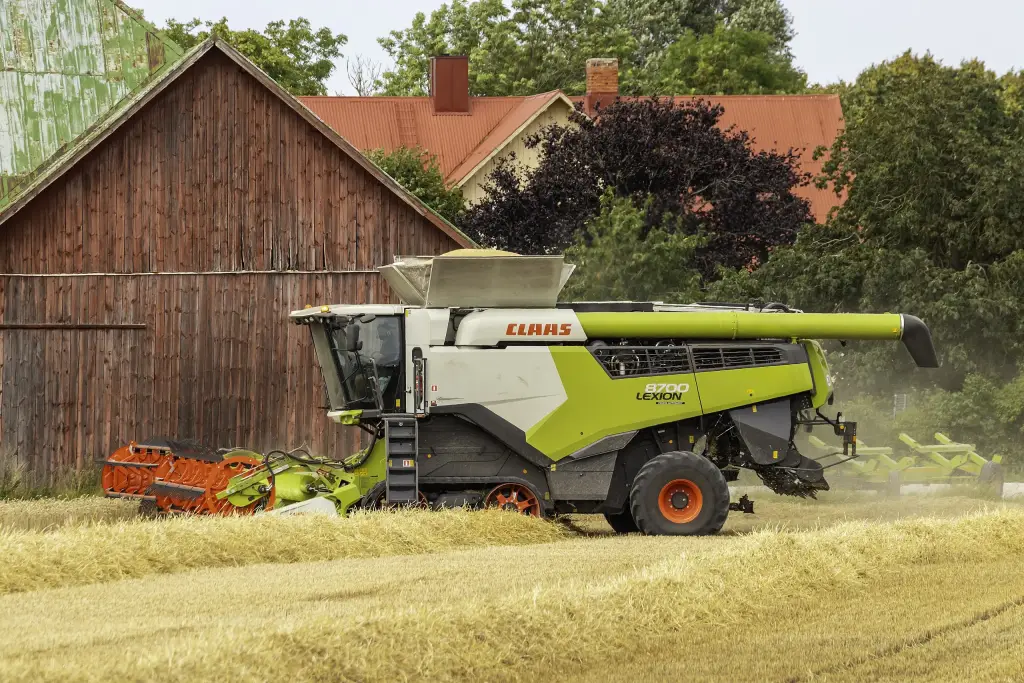
Claas Lexion versions
- 400 series: two separation rotors.
- 500 series: six straw walkers.
- 600 series: six straw walkers, headed by the Lexion 600 of 2005.
- 700 series: two separation rotors, from 2010.
- 5000 and 6000 series: five and six straw walkers.
- 7000 and 8000 series: two separation rotors; the 8900 of 2019 belongs to the 8000 line.
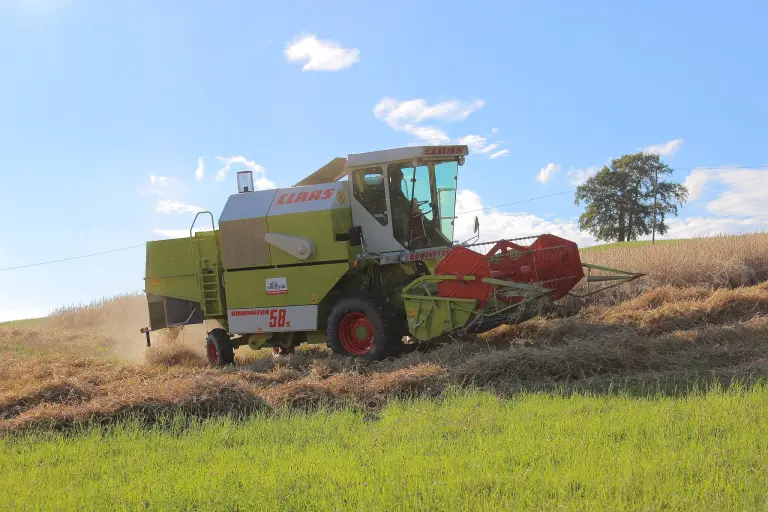
Other Claas machines are in our Claas collection: the Cougar mower and the Dominator combines that came before the Lexion.
Video: Claas Lexion 780 TT combines at work
Video on YouTube.
Sources
- Claas Lexion, English Wikipedia: history, models, engines and series