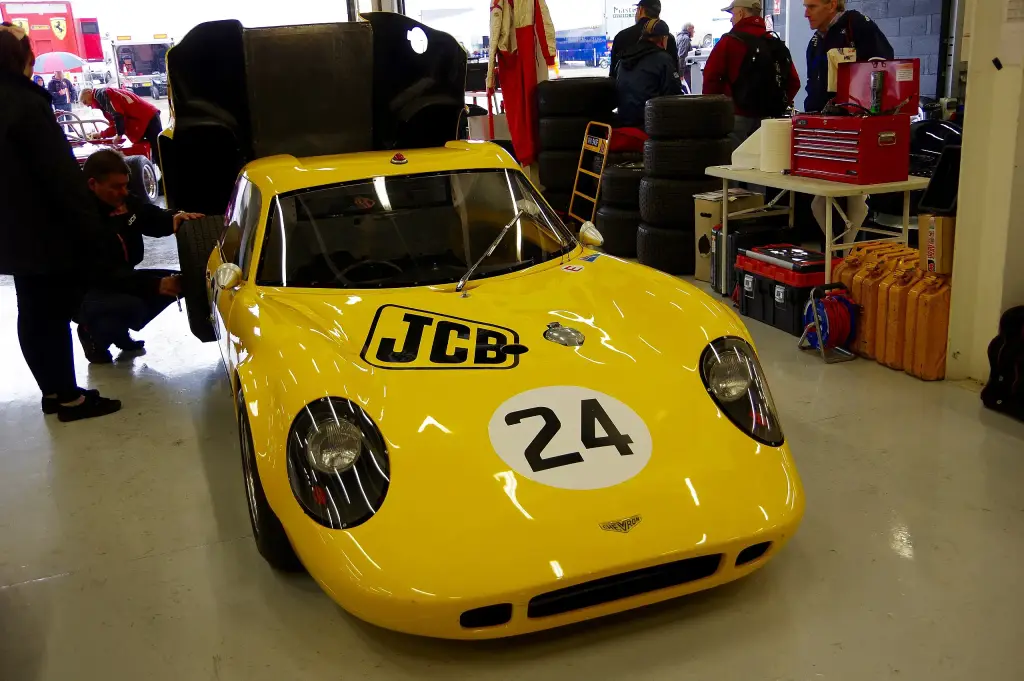
The Chevron B8 is a lightweight sports racing car designed, developed and built by the British manufacturer Chevron Cars in 1968. Homologated in the prototype category of the International Automobile Federation, it was produced in a run of only 44 cars and remained in competition for the best part of two decades.
Chevron B8 at a glance
| Maker | Chevron Cars, Bolton, England |
|---|---|
| Year | 1968 |
| Class | sports racing car, prototype category |
| Engines | Ford-Cosworth FVA, BMW M10, Coventry Climax FPF |
| Layout | four-cylinder, mid-mounted |
| Power | 200–225 hp (149–168 kW) |
| Body | lightweight open two-seater |
| Built | 44 |
| First race | 1967, Danube Cup |
| Racing career | into the mid-1980s |
Based on one source, the English Wikipedia article on the B8, which gives both thirty-six and fifty-two race wins; the larger figure, for the whole racing career, is used here.
History of the Chevron B8
A small car for a small maker
The B8 was the work of Chevron Cars, a British constructor that built its reputation on light, simple racing cars for private owners rather than works teams. The B8 followed the same recipe: a compact open two-seater with a four-cylinder engine in the back, sold to drivers who raced it themselves. The car was homologated in the prototype category of the International Automobile Federation, which set the class it competed in.
Racing history
The B8 first appeared in competition in 1967, at the Danube Cup, where Digby Martland finished sixth overall. From there the model spread through club and international sports car racing and stayed in use for far longer than most cars of its generation: it was still being raced until 1986. Over that career the type is credited with a total of 52 race wins, 127 podium finishes, 18 fastest laps and 45 class victories. The scale of that record reflects not raw speed alone but the number of cars in private hands and the ease with which they could be kept running.
A long life
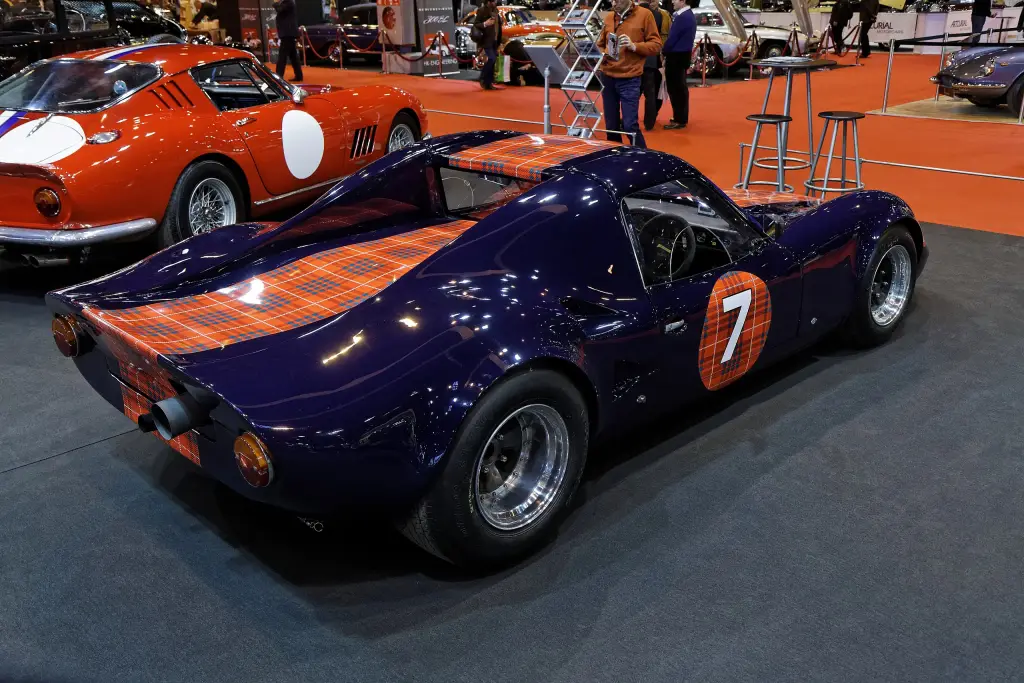
Because the B8 was built in small numbers and used a simple tubular structure with a four-cylinder engine, it survived into historic racing long after its contemporary rivals had disappeared. Cars still appear at events such as the Silverstone Classic and the Estoril Classics, usually in the colours of the private teams that campaigned them in period.
Design and features
- Light weight: the whole design was built around a small, simple open body and a four-cylinder engine.
- Engine choice: customers could fit the Ford-Cosworth FVA, the BMW M10 or the Coventry Climax FPF.
- Prototype homologation: the B8 raced in the FIA prototype category rather than a production class.
- Privateer appeal: simple construction made the car practical for owner-drivers to run and repair.
Chevron B8 versions
- Ford-Cosworth FVA cars: the racing four-cylinder developed by Cosworth.
- BMW M10 cars: the production-based BMW four, a cheaper and more robust alternative.
- Coventry Climax FPF cars: the veteran British racing four used in earlier sports racers.
- Later historic specification: cars rebuilt for historic racing from the 1980s onwards.
The B8 was followed in Chevron’s sports car line by later models, including the open-wheel Chevron B38 of 1977. More cars from the marque are in the Chevron collection.
Video: Chevron B8 SOUND On The Track – Full Throttle Accelerations, Flames & More
Video by 19Bozzy92 on YouTube.
Sources
- Chevron B8, English Wikipedia: design, engines, production, racing record