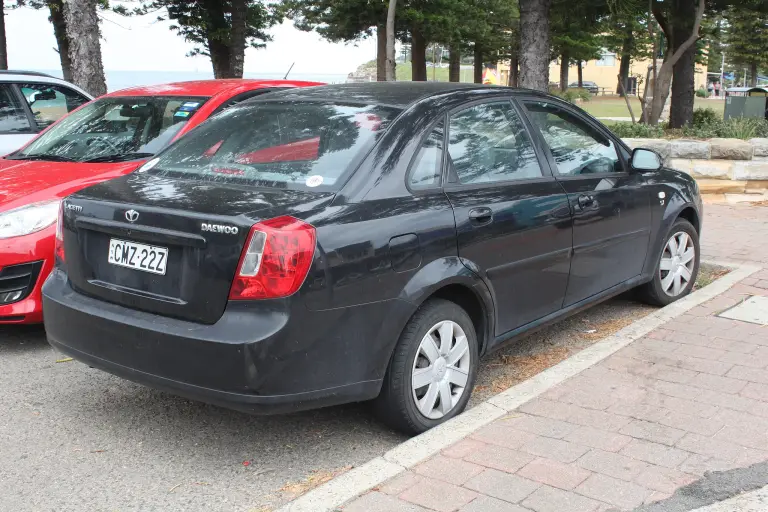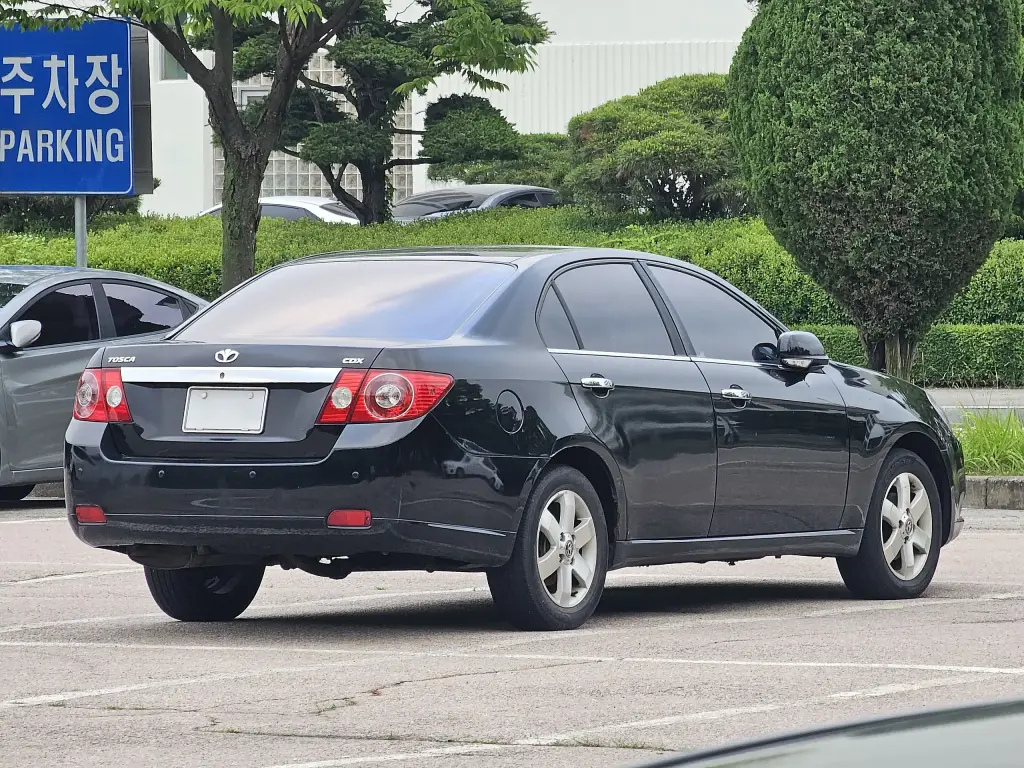
The Chevrolet Epica was the European and export name of the Daewoo Tosca, a front-wheel-drive mid-size car introduced at the 2006 Geneva Motor Show. Its unusual feature was a Porsche-designed straight-six mounted transversely under the bonnet, and it was replaced by the Chevrolet Malibu.
Chevrolet Epica at a glance
| Production | 2006–2011 in Korea, to 2014 in China |
|---|---|
| Class | Mid-size car |
| Internal code | V250 |
| Related to | Daewoo Magnus (sold as the earlier Chevrolet Evanda) |
| Layout | Front-wheel drive, transverse engines |
| Petrol engines | 1.8 four, 2.0 and 2.5 straight-six (XK family) |
| Diesel | 2.0 common-rail, 150 hp, from 2007 |
| Gearboxes | Five-speed manual, four-speed automatic; six-speed automatic from 2008 |
| Other names | Daewoo Tosca, Holden Epica, Chevrolet Tosca |
| Replaced by | Chevrolet Malibu |
The article is based on the English Wikipedia page on the Daewoo Tosca, which covers the Chevrolet Epica version.
History of the Chevrolet Epica
The Tosca was designed entirely in-house at Daewoo, unlike its V100 Leganza and V200 Magnus predecessors, which were styled by Giugiaro. GM Daewoo said the name stood for ‘Tomorrow Should Come Always’, and it is also the title of a Puccini opera. The Chevrolet Epica name had already been used on the V200 Magnus in Canada, Latin America, China, Europe, Arabia and Micronesia, so the new car continued a name buyers in some markets already knew. It was launched in Europe at Geneva in 2006, and from April 2007 it was sold in Australia and New Zealand as the Holden Epica, replacing the Opel-sourced Holden Vectra. It was also built and sold in Kazakhstan from June 2007, and in Iceland it was badged Chevrolet Tosca.
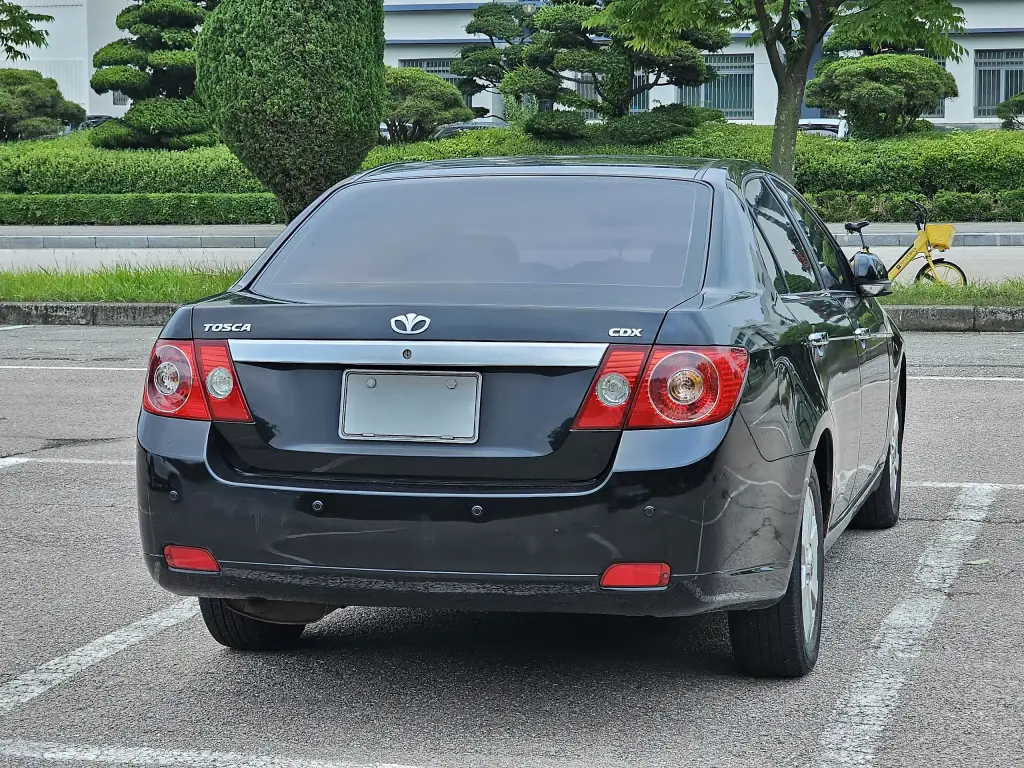
What set the Tosca apart was its engine range. Daewoo’s XK straight-six engines were designed by Porsche, and in the Tosca they were mounted transversely, which required a very compact and tightly packed installation. The car was launched with a 2.5-litre carried over from the Magnus and a new 2.0-litre six, and a 1.8-litre four was offered in Korea from 2006, with a five-speed manual or four-speed automatic. In early 2007 a 2.0-litre common-rail turbodiesel with 150 hp and 320 Nm joined the range, developed by GM Powertrain, GM Daewoo and VM Motori and already used in the Daewoo Winstorm; it was the first diesel in a Daewoo car. Early 2008 brought a six-speed automatic and a revised rear end with new lights and bumper.
Daewoo production ended in early 2011 when the Daewoo brand was renamed Chevrolet in South Korea, and Holden dropped the Epica the same year because of weak sales. Chinese production ran from March 2007 to 2014. The model was replaced by the Chevrolet Malibu, which was then built in South Korea for the first time, and in Europe its place in the range had already been taken by the same car.
Design and features
- Transverse straight-six: a rare layout, made possible by a compact Porsche-designed engine.
- Three petrol engines: a 1.8 four and 2.0 and 2.5 straight-sixes.
- First Daewoo diesel: the 2.0 common-rail unit arrived in 2007.
- Many names: Daewoo Tosca, Holden Epica and Chevrolet Tosca in different markets.
Chevrolet Epica versions
- 2.0 and 2.5 six: the original petrol range with manual or automatic gearboxes.
- 1.8 four: the smaller engine for the Korean market.
- 2.0 VCDi diesel: the 150 hp common-rail version from 2007.
- Holden Epica: the Australian and New Zealand version of 2007–2011.
The Epica replaced the Chevrolet Alero in Europe and was itself replaced by the Chevrolet Malibu. More cars are in the Chevrolet collection.
Video: 2004 Chevrolet Epica walkaround
Video by Justins Car Reviews on YouTube.
Sources
- Daewoo Tosca, English Wikipedia: design, engines, markets, production