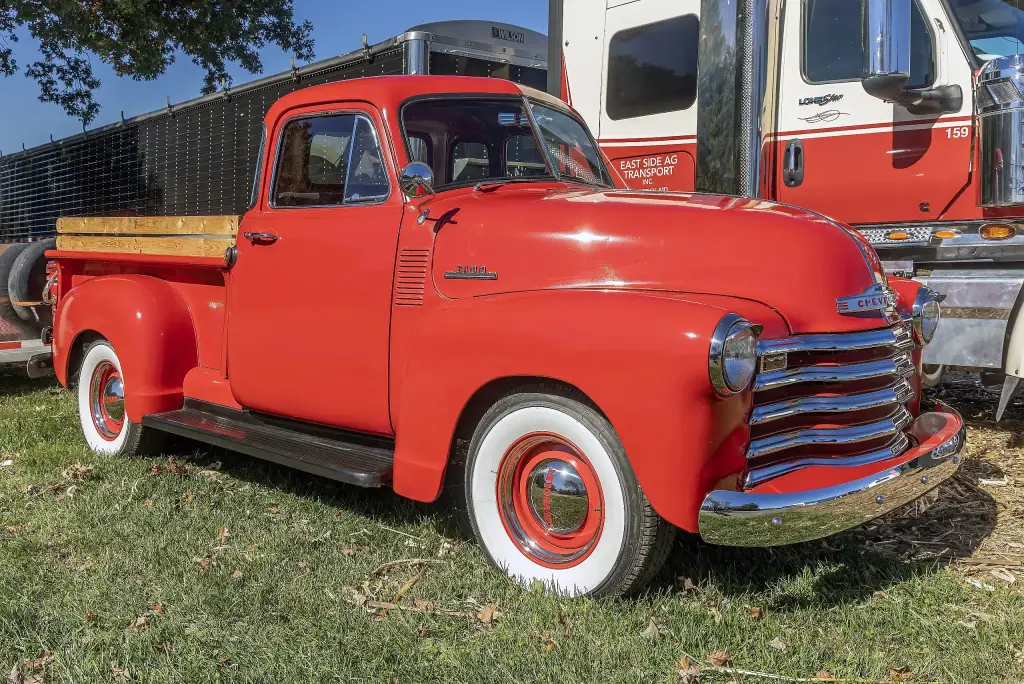
The Chevrolet Advance-Design was the company’s first major truck redesign after the Second World War and its light and medium-duty range from June 1947 until March 1955. Known today for its rounded cab and five-bar grille, it was the best-selling truck in the United States in every year it was built.
Chevrolet Advance Design at a glance
| Production | June 1947 – March 1955 |
|---|---|
| Replaced | Chevrolet AK Series |
| Replaced by | Chevrolet Task Force |
| GMC equivalent | GMC New Design |
| Capacities | Half-ton 3100, three-quarter-ton 3600, one-ton 3800 |
| Body styles | Pickup, Suburban, panel van, canopy express, cab-over |
| Engines 1947–1953 | 216 cu in inline six |
| Engines from 1954 | 235 and 261 cu in inline six |
| 1954 changes | One-piece curved windscreen, bull-nose grille, Hydramatic option |
| Sales record | number one truck in the United States, 1947–1955 |
History of the Chevrolet Advance Design
The Advance-Design was introduced on 28 June 1947 as a larger, stronger and sleeker successor to the AK Series. The same basic design family covered every truck in the range, including the Suburban, panel trucks, the canopy express and the cab-overs; the cab-over used the same cab and a similar grille but a shorter, taller bonnet and different wings, which required its own cowl. From 1947 until 1955 Chevrolet trucks were the best-selling trucks in the United States, with rebadged versions sold through GMC dealers as the GMC New Design.
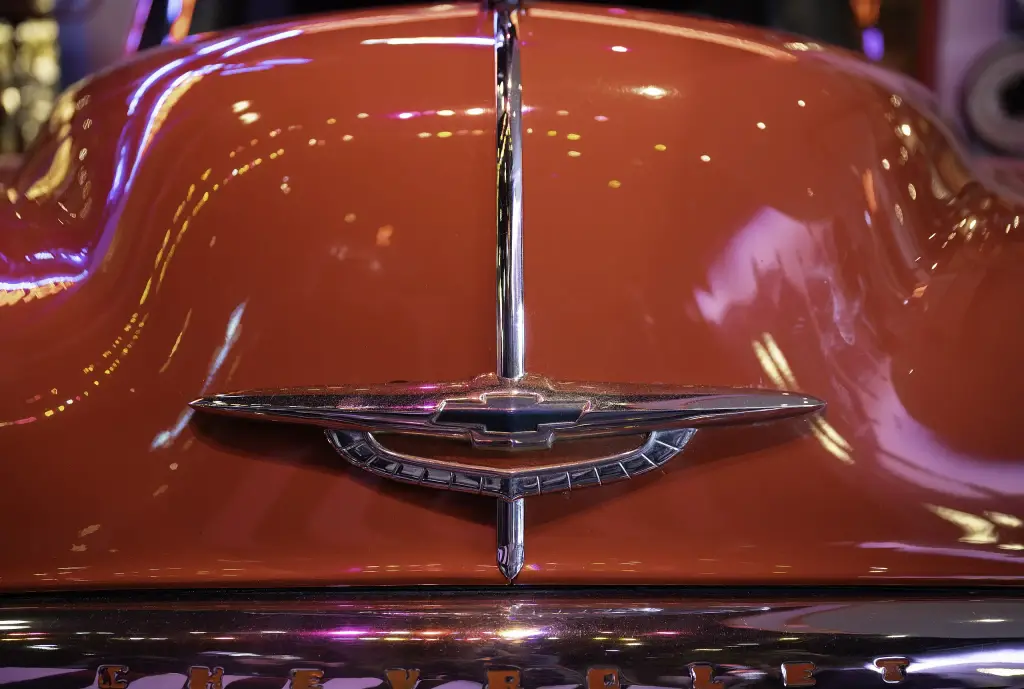
The range changed little from year to year, which makes the annual differences a useful guide to dating a truck. In 1948 the gear lever moved from the floor to the steering column. In early 1949 the fuel tank moved upright behind the seat, and from late 1949 the bonnet emblems carried cargo-capacity numbers instead of the Thriftmaster and Loadmaster names: 3100 for the half-ton, 3600 for the three-quarter-ton and 3800 for the one-ton. Telescopic shock absorbers replaced lever-action units in 1950, vent windows arrived in 1951, push-button door handles and a 90 mph speedometer in 1952, and 1953 was the last year for the 216 cu in six and for wooden blocks under the load bed.
The 1954 model year was the only one with significant design changes: a one-piece curved windscreen without the centre divider, a revised steering wheel and dashboard, horizontal bed rails, round tail lights and the crossbar ‘bull-nose’ grille. The new engines were the 235 and 261 cu in sixes, and the Hydramatic automatic transmission and a new two-ton 6500 model became available for the first time. The 1955 First Series differed from 1954 mainly in its bonnet emblems and an open driveshaft in place of the enclosed torque tube, before the Task Force range took over in March 1955. The Advance-Design style was later echoed by the Chevrolet SSR and the Chevrolet HHR.
Design and features
- One cab, many trucks: pickups, Suburbans, panel vans and cab-overs shared the same basic cab and front sheet metal.
- Numbered by capacity: the 3100, 3600 and 3800 bonnet badges of 1949 onwards still name the trucks today.
- 1954 bull-nose grille: the crossbar grille and curved one-piece windscreen of the final full year.
- Design legacy: the shape returned on the 2003–2006 Chevrolet SSR and the 2006–2011 Chevrolet HHR.
Chevrolet Advance Design versions
- 3100 half-ton: the standard pickup in short and long wheelbase.
- 3600 three-quarter-ton: the heavier pickup and chassis-cab.
- 3800 one-ton: the heaviest of the light range.
- Suburban and panel: the carry-all and the closed van on the same chassis.
- Cab-over: a short-bonnet, high-cab version with its own front end.
The Advance-Design was replaced by the Chevrolet Task Force, and its chassis lived on under the early Suburban. More trucks are in the Chevrolet collection.
Sources
- Chevrolet Advance Design, English Wikipedia: production years, yearly changes, engines