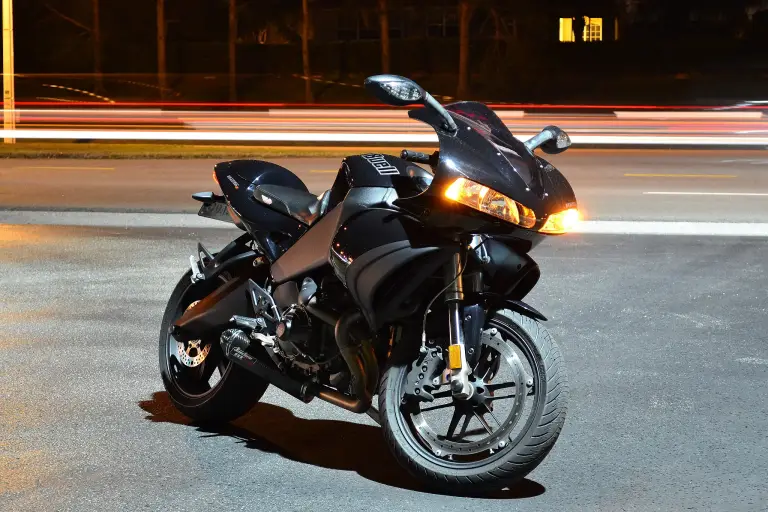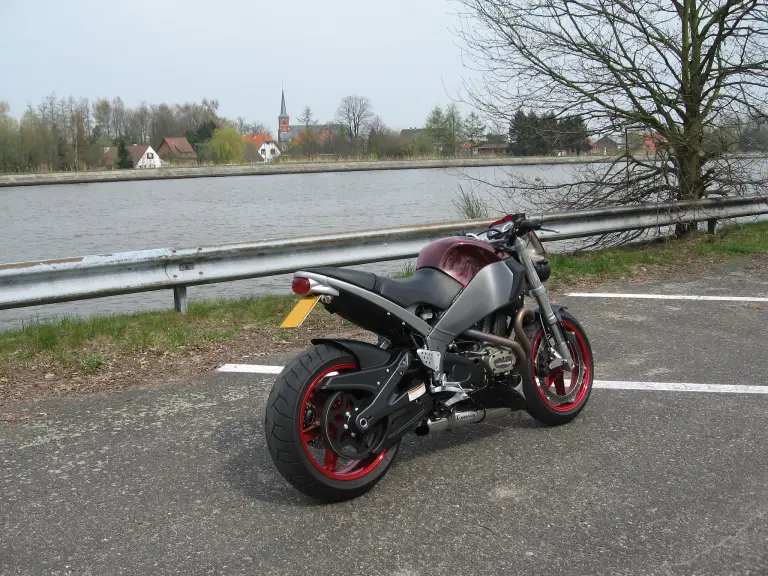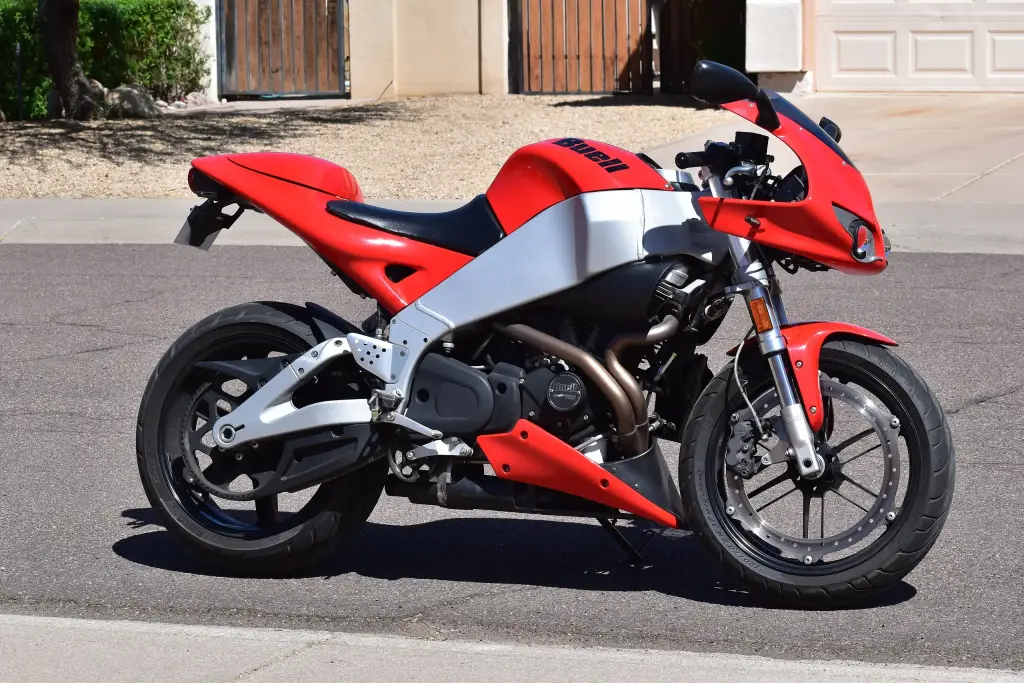
The Buell XB9 was the first of Buell’s XB series and the clearest statement of the company’s ideas about mass centralisation. Fuel lives inside the frame where a conventional motorcycle keeps its airbox, the oil sits in the swingarm, and the front brake is mounted on the rim instead of the hub.
Buell XB9 at a glance
| Maker | Buell Motorcycle Company, United States |
|---|---|
| Production | 2002–October 2009 |
| Engine | 984 cc 45° V-twin of Harley-Davidson origin, air and oil cooled, 10:1 |
| Valve gear | two pushrod-operated valves, hydraulic lifters |
| Fuel system | electronic fuel injection, 45 mm throttle body |
| Lubrication | dry sump, oil carried in the swingarm |
| Fuel tank | inside the frame |
| Gearbox | five-speed |
| Final drive | toothed belt |
| Front brake | perimeter disc on the rim, six mounting points |
| CityX XB9SX power | 92 hp at 7,500 rpm |
History of the Buell XB9
The XB9 was introduced in 2002 and built until all Buell production stopped in October 2009. Its engine was a 45° V-twin of Harley-Davidson origin, air and oil cooled, with a total displacement of 984 cc and a 10:1 compression ratio. Lubrication is by dry sump, the exhaust runs under the engine in a 2-into-1 layout, and two pushrod-operated valves per cylinder work through hydraulic lifters with hydraulic clearance compensation. Electronic fuel injection feeds it through a 45 mm throttle body, and a five-speed gearbox sends drive to a toothed final belt.
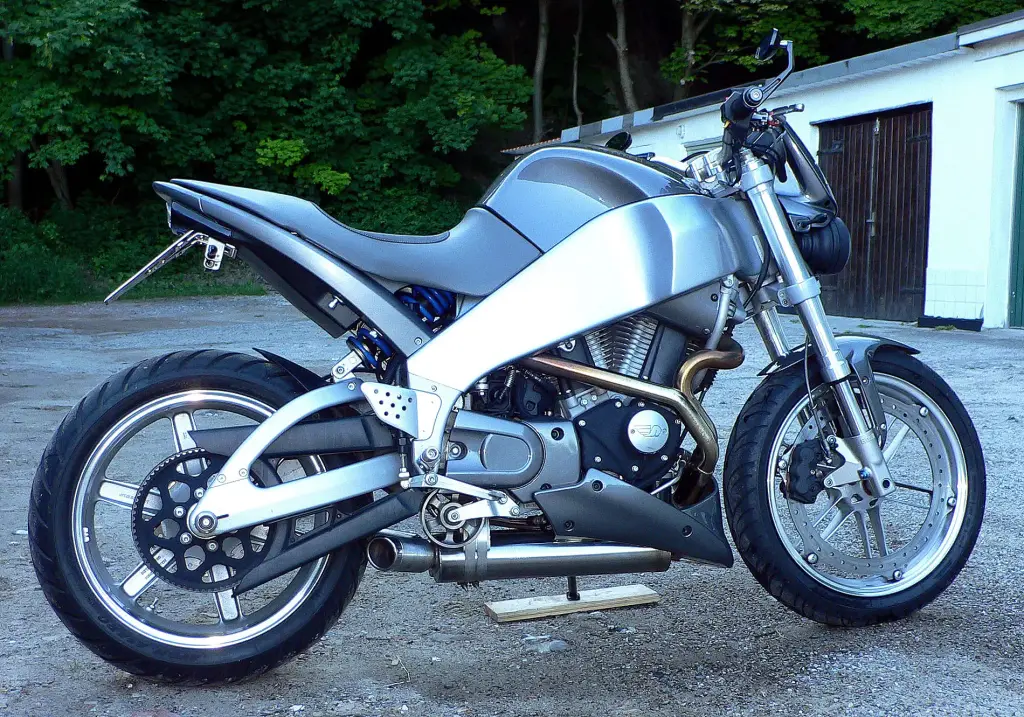
Compared with the 1,203 cc engines of the Buell XB12 series introduced in 2004, the XB9 has a slightly shorter stroke and 219 cc less capacity, which gives it a usefully higher engine speed, about 1,000 rpm more. The fuel is stored inside the frame, with the airbox living where a conventional fuel tank would be, and the oil is carried in the swingarm; together with the dry-sump system this lowers the centre of gravity and requires both a fuel pump and an oil pump.
The front brake is unusual too. Rather than fastening the disc around the wheel bearing at the hub, the XB9 bolts a perimeter disc to the outer edge of the rim at six hard points, the strongest part of the wheel. That removes the need for heavier spokes to take braking loads and cuts unsprung mass. Three versions shared the platform: the faired Firebolt XB9R of 2002, the naked Lightning XB9S that followed with a small screen and a shorter rear frame, and the CityX XB9SX at the end of 2004, with motocross-style bars, handguards and a grille over the headlight, rated at 92 hp.
Design and features
- Fuel in the frame: the frame itself holds the petrol, and the airbox sits where the tank normally would.
- Oil in the swingarm: dry-sump lubrication with the oil reservoir in the rear swingarm.
- Rim-mounted front brake: a perimeter disc bolted to six points on the rim, for less unsprung mass.
- Rev-happy motor: the shorter-stroke 984 cc twin runs about 1,000 rpm higher than the XB12.
Buell XB9 versions
- Firebolt XB9R (2002): the semi-faired sport version.
- Lightning XB9S: naked bike with a small screen and a shorter rear frame, inspired by the S1 and X1 Lightnings.
- Lightning CityX XB9SX (late 2004): motocross-style handlebar, handguards, headlight grille and a 92 hp engine.
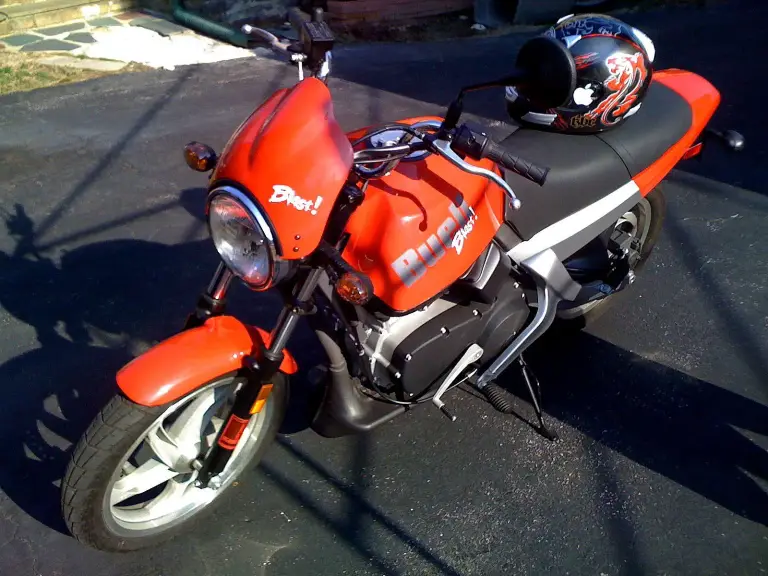
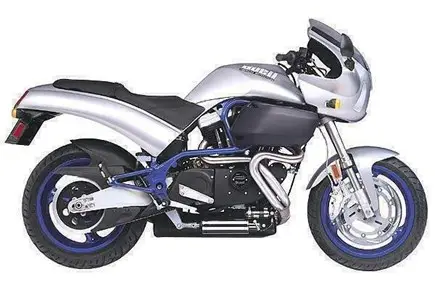
The XB9 grew into the larger XB12 family, while the Blast was the beginner’s single beneath it. More Buells are in the Buell collection.
Sources
- Buell XB9, English Wikipedia: engine, fuel and oil layout, brake, versions
- Buell XB9, Italian Wikipedia: production dates, comparison with the XB12, CityX