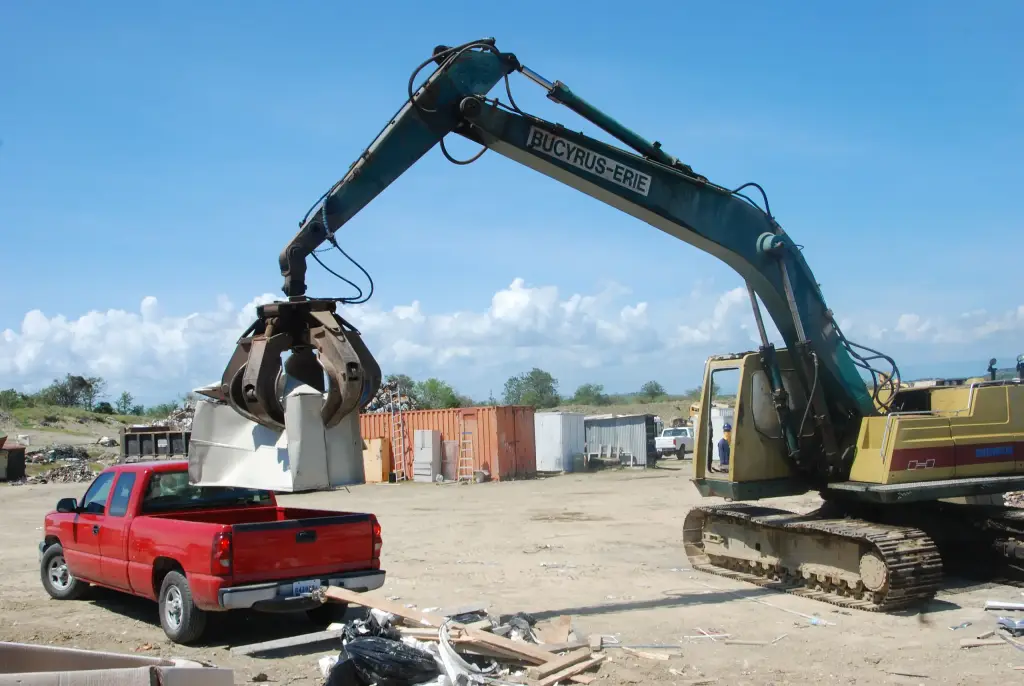

Bucyrus-Erie was an American surface and underground mining equipment company, founded in Ohio in 1880 and named Bucyrus-Erie from 1927. Its steam shovels dug the Panama Canal, and its walking draglines and stripping shovels were among the largest machines ever built on land. The company was bought by Caterpillar in 2011.
Bucyrus-Erie at a glance
| Founded | 1880 at Bucyrus, Ohio, as Bucyrus Foundry and Manufacturing Company |
|---|---|
| Headquarters | Bucyrus, Ohio; South Milwaukee, Wisconsin from 1893 |
| Name Bucyrus-Erie | 1927, after the merger with the Erie Steam Shovel Company |
| Panama Canal | 77 of the 102 steam shovels used to dig the canal, supplied in 1904 |
| British link | Ruston-Bucyrus Ltd, formed with Ruston & Hornsby in 1930 |
| Bankruptcy | Chapter 11 from 18 February to 14 December 1994 |
| Renamed | Bucyrus International, Inc. in 1997 |
| Acquisitions | Marion Power Shovel 1997, DBT 2007, Terex mining division 2010 |
| Owner from 2011 | Caterpillar Inc. |
| Brands | Bucyrus, Bucyrus-Erie, Marion and Ransomes & Rapier |
| Biggest machine | 4250-W walking dragline Big Muskie, 13,000 tonnes |
Based on one source, the English Wikipedia article on Bucyrus-Erie.
History of the Bucyrus-Erie
Bucyrus Foundry, 1880–1927
The company began in 1880 as the Bucyrus Foundry and Manufacturing Company of Bucyrus, Ohio, one of the early producers of steam shovels, and built its machines at its home town until 1893, when operations moved to South Milwaukee, Wisconsin.

The Panama Canal
In 1904 Bucyrus supplied 77 of the 102 steam shovels used to dig the Panama Canal. They were 95-ton machines with five-cubic-yard buckets that could move about eight tons of material at a time, each run by a crew of four — an engineer, two firemen stoking the boiler and a craneman — with six more men on the ground laying the rails the shovel moved on. A photograph of President Theodore Roosevelt was taken in November 1906 operating a Bucyrus shovel during his inspection trip. In March 1910 a single shovel excavated 70,000 cubic yards in 26 days at the Culebra Cut, a canal construction record; each machine averaged over a million cubic yards of earth at the cut.
Bucyrus-Erie and Ruston-Bucyrus, 1927–1980
The company took the name Bucyrus-Erie in 1927 when it merged with the Erie Steam Shovel Company, then the country’s leading maker of small excavators. In 1930 it joined Ruston & Hornsby Ltd of Lincoln, England, to form Ruston-Bucyrus Ltd in England; Ruston & Hornsby had been building steam excavators since 1874, and the partnership gave Bucyrus access to world markets it had not reached before. Ruston & Hornsby sold its share in 1985, during a recession in the mining industry.
Bankruptcy, growth and Caterpillar, 1980–2011
For a time in the 1980s the company was known as Becor Western, after a merger with Western Gear. On 18 February 1994 Bucyrus-Erie filed for Chapter 11 bankruptcy and stayed under protection until 14 December 1994. It took the name Bucyrus International, Inc. in 1997 and in the same year bought its old rival Marion Power Shovel. It acquired the DBT Group of Lünen, Germany, an underground mining equipment maker, from Ruhrkohle AG on 4 May 2007, and in February 2010 bought the mining equipment division of Terex, which had partly come from O&K and included the RH 400, the world’s largest hydraulic excavator, later built as the Cat 6090.
Sold to Caterpillar
On 15 November 2010 Bucyrus agreed to be acquired by Caterpillar in a deal valued at US$8.6 billion, and the transaction closed on 8 July 2011. Caterpillar said it would set up its new mining business headquarters at the former Bucyrus site in South Milwaukee. The intellectual property rights for Bucyrus-Erie marine cranes went to the Sparrows Group of Houston, Texas.
Famous machines
The 4250-W walking dragline Big Muskie, built in 1969 with a 220-cubic-yard bucket, weighed 13,000 tonnes; its bucket now stands in a small coal-mining park near McConnellsville, Ohio. The 3850-B stripping shovels of 1962 and 1964 had buckets of 115 and 145 cubic yards. The Silver Spade and its twin the GEM of Egypt, 1950-B shovels of 1965 and 1967, had 100-cubic-yard buckets, and the Silver Spade was dismantled in 2007. Big Brutus, an 1850-B of 1962 with a 90-cubic-yard bucket, is the centrepiece of a museum at West Mineral, Kansas. A Bucyrus-Erie 50-R, 55 feet high and carrying a heavy drill, was used in the rescue of two miners in the 1963 Sheppton, Pennsylvania, mining disaster.
Design and features
- Panama Canal shovels: 77 of the 102 steam shovels on the canal came from Bucyrus, and one set a digging record at the Culebra Cut in 1910.
- Giant walking draglines: the 2570-W was one of the most popular models, with buckets of 120 to 160 cubic yards.
- Stripping shovels: the 1950-B Silver Spade and the 1850-B Big Brutus are preserved as monuments to open-cast mining.
- Surface and underground: the range covered both, from hydraulic excavators to the DBT underground equipment bought in 2007.
- World reach: the Ruston-Bucyrus venture of 1930 opened export markets, and Ruston-Bucyrus machines worked in Britain for decades.
Bucyrus-Erie versions
- Steam shovels (from 1880): the original Bucyrus products, working on rails with a crew of four.
- Walking draglines: the 5-W, the 1250-B/W and 1260-W, the 2570-W and the giant 4250-W Big Muskie.
- Stripping power shovels: the 1850-B, 1950-B and 3850-B with buckets from 90 to 145 cubic yards.
- Drills and small excavators: the 50-R rescue drill and the Erie Steam Shovel line of small machines.
- Hydraulic excavators: the O&K-derived RH 400 from the Terex mining division, later the Cat 6090.
- Underground equipment: the DBT range added in 2007.
More machines and photographs of the marque are in the Bucyrus collection.
Video: Bucyrus Erie Excavator Taking Flood Off Cranberry Beds
Video by MossMan381 on YouTube.
Sources
- Bucyrus-Erie, English Wikipedia: history, dates, machines