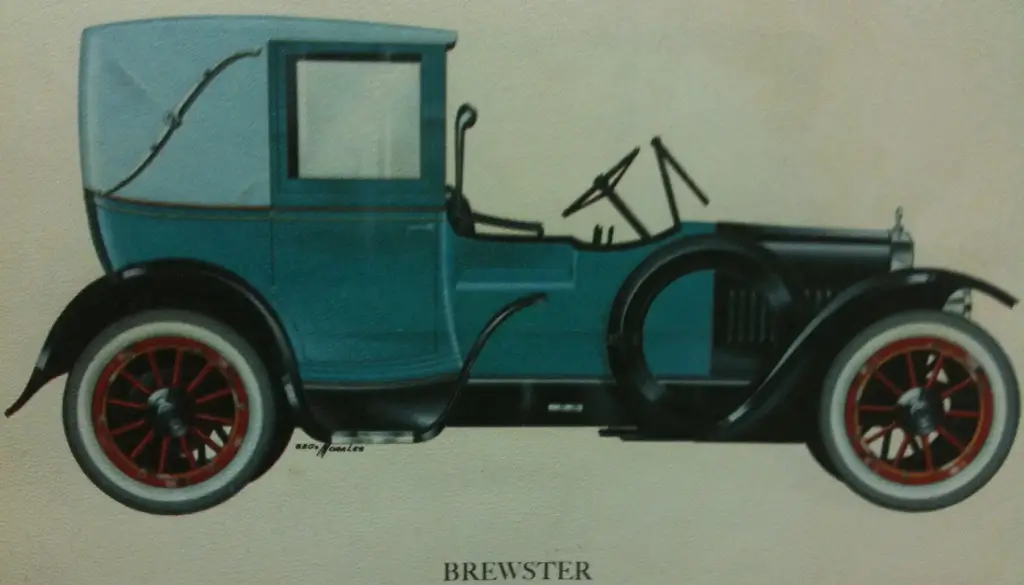

Brewster & Company of New York built carriages from 1810 and bodies for luxury cars from 1905. Its town car was part of a coachbuilding tradition that had already produced “the best carriages in the country”, and it survived into the 1930s on Rolls-Royce and Ford chassis.
Brewster Town Car at a glance
| Coachbuilder | Brewster & Company, New York |
|---|---|
| Founded | 1810 by James Brewster, New Haven, Connecticut |
| Body type | town car |
| First car bodywork | 1896, on an electric vehicle |
| Coachwork on customer chassis | from 1905 |
| Own cars | 1915–1925, Long Island City |
| Standard body styles | 28 offered from Rolls-Royce showrooms |
| Town car among them | Trouville Town Car, named after a French city |
| Chassis bodied | Delaunay-Belleville, Rolls-Royce, Ford V8 |
| Ford V8 bodies | 135 chassis, 1934–35 |
| Company end | bankruptcy 1935, assets auctioned 1937 |
There is no separate Wikipedia article on the Brewster town car; this page is based on the article about the coachbuilder Brewster & Co. (based on one source).
History of the Brewster Town Car
From carriages to coachwork
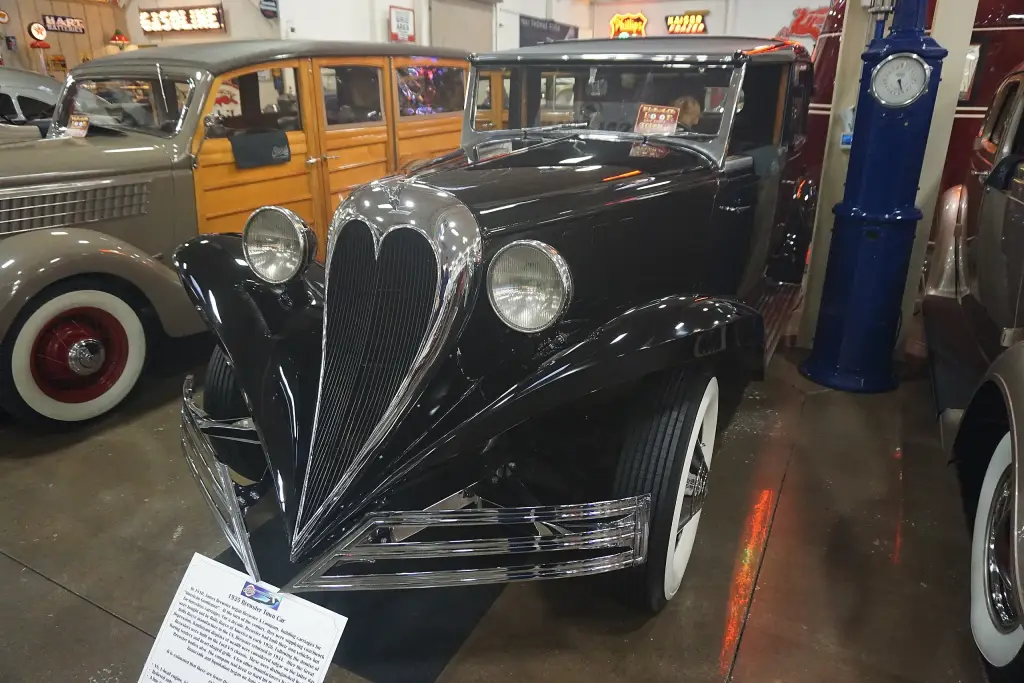

Brewster & Company was an American custom carriage and motorcar coachbuilder. James Brewster established it in 1810 and the firm operated for about 130 years, starting in New Haven, Connecticut and moving into a shop at 52 Broad Street in New York City in 1827. Its reputation as a carriage builder spread to the larger cities of the eastern coast, with exports to Cuba and South America, and the Brewsters won the gold medal for best exhibit at the 1878 International Exposition in Paris and the Chevalier of the Legion of Honor from the president of France. The family slogan, adopted by James Brewster’s grandson William, was “Carriage Builder for the American Gentleman”.
The move into motorcars came slowly. The earliest known automotive bodywork by Brewster was on an electric vehicle in 1896, followed by a Delaunay-Belleville chassis with a gasoline engine in 1905. In that year Brewster became importer for Delaunay-Belleville, one of the desirable French makes of the time, and this was the firm’s first venture into automobile body building.
The town car and the Rolls-Royce years
In 1914 Brewster was selected as sales agent for Rolls-Royce Limited and became the main body supplier for Rolls-Royce in the United States. The bodies were built to fit the imported chassis of individual customers, so no two were necessarily alike. After the 1915 sinking of the Lusitania put European supplies in danger, Brewster began producing its own automobiles, a practice it kept up until 1925; the cars were built at its Long Island City facility and cost as much as “a Packard Twin Six limousine plus a fleet of five Model T Ford roadsters”, while being smaller.
When Rolls-Royce of America took over Brewster & Company in 1925, the business settled into supplying bodies for Rolls-Royce chassis, which were fitted with temporary seats and protection and driven from the Massachusetts plant to the Brewster Building in Long Island City. To deliver cars more quickly and at a lower price, the showrooms offered 28 standardised body styles, and Brewster gave the American-made coachwork English city names: the Derby Touring Sedan, the York Roadster, the Huntington Limousine, the Avon Sedan and the Newmarket Convertible Sedan. The town car in the programme took its name from the French city of Trouville — the Trouville Town Car.
Ford V8 bodies and the end
After Rolls-Royce of America folded, Phantom II chassis were shipped directly from Britain to Long Island City between 1931 and 1934. High-end sales fell after the Great Depression began in 1929, and in 1934–35 Brewster built and sold luxury bodies on 135 Ford V8 chassis. Bankruptcy proceedings began in mid-1935 and the last of Brewster’s assets were sold at auction in 1937.
Design and features
- Coachwork, not a chassis: most Brewster bodies were ordered to fit an imported chassis belonging to the customer.
- Town-car style: the closed town car was one of the formal body styles in the Brewster catalogue, alongside sedans and limousines.
- English city names: Derby, York, Huntington, Avon and Newmarket were joined by the French-named Trouville Town Car.
- Standardised luxury: Rolls-Royce showrooms offered 28 body styles for quicker delivery at a lower price.
Brewster Town Car versions
- Trouville Town Car: the town car in the Rolls-Royce of America programme, named after the French seaside town.
- Bodies on Delaunay-Belleville chassis: the firm’s first automotive coachwork, from 1905, and most of its sales by 1914.
- Bodies on Rolls-Royce chassis: the main American supply of coachwork for Rolls-Royce from 1914 and through the Rolls-Royce of America years.
- Brewster’s own cars: built at Long Island City between 1915 and 1925.
- Ford V8 bodies: 135 luxury bodies on Ford chassis in 1934–35, the firm’s last series.
Other coachbuilt American cars and the rest of the marque are gathered in the Brewster section.
Sources
- Brewster & Co., English Wikipedia: history, coachwork, body styles, end of the firm