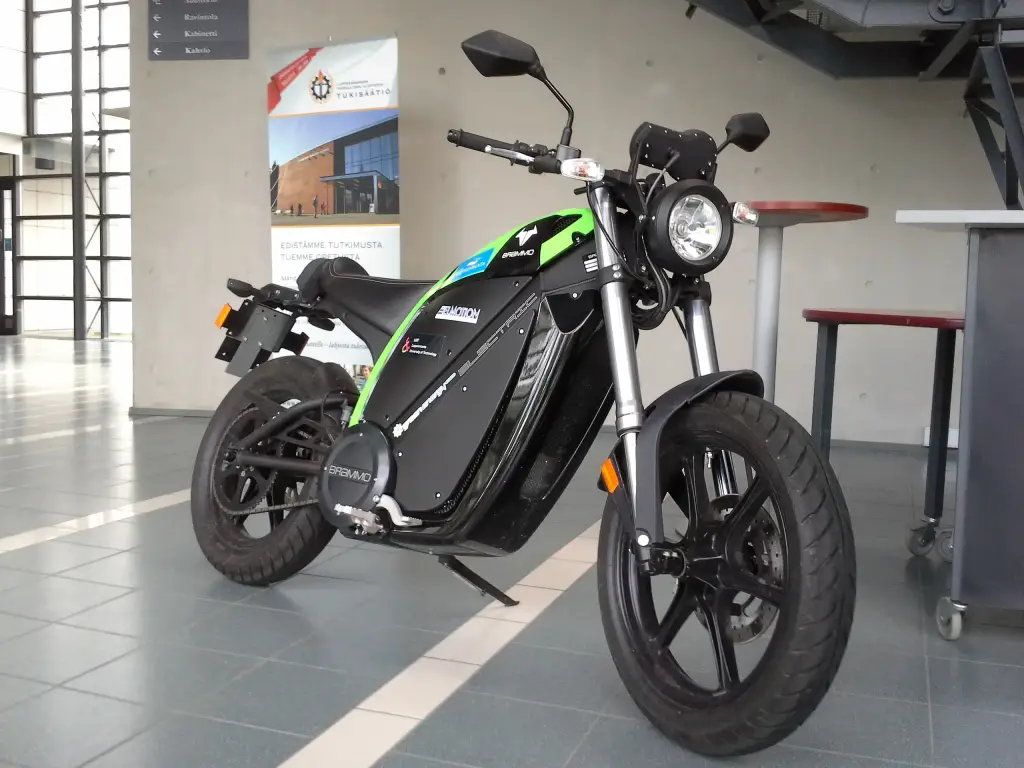
The Brammo Enertia was an electric motorcycle designed and sold by Brammo, Inc. as a commuter vehicle. It used a lithium iron phosphate battery and a monocoque aluminium body, and it went on sale in the United States in the second half of 2009, including through Best Buy stores.
Brammo Enertia at a glance
| Maker | Brammo, Inc., United States |
|---|---|
| Type | electric commuter motorcycle |
| On sale | late July 2009; at Best Buy from August 2009 |
| Body | aluminium monocoque |
| Motor | permanent magnet AC synchronous |
| Battery | six Valence lithium iron phosphate modules, 3.1 kW·h pack |
| Top speed | over 62 mph (100 km/h) claimed; 50–55 mph (89 km/h) also quoted |
| Range | 40–50 miles (64–80 km) at the 40% power setting |
| Charging | about three hours from a standard 110 V outlet |
| Transmission | none: no gears or clutch |
| Wheels | 18-inch front, 17-inch rear Avon RoadRiders |
| 0–60 mph, test | 16.1 seconds (Cycle World) |
| Quarter mile, test | 20.19 seconds at 60.78 mph (Cycle World) |
History of the Brammo Enertia
A commuter, not a superbike
The Enertia was conceived as a practical electric commuter rather than a performance machine. Its permanent magnet AC synchronous motor drew on six Valence lithium iron phosphate battery modules, which gave a top speed of over 62 mph (100 km/h). The batteries could be recharged through the onboard charger in about three hours from a standard 110 volt outlet, and Brammo quoted a range of 40 to 50 miles (64–80 km) between charges when the power was set to the minimum level of 40%.
Aluminium monocoque
Early prototypes used carbon fibre for the principal structure, but Brammo later decided to build the monocoque body in aluminium. Some components were made entirely of recycled material, while the body panels used a mixture of recycled and new material. The bike had no gears and no clutch, so there was no shifting; Brammo claimed 0 to 30 mph (0 to 48 km/h) in 3.8 seconds in performance mode. There was no regenerative braking: Brammo said the technology offered limited benefit to motorcycles and carried a risk of traction problems.
Racing and retail
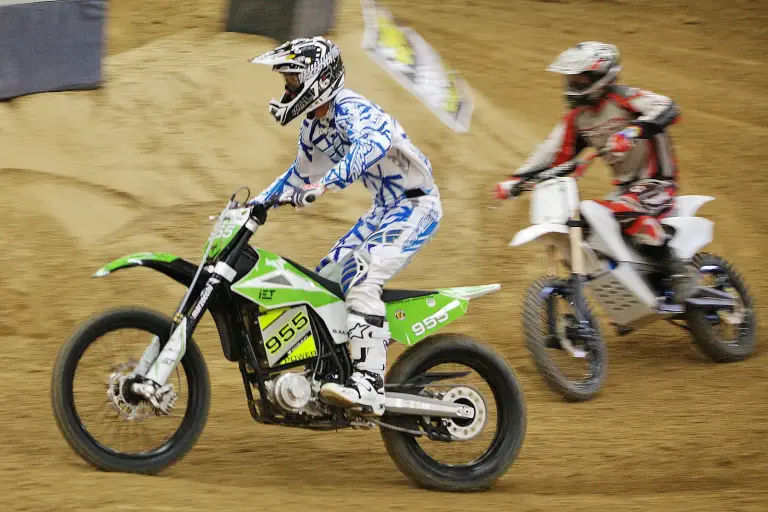
In June 2009 Brammo entered two modified Enertia motorcycles in the TTXGP, the zero-emissions race on the Isle of Man’s Snaefell Mountain Course. Its number 26 bike, called the TTR, finished third in the final race, ridden by Mark Buckley at an average of 75.35 mph (121.26 km/h) and a top speed of 102 mph (164 km/h). The production Enertia went on sale in late July 2009 and reached select Best Buy stores in August 2009, with Brammo promising a gradual roll-out across the retailer’s stores.
Design and features
- No gears, no clutch: twist and go, with 0–30 mph in 3.8 seconds claimed in performance mode.
- Light, responsive handling: Cycle World praised the wide handlebar, sporty steering geometry and narrow Avon RoadRiders.
- Simple charging: a standard 110 V outlet and the onboard charger filled the pack in about three hours.
- Recycled materials: part of the bike used recycled material, and the body panels mixed recycled and new stock.
- Low running cost: a 3.1 kW·h pack needed about 806 kW·h of electricity a year over the US average 13,000 miles.
Brammo Enertia versions
- Enertia (2009): the original aluminium-monocoque commuter.
- Enertia Plus (announced October 2010): a 6.0 kW·h battery pack, about 80 miles on a charge and over 60 mph, with a full charge in about six hours at a Level 1 charging station.
- TTR (2009): the modified racing version entered in the TTXGP, third in the final race.
- Enertia Plus LE: the law-enforcement version adopted by Hong Kong’s Government Logistics Department in October 2011 for police and water supplies motorcycles.
The Enertia was Brammo’s first production motorcycle; the company later announced the off-road Brammo Engage. More electric and other motorcycles are in the Brammo collection.
Sources
- Brammo Enertia, English Wikipedia: construction, performance, road tests, comparison
- Brammo, English Wikipedia: company history, racing, Enertia Plus, Hong Kong police