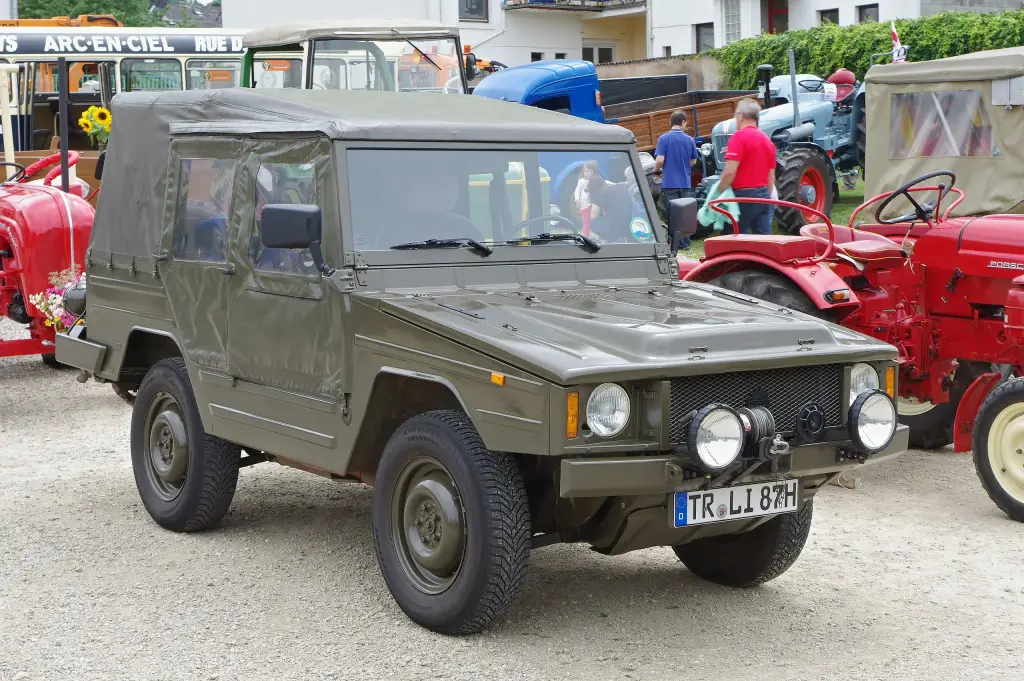
The Bombardier Iltis is the Canadian-built version of the Volkswagen Type 183, a light military four-wheel-drive vehicle of the 1970s and 1980s. Volkswagen transferred the design and tooling to Bombardier in 1981, and the Quebec company built the Iltis for the Canadian and Belgian armies until the second half of the 1980s.
Bombardier Iltis at a glance
| Maker | Bombardier Inc., Valcourt, Quebec, under Volkswagen licence |
|---|---|
| Production | 1984–1986 (English Wikipedia); French Wikipedia gives 1988 |
| Engine | 1.7 l four-cylinder petrol, 75 PS (55 kW) |
| Later engine | 1.6 l turbo diesel, 69 PS (51 kW) |
| Drive | four-wheel drive, five-speed manual |
| Crawler gear | about 4 km/h, selectable only in four-wheel drive |
| Body | four-door open top; ambulance and other bodies in small numbers |
| Users | Canada, Belgium, Cameroon, Oman |
| Canadian order | 1,900 vehicles, later 2,500, for C$68 million |
| Belgian order | 2,673 delivered |
| Built | about 6,000 by Bombardier; about 10,000 by Volkswagen |
The Iltis was designed by Volkswagen; this page concentrates on the Bombardier-built Canadian version. The English and French Wikipedia articles disagree on the end of production.
History of the Bombardier Iltis
Volkswagen’s design
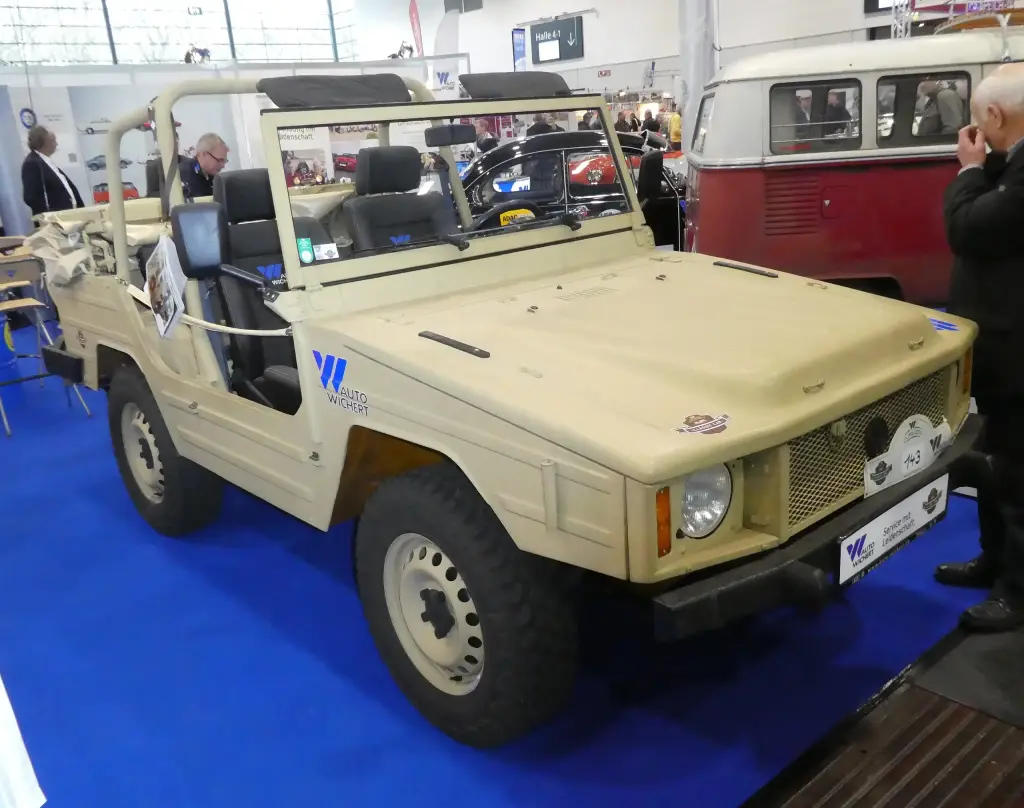
The Iltis — German for polecat — was designed by Volkswagen as the Type 183 for the West German armed forces. In the late 1960s the Bundeswehr had joined a multinational effort to create a common “Europa Jeep”, but the project dragged on, so Volkswagen offered an updated Kübelwagen, the Type 181, as an interim vehicle. When the Europa Jeep collapsed in 1979 under rising costs, the government asked several makers for prototypes. Volkswagen answered with an evolution of the DKW Munga: a four-wheel-drive vehicle using components from the Audi 100 and a 1.7-litre four-cylinder engine of 75 PS (55 kW). The design proved so capable on snow that Audi engineers used what they learned for the quattro system that appeared on the Audi Quattro in 1980.
Production began in the summer of 1978 and the first 200 vehicles were delivered in November; by late 1979 about 2,000 had been built, including 310 for the Luftwaffe and 20 for the navy. Most were four-door open-top cars, with small numbers of ambulances and anti-tank, artillery survey, command and radio vehicles. A civilian version was shown at the 1979 Geneva Motor Show, and in 1980 Freddy Kottulinsky and Gerd Löffelmann won the Paris–Dakar Rally in an Audi-prepared Iltis.
The Bombardier contract
In October 1981 Volkswagen agreed to transfer the design and manufacturing technology of the Iltis to Bombardier in Canada, together with worldwide marketing rights and the tooling used to build it. Volkswagen announced a C$100 million plant; the site was first chosen at Barrie, Ontario, but Volkswagen agreed to Valcourt, Quebec, instead. In November 1983 Ottawa placed an order for 1,900 Iltises — later raised to 2,500 — worth C$68 million, with grants of C$1.3 million to expand the production line and C$700,000 for Bombardier to develop and market a civilian version. Production for the Canadian contract began in the second quarter of 1984 and finished at the end of 1985. Belgium ordered more than 2,500 vehicles and received 2,673; Cameroon and Oman also took small, unrecorded numbers. The English Wikipedia says Bombardier production stopped by 1986, the French one that it ended in 1988.
The vehicle
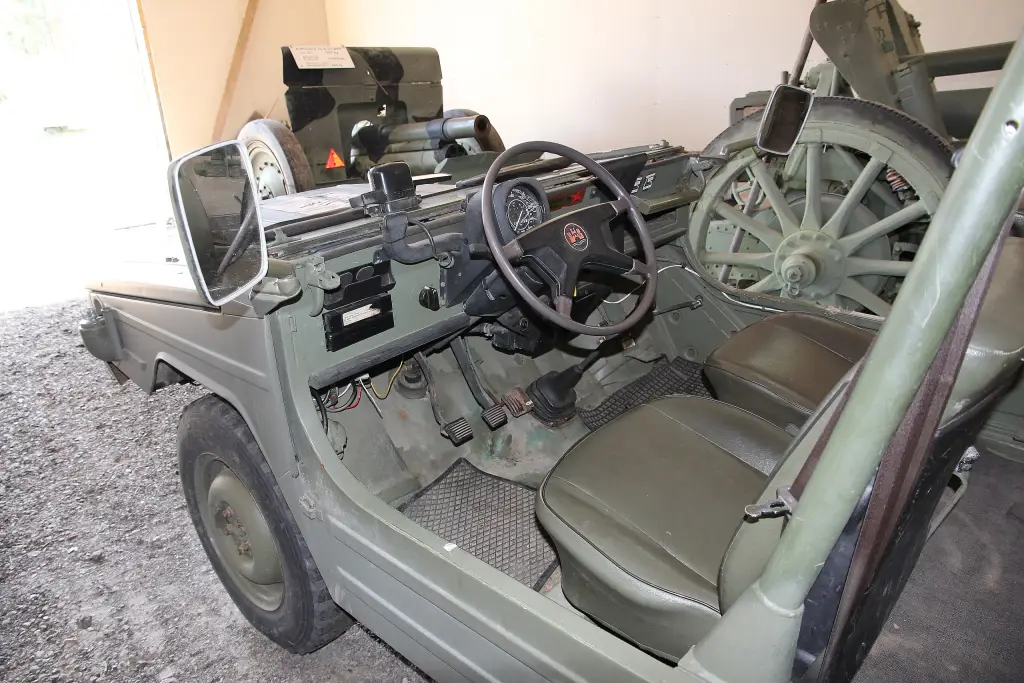
The Iltis has a low 8.2:1 compression ratio so that it can run on low-octane fuel, part-time four-wheel drive engaged by a floor lever, optional differential locks, rack-and-pinion steering and independent suspension with many parts shared at all four corners. The five-speed gearbox has an ultra-short “crawler” first gear that can only be selected in four-wheel drive and moves the car at about 4 km/h. The seats came from the contemporary Volkswagen Passat. French sources put total production at about 10,000 vehicles by Volkswagen and about 6,000 by Bombardier.
Design and features
- Licence-built in Quebec: Bombardier assembled the Iltis at Valcourt with tooling bought from Volkswagen.
- Proven four-wheel drive: the Audi-developed system was the basis of the quattro.
- Military and civilian versions: open-top four-door for the army, soft-top for civilians.
- Low-octane engine: 1.7-litre petrol unit of 75 PS, later a 1.6-litre turbo diesel of 69 PS.
- Rally winner: an Iltis won the 1980 Paris–Dakar in the hands of Kottulinsky and Löffelmann.
Bombardier Iltis versions
- Canadian military Iltis: four-door open-top, 1,900 ordered in 1983 and later 2,500.
- Belgian Iltis: 2,673 delivered from 1984.
- Civilian Iltis: soft-top offered from 1979, marketed in Canada with a government grant.
- Bombardier-built cars with front differential lock: some Canadian vehicles had a front locker as well as the rear one.
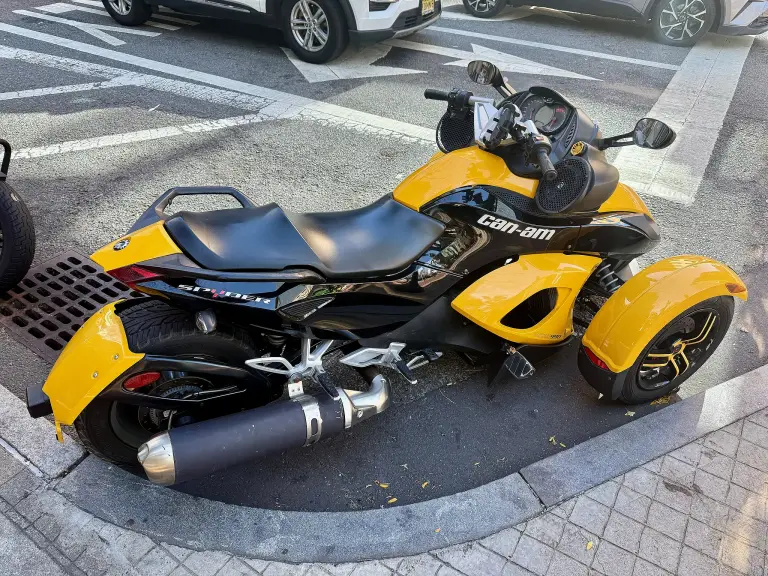
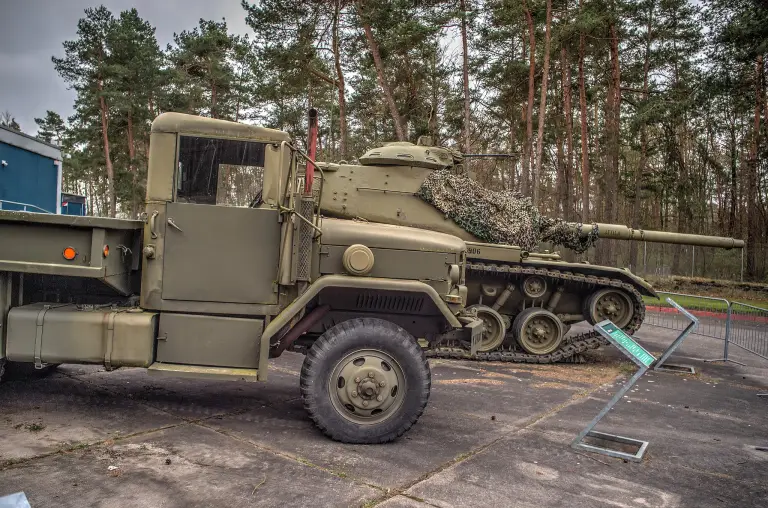
The Iltis is the lightest vehicle in this collection; the other military machine here is the Bombardier MLVW truck. The Can-Am Spyder shows where Bombardier Recreational Products went later. More in the Bombardier collection.
Video: Bombardier Iltis Springtime fun
Video on YouTube.
Sources
- Volkswagen Iltis, English Wikipedia: design, history, Bombardier section, specifications
- Volkswagen Iltis, French Wikipedia: licence agreement, production totals, gearbox