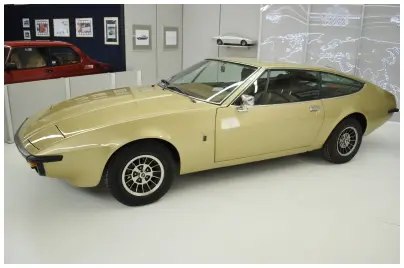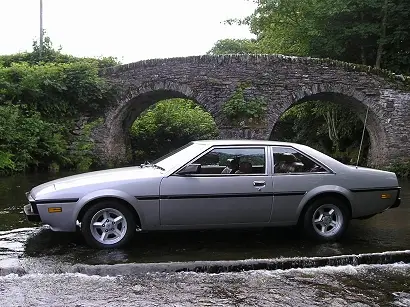
The Bitter SC was a sports-luxury car built by Erich Bitter Automobil GmbH from 1979 to 1989. Based on the Opel Senator, it was offered as a coupé, a convertible and a sedan, and its exterior styling echoed the Pininfarina-designed Ferrari 365 GT4 2+2.
Bitter SC at a glance
| Maker | Erich Bitter Automobil GmbH |
|---|---|
| Production | 1979–1989 |
| Based on | Opel Senator |
| Body styles | coupé, convertible, sedan |
| Coupé shown | 1979, on sale spring 1981 |
| Convertible | shown 1981, on sale spring 1983 |
| Sedan | shown 1984, available 1985 |
| Engine at launch | Opel 3.0-litre fuel-injected six, 180 PS (132 kW) |
| From 1984 | 3.9-litre Mantzel M39E, 210 PS (154 kW) |
| Styling | echoing the Pininfarina Ferrari 365 GT4 2+2 |
| Bodies | OCRA, then Maggiora, northern Italy |
There is no separate English or German Wikipedia article on the SC: this page is based on the SC section of the English article on the Bitter marque, so it rests on one source.
History of the Bitter SC
The coupé
The first SC to be launched was the coupé, first shown in 1979, although sales only began in the spring of 1981. Like the CD before it, the SC was based on Opel’s largest model of the time, the Senator, and its exterior styling echoed that of the Pininfarina-designed Ferrari 365 GT4 2+2, first shown in 1972 and later sold as the 400 and the 412.
Convertible and sedan
A convertible followed, presented in 1981 at the Frankfurt Auto Show and on sale from the spring of 1983. The last version to arrive was a sedan, shown in 1984 and available from 1985. The SC remained in production until 1989.
Engines
Bitter originally considered a V8: the 2.5-litre unit from the Lamborghini Urraco and a Holden V8 were both bench-tested, but emissions levels, fuel consumption and high costs ruled them out. The SC was therefore powered by a fuel-injected Opel 3.0-litre in-line six of 180 PS (132 kW). That was acceptable but not quite enough for a car of its price class, and overheating concerns ruled out a turbocharger. Erich Bitter took the other route and had the Opel tuner Mantzel increase the stroke drastically, from 69.8 to 90.5 mm, making a 3848 cc engine. Known as the 3.9-litre, with the engine code M39E where the M stands for Mantzel, it appeared in 1984 with 210 PS (154 kW) and fifty percent more torque.
Bodies from Italy
Bitter had hoped to keep working with Karosserie Baur, which had built the CD, but Baur had meanwhile taken on the BMW M1 and had no capacity to spare. Bitter turned instead to a small coachbuilder in northern Italy called OCRA, near Turin. OCRA lacked the means and experience to series-produce bodies and lost the contract in early 1982 after 79 examples had been built; the bodywork of these early cars was rust-prone and suffered from quality problems. Bitter then contracted Maggiora to build the cars.
Design and features
- Senator foundations: Opel’s largest model supplied the platform and running gear.
- Italian looks: the body echoed the Ferrari 365 GT4 2+2 by Pininfarina.
- Three body styles: a coupé was joined by a convertible and, later, a sedan.
- Mantzel conversion: a longer stroke turned the 3.0 six into a 3.9 with 210 PS.
- Coachbuilt in Italy: bodies came first from OCRA near Turin and then from Maggiora.
Bitter SC versions
- SC coupé (1979–1989): the first version, shown in 1979 and on sale from 1981.
- SC convertible (1981–1989): presented at Frankfurt in 1981, on sale from 1983.
- SC sedan (1984–1989): shown in 1984, available from 1985.
- 3.9-litre (from 1984): the Mantzel-stroked M39E engine with 210 PS and more torque.
The SC followed the Bitter CD, which used Opel Diplomat mechanicals. More cars are in the Bitter collection.
Video: 1984 Bitter SC USA
Video on YouTube.
Sources
- Bitter Automotive, English Wikipedia: body styles, engines, coachbuilders, production years