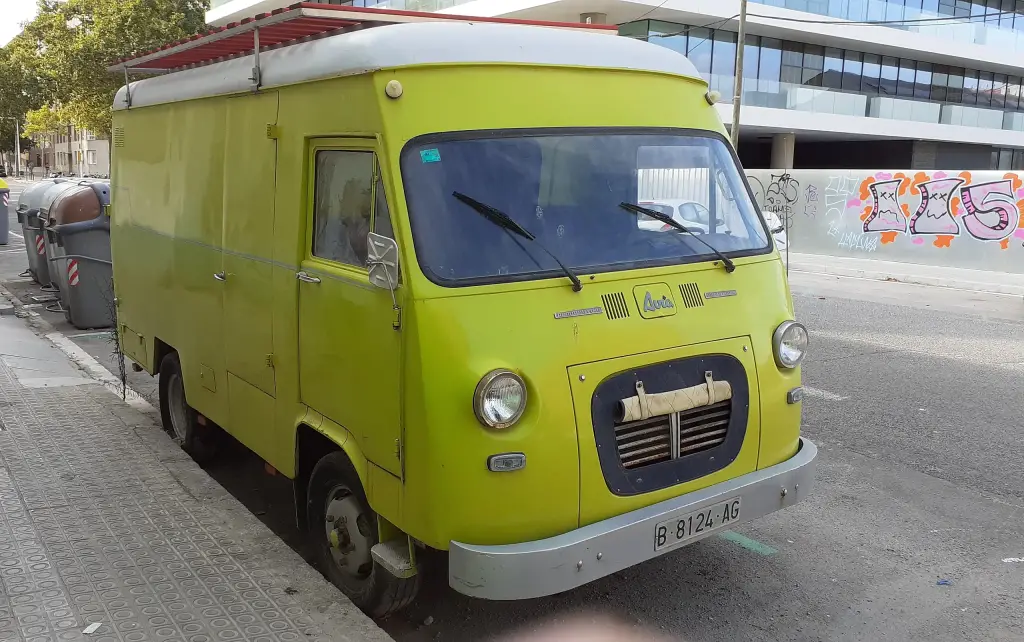
The Avia 2500 was the first light truck of the Spanish Avia, the commercial vehicle brand of the Madrid aircraft company AISA. A prototype was shown at the Barcelona trade fair in 1960 and production began in 1961 with a Perkins diesel and a cab designed by the coachbuilder Pedro Serra.
Avia 2500 at a glance
| Maker | Aeronáutica Industrial S.A. (AISA), Madrid |
|---|---|
| Brand | Avia (Spain) |
| First shown | Barcelona trade fair, 1960 |
| Production | from 1961 |
| Engine | Perkins diesel, 61 hp |
| Cab | designed by Pedro Serra, built by Bosuga |
| Payload class | 2,500 kg |
| Engineering advice | ENASA-Pegaso technical department |
| Licensed production | Setúbal, Portugal (SODAG), from 1964 |
| Export brand | Alas |
| Last Avia truck sold | 1984 |
Based on one source: the Spanish Wikipedia article on the Spanish Avia (AISA). The Spanish Avia was a different company from the Czechoslovak Avia.
History of the Avia 2500
The Spanish Avia had nothing to do with the Czechoslovak truck maker of the same name. It was the commercial vehicle brand of Aeronáutica Industrial S.A. (AISA), an aircraft company based at Cuatro Vientos in Madrid. AISA traced its origins to the Talleres J. Loring founded by Jorge Loring Martínez in Carabanchel Alto in 1923; in 1934 the firm became a joint-stock company and took the name AISA, building training aircraft under Fokker licence and autogiros for the Cierva company.
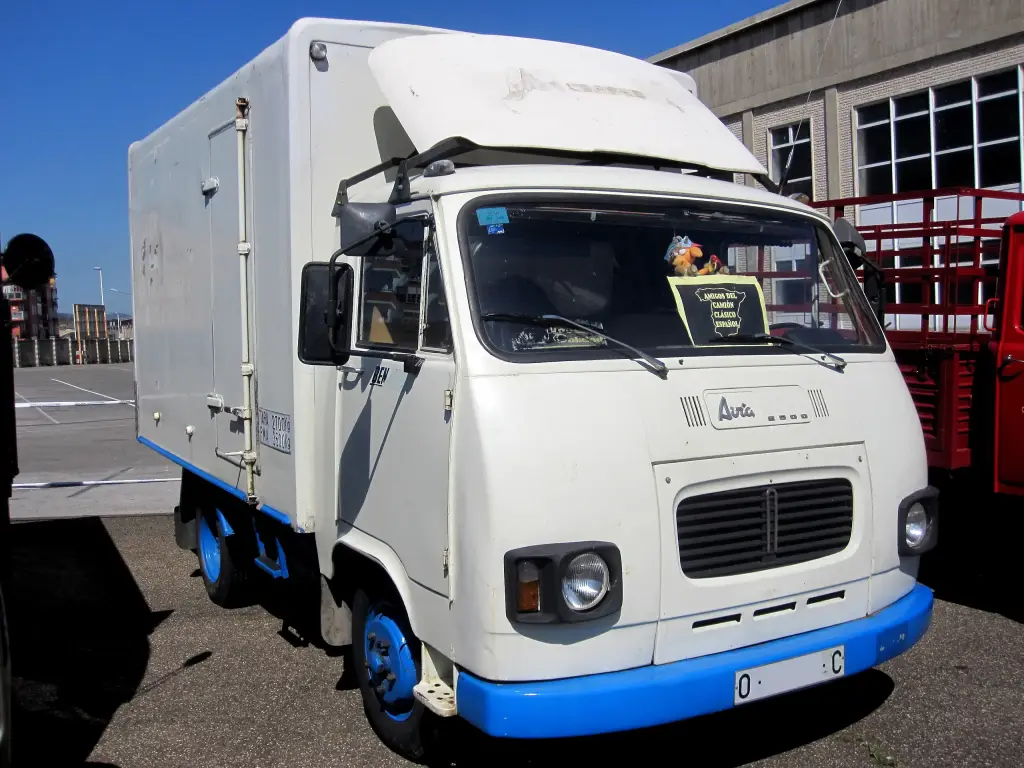
In 1957, with light commercial vehicles booming in Spain, AISA began building industrial vehicles under the Avia name. The first was the Avia 200 motocarro, a three-wheeler with a 197 cc Hispano Villiers engine of 8.4 hp and a 500 kg payload, produced until 1963 in many versions. The first proper truck followed: the Avia 2500, presented as a prototype at the Barcelona trade fair in 1960 and put into production in 1961.
The 2500 used a Perkins diesel of 61 hp. Its cab was designed by the coachbuilder Pedro Serra and built by Bosuga, and for the project AISA had the advice of the technical department of ENASA-Pegaso, since the state holding company INI owned 33 per cent of AISA. The truck was well received, and in 1962 it was joined by the more powerful Avia 3500.
A growing range
From 1964 Avia vehicles were also built under licence in Setúbal, Portugal, by SODAG. By 1969, with the arrival of the 6500, the range covered models of 1500, 2500, 3500, 4000 and 6500 kg payload, and in 1973 a 7000 kg model was added. Avia trucks were valued for having better finish than their competitors. In markets abroad the Spanish Avia was sold under the Alas brand to avoid confusion with the Czechoslovak maker.
The end of the Spanish Avia
In the mid-1970s AISA associated with Motor Ibérica, the maker of Ebro vehicles, which was both its main competitor and a supplier of engines and cabs. Avia gradually became a second brand of Ebro, sold through independent dealers. When Nissan bought Motor Ibérica in the 1980s the Avia name disappeared from the new management’s plans, and the last truck with the Avia badge was sold in 1984.
Design and features
- First Spanish Avia truck: the model that took AISA from motor tricycles into light lorries.
- Perkins diesel: 61 hp, the engine family used across the Spanish Avia range.
- Serra cab: designed by Pedro Serra and built by Bosuga, with engineering advice from ENASA-Pegaso.
- Export brand: sold abroad as Alas, and built in Portugal by SODAG from 1964.
Avia 2500 versions
- Avia 2500 (1961): the original light truck with the 61 hp Perkins engine.
- Later range models: the 1500, 3500, 4000 and 6500 shared the same approach to payload classes.
- SODAG-built vehicles: Portuguese licence production from 1964.
The larger Avia 3500 followed in 1962, and the lightest class of the range is described in Avia 2000. More models are in the Avia collection.
Sources
- Avia (automóviles), Spanish Wikipedia: company history, 2500, cab, engines, range, end of the brand