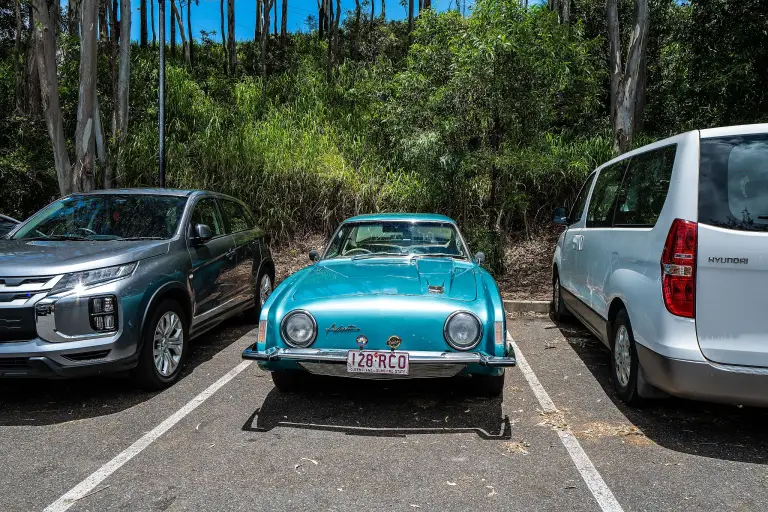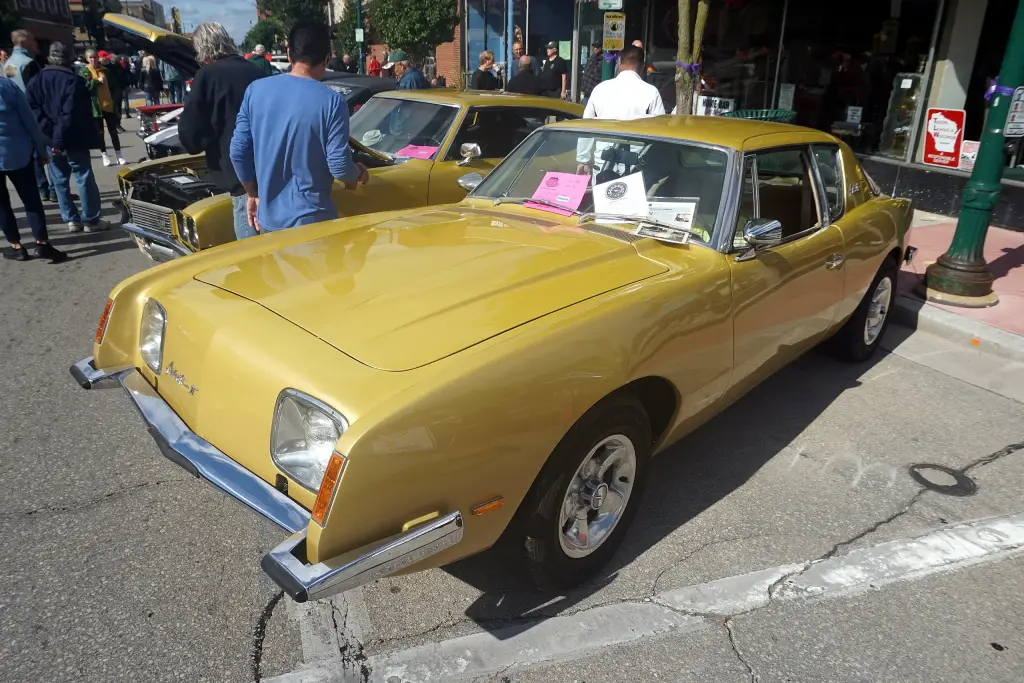
The Avanti II was the hand-built continuation of the Studebaker Avanti. After Studebaker closed its South Bend factory in December 1963, local dealers bought the name, tooling and plant space and introduced a slightly modified version in 1965 with a Chevrolet V8 under the bonnet.
Avanti II at a glance
| Maker | Avanti Motor Corporation, South Bend, Indiana |
|---|---|
| Production | 1965–1986 |
| Founders | Nate and Arnold Altman with Leo Newman |
| Body | modified Studebaker Avanti coupe, hand-built |
| Engine 1965 | 327 cu in Chevrolet Corvette V8 |
| Engine later | 400, then small-block 350, then 305 from 1981 |
| 1981 engine | 305 cu in V8, 155 hp, electronic engine controls |
| Gearbox | GM Turbo 350 automatic with lock-up |
| Build time | 10–12 weeks, depending on colour and trim |
| Chassis | Studebaker-designed unit, then Chevrolet Monte Carlo |
| Owner from 1982 | Stephen H. Blake |
| Last car | a one-off with a Roush V6 |
Based on one source, the English Wikipedia article on the Avanti, section “Avanti II (1965–1986)”.
History of the Avanti II
After Studebaker ended production at South Bend on 20 December 1963, the Avanti name, tooling, truck production rights, parts and plant space were bought by local Studebaker dealers Nate and Arnold Altman and Leo Newman. They incorporated as the Avanti Motor Corporation and hand-built a small number of cars, with no connection to the Studebaker brand name. Leo Newman ran the Studebaker truck parts division, which made the new company profitable from the start.
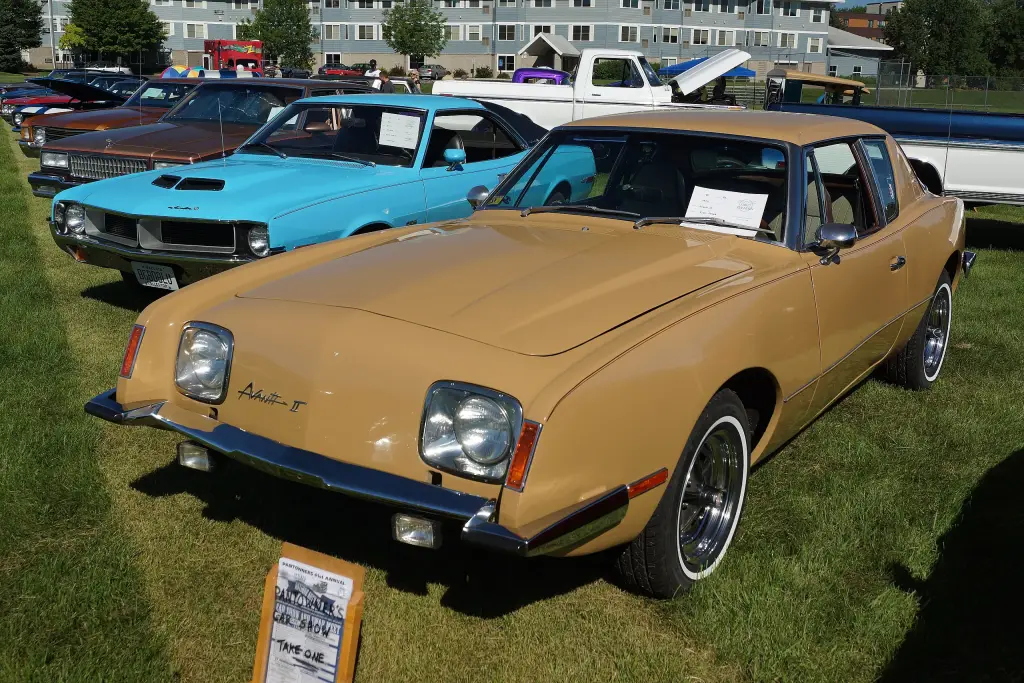
The Altman brothers introduced a slightly modified Avanti in 1965 as the Avanti II, at first with the 327 cu in Chevrolet Corvette engine. The engine grew to 400 cubic inches, then to the small-block 350, and from 1981 to the 305, which had electronic engine controls, 155 hp and a GM Turbo 350 automatic with lock-up. Building one car in the 1980s took ten to twelve weeks, depending on special colour or upholstery orders, and cars were built on the Studebaker-designed chassis until the Chevrolet Monte Carlo platform took over.
After Nate Altman died, Arnold Altman ran the company until it was sold in 1982. On 1 October 1982 the real estate developer Stephen H. Blake bought the rights to the Avanti II, with the state of Indiana guaranteeing $1.9 million in loans as part of the package. A convertible body style and a lighter backbone chassis designed by former Pontiac engineer Herb Adams were planned, but the plans were shelved in favour of the Monte Carlo chassis because it could take Chevrolet V8s. Rectangular headlights and plastic bumpers in body colour were introduced, and each car still took eight to ten weeks to build.
Shortly after the Mark II Avanti was introduced the company declared bankruptcy and Blake resigned in February 1986. The last Avanti II was a one-off with a Roush V6 engine; the “II” was dropped from the name under new ownership in 1987.
Design and features
- Hand-built coachwork: a small, often interrupted series of cars assembled to order over ten to twelve weeks.
- Chevrolet power: Corvette, then 400, 350 and 305 cubic inch V8s with a Turbo 350 automatic.
- Studebaker bones: the original chassis and body tooling carried over from the 1963 car.
- Gradual modernisation: rectangular headlights and body-coloured plastic bumpers arrived in the 1980s.
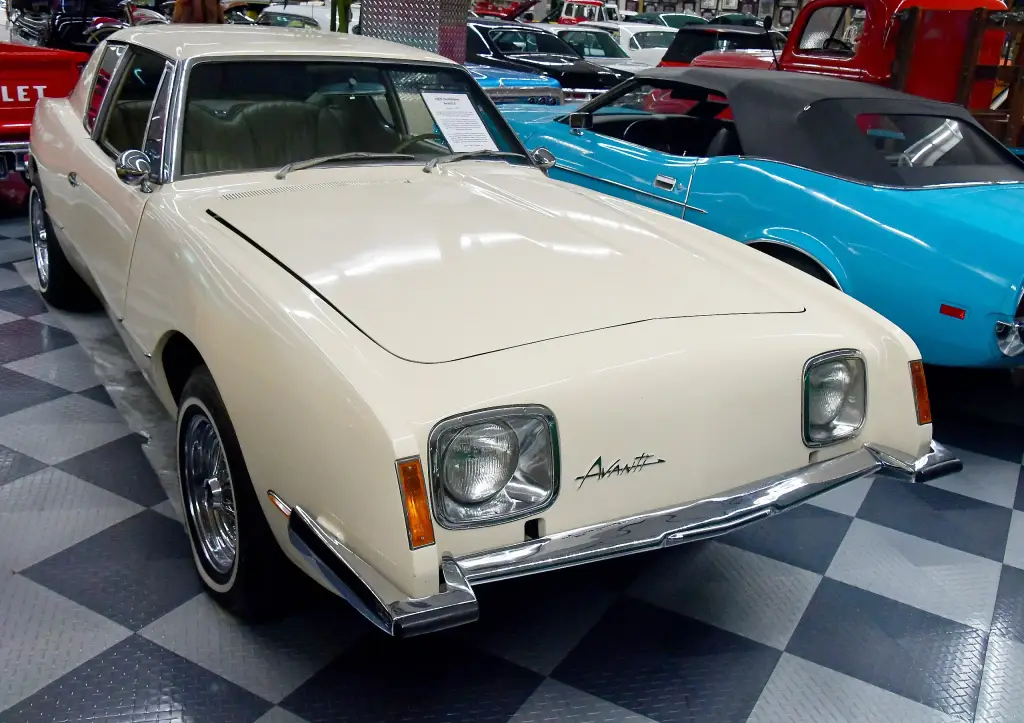
Avanti II versions
- Early Avanti II (1965–): 327 Corvette V8 on the Studebaker chassis.
- 400 and 350 engined cars: larger and then smaller small-block V8s.
- 1981 specification: 305 V8 with electronic controls and lock-up automatic.
- Mark II Avanti: the 1980s restyle with rectangular headlights and plastic bumpers.
The Avanti II grew out of the original Studebaker Avanti. More cars of the marque are in the Avanti collection.
Sources
- Avanti (car), English Wikipedia: Avanti II history, engines, ownership