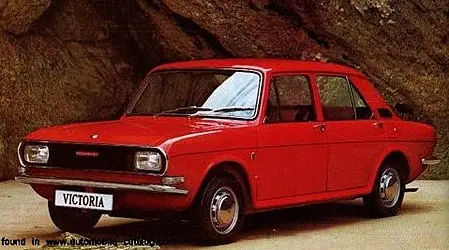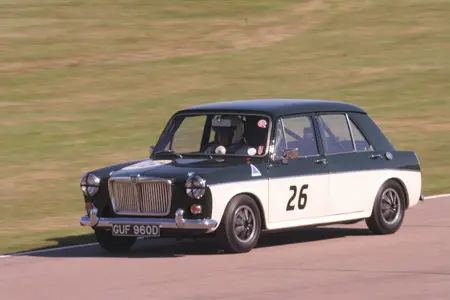
The Authi 1100 was the Morris 1100/1300 built in Spain by Authi, the Pamplona company founded in 1965 by BMC and the metalworking firm Nueva Montaña Quijano. The first Spanish-built Authi product, an MG 1100, emerged in January 1967, and the model stayed in the range until 1972.
Authi 1100 at a glance
| Maker | Authi (Automóviles de Turismo Hispano Ingleses), Arazuri, Pamplona |
|---|---|
| Production | 1966–1972 |
| Model | Morris 1100/1300 built in Spain |
| First Spanish-built Authi | MG 1100, January 1967 |
| Shareholders | BMC and Nueva Montaña Quijano (NMQ) |
| BLMC control | 51% of NMQ, July 1967 |
| Bodies and under panels | delivered from England |
| Engine and gearbox | NMQ plant at Los Corrales de Buelna |
| Other parts | made locally and in Barcelona |
| Company ended | 1976, plant sold to SEAT |
There is no Wikipedia article about the Authi 1100, so this page is based on the English article about the Authi company and is shorter than a normal model article. No technical data for the Spanish-built cars is given in that source.
History of the Authi 1100
The BMC venture in Spain
Authi was officially registered on 12 November 1965 under the chairmanship of Eduardo Ruiz de Huidrobo y Alzurena, with its head office and premises at Arazuri, a few kilometres west of Pamplona. The share capital was held by the Santander metalworking business Nueva Montaña Quijano, founded in 1948 and owned by the Banco de Santander and the Quijano family. BMC needed a way to sell its cars in Spain, where strict rules protected local manufacturers from imported competitors and from foreign takeover, while NMQ was looking for a new partner after Renault moved its engine production in-house. The answer was a Spanish company that built almost identical copies of a range of Austin and Morris cars.
The 1100
The production list of the company includes the Morris 1100/1300, built from 1966 to 1972, and the first Spanish-built Authi product was an MG 1100 that emerged in January 1967. Assembly was a genuinely mixed operation: the bodywork and under panels were delivered from England, while the engine and the gearbox were manufactured at NMQ’s own plant at Los Corrales de Buelna. Other parts, including axle, suspension, windows and smaller components, were produced locally and in Barcelona in order to comply with the government’s protectionist trade policies.
The end of Authi
In July 1967 BLMC chairman Lord Stokes announced that his company had taken a controlling 51% share in NMQ, and a further Leyland capital injection in 1973 raised the share capital to 2,400 million pesetas. The company survived only until 1976, when British Leyland ran out of money and the almost new Authi plant was sold to SEAT after the failure of a bid for it from General Motors. GM later built its own factory at Zaragoza, opened in 1982, while SEAT produced the 124, 131, Panda and Lancia Beta at the former Authi works.
Design and features
- Spanish BMC copy: the 1100 was one of the Austin and Morris models Authi built almost unchanged for the protected Spanish market.
- Mixed sourcing: bodies and under panels came from England, engines and gearboxes from NMQ at Los Corrales de Buelna.
- Local content: axles, suspension and windows were made locally and in Barcelona.
- Short model life: the Morris 1100/1300 stayed in the Authi range from 1966 to 1972, four years before the company itself disappeared.
Authi 1100 versions
- Morris 1100: the smaller-engined version of the model built by Authi.
- Morris 1300: the larger version listed with the 1100 in the Authi production range of 1966–1972.
- MG 1100 (January 1967): the first Spanish-built Authi product, a badge-engineered member of the same family.
The Authi Victoria was the Austin-badged model that followed in the 1970s. More cars are in the Authi collection.
Video: Authi 1975
Video on YouTube.
Sources
- Authi, English Wikipedia: company history, production list, sourcing of parts, sale to SEAT