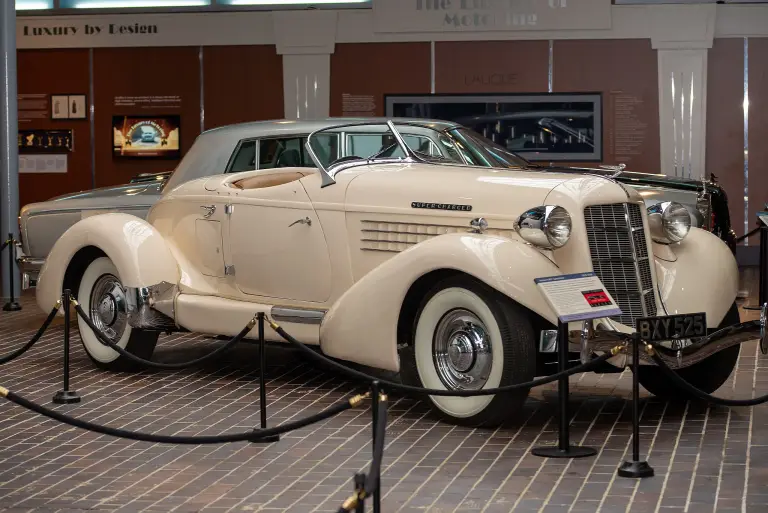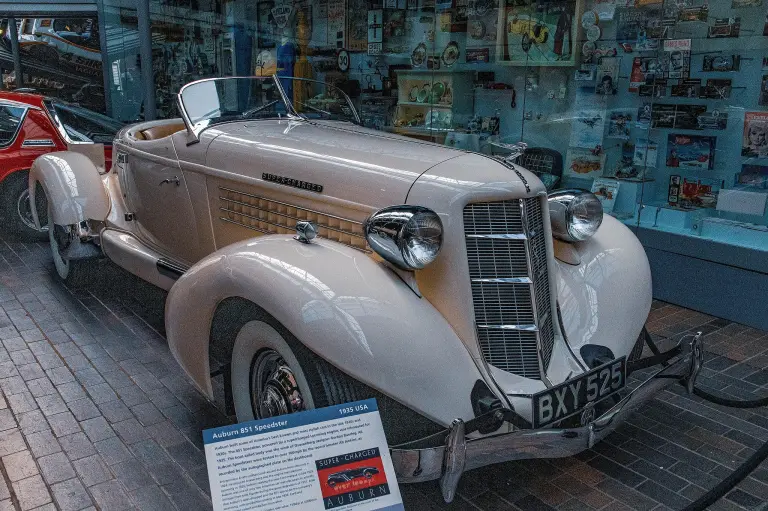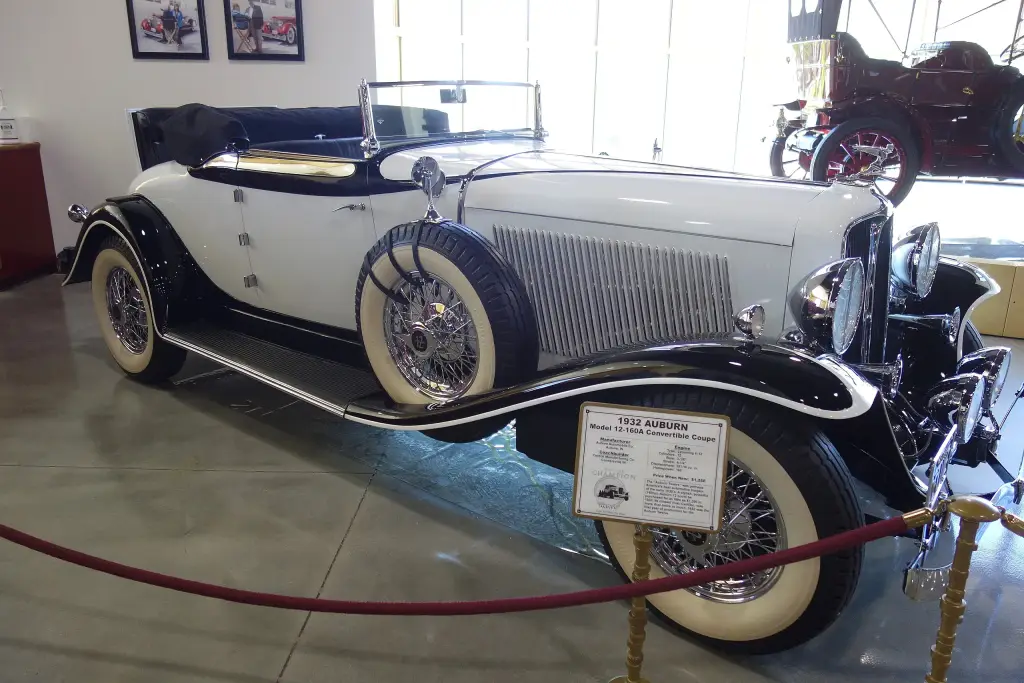
The Auburn 12-160 was part of Auburn’s twelve-cylinder range, introduced in 1931 with a V12 designed by George Kublin and built by Lycoming Engines. With the Great Depression taking hold the V12 was expensive, and only very small numbers were sold: about 25 of the Speedster 160 were built. The car survived in other forms, most visibly in the 1932 Model 12-160A convertible coupe.
Auburn 12-160 at a glance
| Maker | Auburn Automobile Company, Auburn, Indiana |
|---|---|
| Range introduced | 1931 |
| Engine | 6.4-litre V12, designed by George Kublin |
| Engine maker | Lycoming Engines |
| Speedster 160 built | about 25 |
| Body shown here | 1932 Model 12-160A convertible coupe |
| Market | luxury class, hit hard by the Depression |
| Legacy | V12 design became the basis of the LaFrance engine used in fire trucks |
Based on one source page for the V12 itself: the twelve-cylinder range is described in the English Wikipedia article on the Auburn Speedster.
History of the Auburn 12-160
In 1931 Auburn added a twelve-cylinder range to its line-up, using a 6.4-litre V12 designed by George Kublin and built by Lycoming Engines. The new twelve was aimed at the top of the American market, where Auburn already competed with its straight-eight models. As the Great Depression took hold the V12 was expensive to make and to buy, and the Auburn Speedster 160 built on it was correspondingly rare: only about 25 were made. The 120 and 125 eight-cylinder Speedsters of the first series had already shown what a light, powerful Auburn could do, but the twelve was a different proposition altogether.
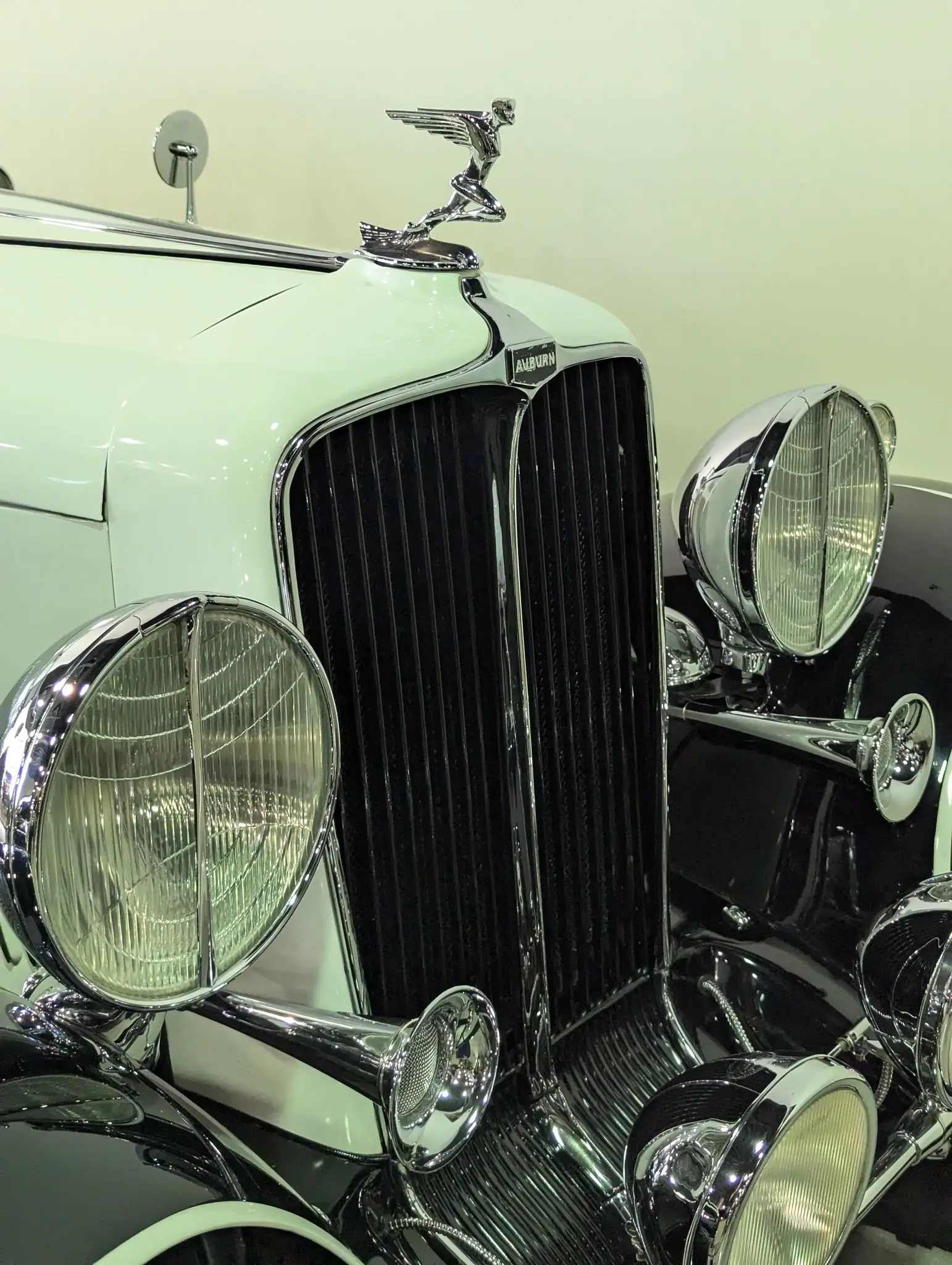
The V12 engine design itself was successful, and it was used as the basis of the LaFrance engine, which served for decades, especially in fire trucks. That gave the Auburn twelve an engineering afterlife far longer than its production life. The car pictured here is a 1932 Model 12-160A convertible coupe, one of the open bodies offered on the twelve-cylinder chassis.
The twelve-cylinder Auburn was a product of the same troubled years as the rest of the marque. Errett Lobban Cord had taken over the company in 1924 and built it into a serious luxury manufacturer, but after the 1929 stock market crash Auburn’s upscale vehicles were too expensive for the Depression-era market. Around 1935 the company even began producing kitchen cabinets and sinks to stay afloat, and in 1937 automotive production of Auburn, Cord and Duesenberg ended altogether. By then the V12 had long given way to the supercharged straight-eight of the 851 and 852 Speedsters.
Design and features
- Lycoming V12: a 6.4-litre twelve designed by George Kublin and built by Lycoming Engines.
- Rarity: about 25 Speedster 160 cars built while the Depression deepened.
- Coachwork: the 1932 Model 12-160A was offered as a convertible coupe among other bodies.
- Engineering legacy: the V12 became the basis of the LaFrance fire-truck engine.
Auburn 12-160 versions
- Speedster 160 (1931–1934): the twelve-cylinder Speedster, of which about 25 were built.
- Model 12-160A convertible coupe (1932): an open body on the twelve-cylinder chassis.
The V12 was replaced at the top of the range by the supercharged straight-eight of the Auburn 851 Speedster. More cars are in the Auburn collection.
Sources
- Auburn Speedster, English Wikipedia: V12 engine, George Kublin, Lycoming, Speedster 160 numbers
- Auburn Automobile Company, English Wikipedia: company history, Depression, end of production