
Aston Martin is a marque that has been bought, sold and rescued so often that its history reads like a thriller. Six cars carry the story: the DB2 that started the David Brown era, the DB5 that met James Bond, a wedge-shaped Lagonda, the Ford-era DB7 and DB9, and the 77 cars of the One-77.
The short version
Founded in 1913, Aston Martin has survived seven bankruptcies. Its identity was set by David Brown after 1947, tested in the 1970s, rebuilt under Ford from 1987 and sharpened into hand-built halo cars in the 2000s.
A company rescued again and again
Before the cars, the owners. The marque has been financially fragile for most of its life, and each rescuer left a mark on the cars that followed. Here is the short list.
- 1913Lionel Martin and Robert Bamford found the company. The first car to carry the name is a Coventry-Simplex four fitted to the chassis of a 1908 Isotta Fraschini.
- 1925After bankruptcy and a sale, Bill Renwick, Bert Bertelli and investors take control and rename it Aston Martin Motors.
- 1947David Brown, owner of a Huddersfield gear and machine-tool maker, buys Aston Martin and then Lagonda. The “DB” cars begin.
- 1972–75Brown hands the company over for £101 after paying its debts; it goes into receivership at the end of 1974 and is sold in 1975 for £1.05 million.
- 1987–93Ford buys 75% of the company in 1987 and, by 1993, all of it.
- 2007A consortium led by Prodrive chairman David Richards buys Aston Martin for £475 million.
- 2018Aston Martin is listed on the London Stock Exchange.
1. DB2 (1950): the engine that bought a company
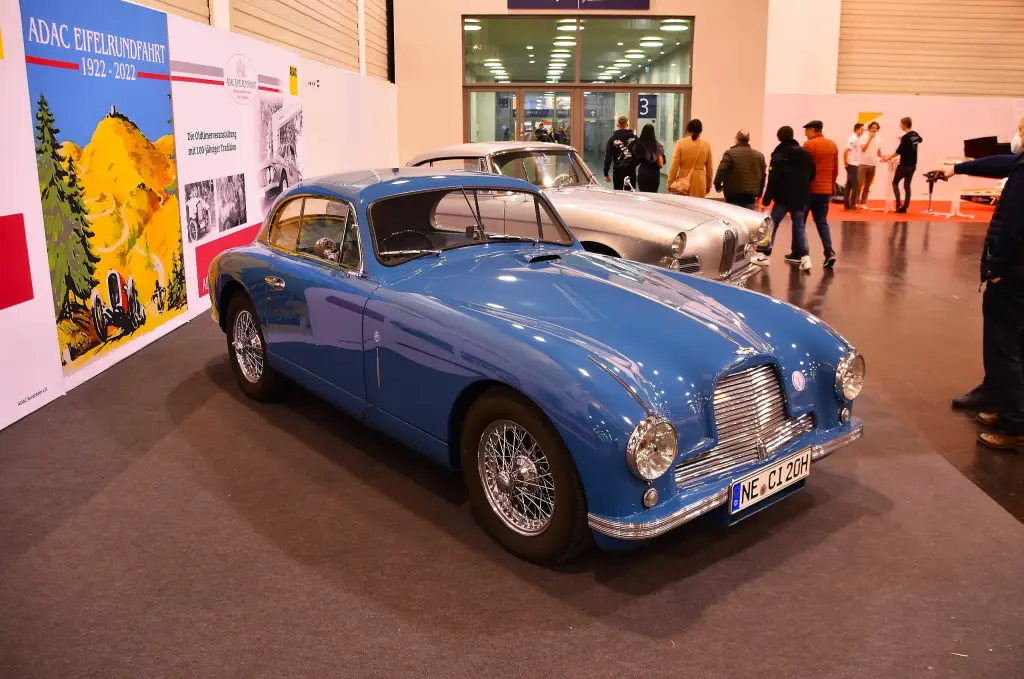
When David Brown bought Aston Martin and Lagonda in 1947, his main objective was Lagonda’s 2.6-litre, twin-overhead-camshaft straight-six, supervised by W. O. Bentley and largely designed by Willie Watson. It was more powerful than the pushrod 2.0-litre four in the Aston Martin 2-Litre Sports (later called the DB1). Fitted to a shortened tube-frame chassis by Claude Hill and wrapped in a fastback body by Frank Feeley, it became the DB2, shown in New York in April 1950.
The DB2 was also a racing car in a suit. In 1950 the factory cars finished fifth and sixth at Le Mans and won the 3-litre class, and a third place overall followed in 1951. A coupé tested by The Motor in 1950 reached 116.4 mph and took 11.2 seconds to 60 mph. Production ran to April 1953 and totalled 411 cars, a quarter of them drophead coupés.

2. DB5 (1963): the car Bond made famous
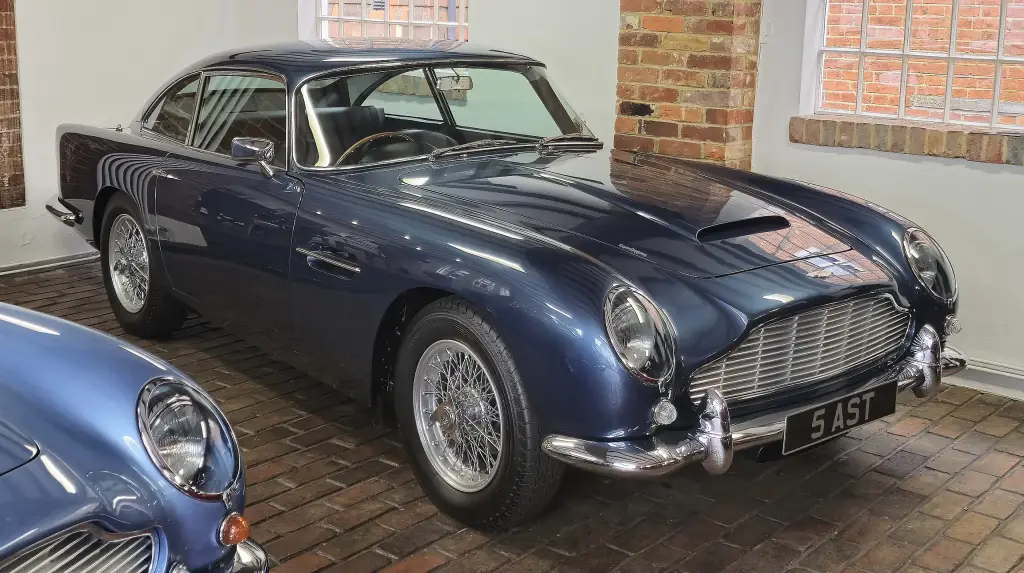
The DB5 was an evolution of the final DB4, styled by the Italian coachbuilder Carrozzeria Touring Superleggera. The main changes were a 4.0-litre all-aluminium engine with three SU carburettors, 282 bhp, and a stronger ZF five-speed gearbox. The result did 145 mph and reached 60 mph in about eight seconds. It came with reclining seats, wool carpets, electric windows, a magnesium-alloy body, an oil cooler and a fire extinguisher as standard.
Author Ian Fleming had put Bond in a DB Mark III in his novel, but special-effects expert John Stears persuaded the company to lend its DB5 prototype for the 1964 film Goldfinger. Four Goldfinger DB5s existed, two for filming and two for promotion, and the rest is marketing history. Rare variants include the 325 bhp Vantage with three Weber carburettors (65 coupés built) and 123 convertibles.
The car appeared on a Royal Mail “British Auto Legends” stamp in 2013.
3. Lagonda (1976): the wedge that kept the lights on
By the mid-1970s Aston Martin had been through the recession, the emissions rules that stopped its US sales, and receivership at the end of 1974. A four-door saloon was a departure from its 2+2 coupés, but as soon as the Lagonda was announced it attracted hundreds of deposits and refilled the company’s cash reserves.
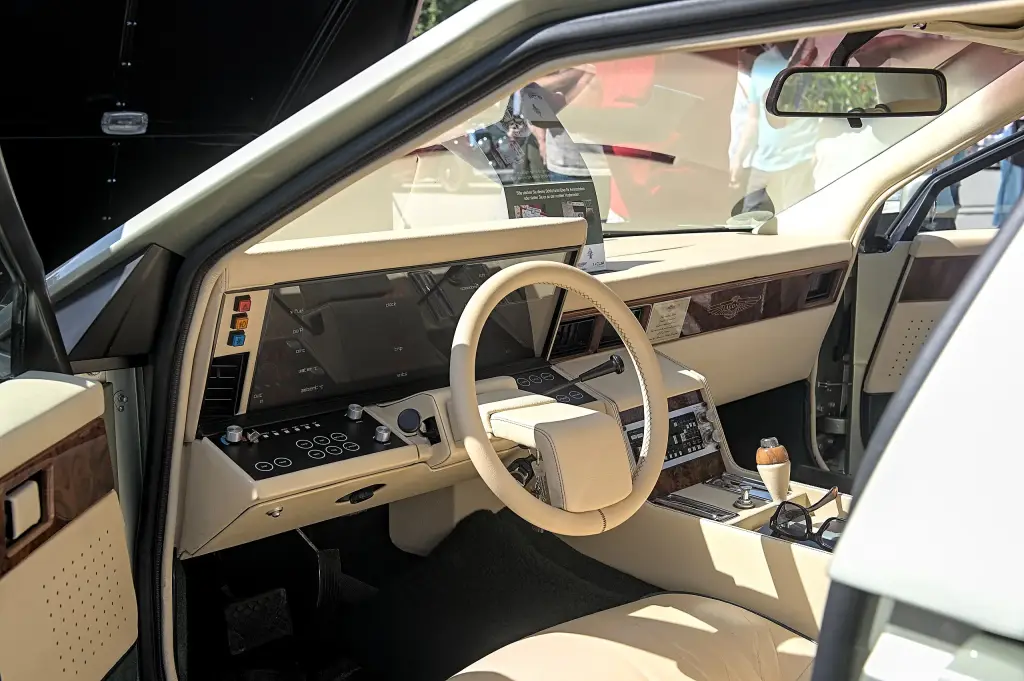
After seven Series 1 cars, the Lagonda was drawn from scratch in 1976 by William Towns as an extreme version of the “folded paper” style of the decade, comparable with the Lamborghini Countach and Lotus Esprit. It had a 5.3-litre DOHC V8 with 280 hp, a top speed of 148 mph and a price of £49,933 in 1980, more than a Ferrari 400 but less than a Rolls-Royce Corniche. It was also the first production car with a digital instrument panel; the development cost of the electronics alone was four times that of the whole car’s budget, and the displays were unreliable. Deliveries began in 1979, and 645 were built in total until 1990.

4. DB7 (1993): the Ford-era saviour
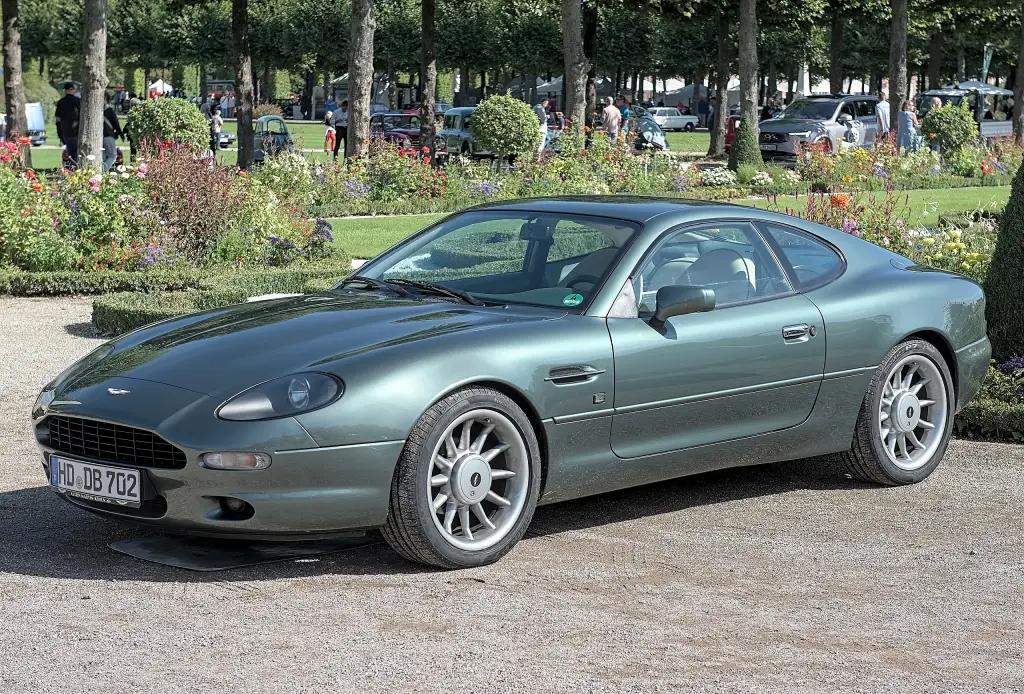
Ford took control in 1987 and had little appetite for expensive new models, so the DB7, known inside as project XX, was made largely from Jaguar parts and with Tom Walkinshaw’s TWR engineering. Ian Callum shaped it. The platform came from the Jaguar XJS, and the budget was so tight that the tail lights came from the Mazda 323 F, door handles from the Mazda 323 Estate and indicator lenses from the Mazda MX-3. The whole project cost US$30 million.
It was shown at the Geneva show in March 1993, the reception was overwhelming, and production began in September 1994 in a new factory at Bloxham. The DB7 was the only Aston with a steel monocoque; a supercharged straight-six gave 340 PS, a V12 Vantage followed in 1999, and more than 7,000 were built, making it the best-selling Aston Martin of its day.

5. DB9 (2003): a new platform, a new Aston Martin
The DB9 replaced the DB7 as an all-new car on the aluminium “vertical/horizontal” platform, designed by Ian Callum and Henrik Fisker and shown at Frankfurt in 2003. Its bonded and riveted aluminium structure was more than twice as stiff in torsion as the DB7’s steel body. It was built at the new Gaydon factory, opened in 2003, the first purpose-built plant in the company’s history.
The 5.9-litre V12 produced 456 PS and the car reached 60 mph in 4.7 seconds with a top speed of 299 km/h. The name tells its own story: Aston Martin did not call it the DB8 because that would suggest a V8, and the DB9 was an all-new car, not an evolution. The DB9 stayed in production until 2016 and spawned the DBR9 racing car.

6. One-77 (2009): 77 cars, one engine
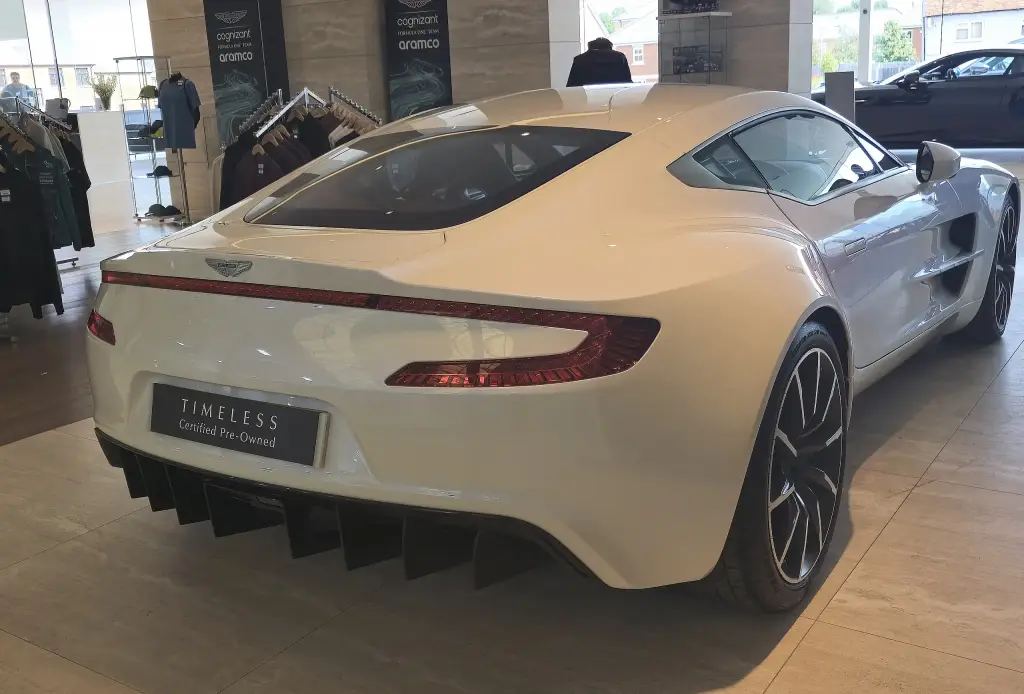
Shown in full at the 2009 Geneva show, the One-77 was limited to 77 cars, with deliveries starting in 2011 and a price of £1,150,000. It had a carbon-fibre monocoque, a hand-made aluminium body and a 7.3-litre V12 with 760 PS at 7,500 rpm, which Aston Martin claimed was the most powerful naturally aspirated production engine in the world when the first car was delivered. A test in December 2009 showed 354 km/h (220 mph), and 0–60 mph took about 3.5 seconds.

Six cars, six eras
| Car | Years | Engine | Power | Built |
|---|---|---|---|---|
| DB2 | 1950–1953 | 2.6 L Lagonda straight-six | about 105 hp (Vantage 125 hp) | 411 |
| DB5 | 1963–1965 | 4.0 L straight-six | 282 bhp (Vantage 325 bhp) | not stated in our sources |
| Lagonda (Series 2) | 1976–1985 | 5.3 L V8 | 280 hp | 645 (all series, 1974–1990) |
| DB7 | 1994–2004 | supercharged straight-six, later V12 | 340 PS (335 hp) | more than 7,000 |
| DB9 | 2004–2016 | 5.9 L V12 | 456 PS (450 hp) | not stated in our sources |
| One-77 | 2011 deliveries | 7.3 L V12 | 760 PS (750 hp) | 77 |
How power grew
Manufacturer ratings from the sources below; the DB2 figure is the original Lagonda engine, and ratings of different eras were measured differently.
Aston Martin questions and answers
What does DB stand for?
The initials of David Brown, who owned the company from 1947 to 1972.
Which Aston Martin did James Bond drive first on film?
The DB5, in Goldfinger (1964). In Ian Fleming’s novel Bond drove a DB Mark III.
Why is there no DB8?
Aston Martin feared the name would imply a V8; the DB9 has a V12 and marked an all-new car.
Who owned Aston Martin under Ford?
Ford bought 75% in 1987 and, by 1993, the whole company, and sold it to a Prodrive-led consortium in 2007.
Browse all our Aston Martin photographs.
This guide is based mainly on English Wikipedia; the secondary sources confirm the main dates and models but not every number.
Sources
- Aston Martin, English Wikipedia: company history and owners
- Aston Martin DB2, English Wikipedia: development, racing, production
- Aston Martin DB5, English Wikipedia: specification, variants, Goldfinger
- Aston Martin Lagonda, English Wikipedia: Series 1 to 4, specification, history
- Aston Martin DB7, English Wikipedia: project XX, parts, production
- Aston Martin DB9, English Wikipedia: platform, name, specification
- Aston Martin One-77, English Wikipedia: specification and production
- A history of Aston Martin’s DB models, Yahoo Autos: DB1 and DB2 context
- Aston Martin history, trivia and fast facts, WhichCar: general history