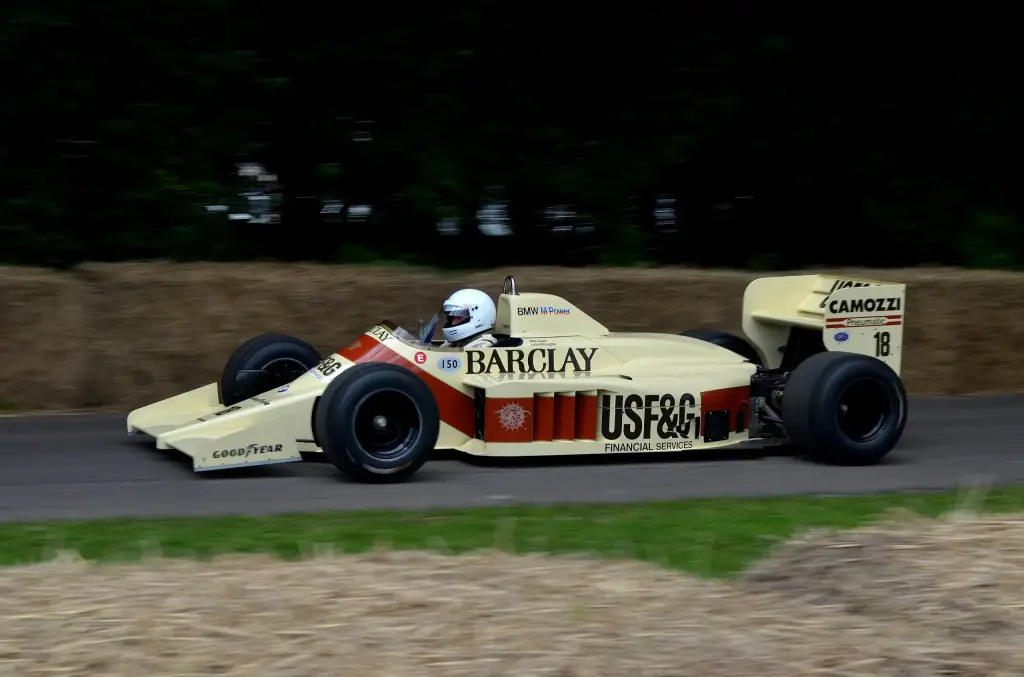
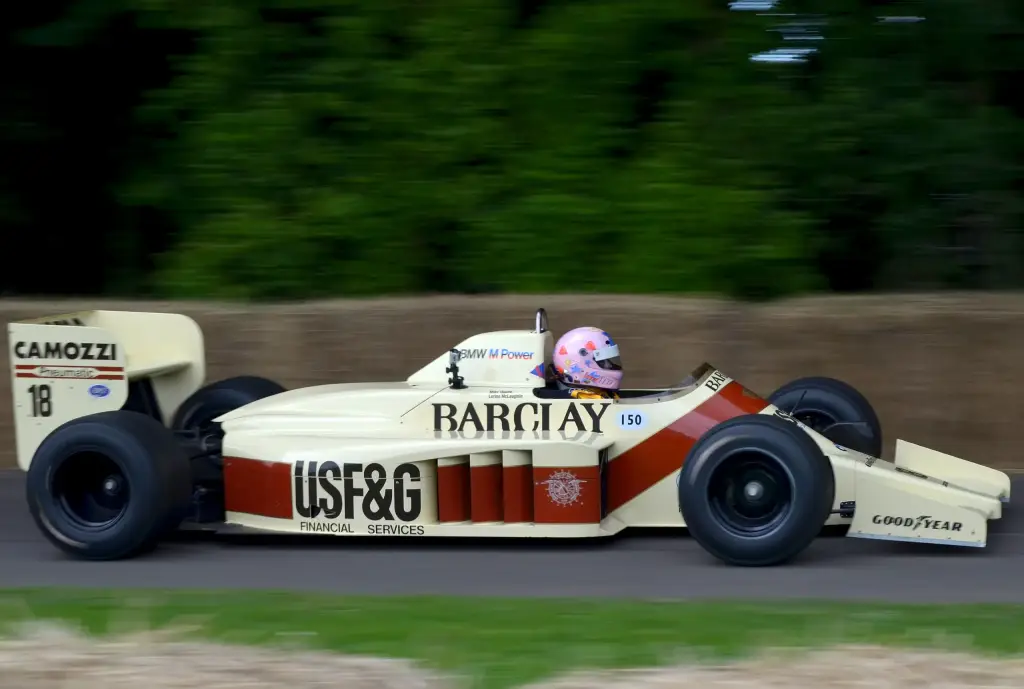
The Arrows A9 was the Formula One car with which the Arrows team competed in the 1986 season. It was meant to replace the ageing A8, but it turned out to be worse than its predecessor and appeared in only three races, all of which ended in retirement.
Arrows A9 at a glance
| Team | Arrows Grand Prix International |
|---|---|
| Season | 1986 Formula One World Championship |
| Engine | BMW M12/13 turbocharged inline-four |
| Engine builder | Heini Mader (Swiss engine specialist) |
| Chassis | first carbon composite Arrows, built by British Aerospace |
| Races entered | 3 (Germany, Austria, Hungary) |
| Drivers | Thierry Boutsen, Christian Danner |
| Best result | no finish |
| Team result | 10th, 1 point (scored with the A8) |
Based on one source.
History of the Arrows A9
The A9 was supposed to replace the ageing A8 car, but it turned out to be worse than its predecessor. The new car was the team’s first carbon composite chassis, built by British Aerospace, and delays in manufacture caused the car to be late. Its lack of performance caused Dave Wass to quit Arrows, and the team stuck with the A8 from the previous season.
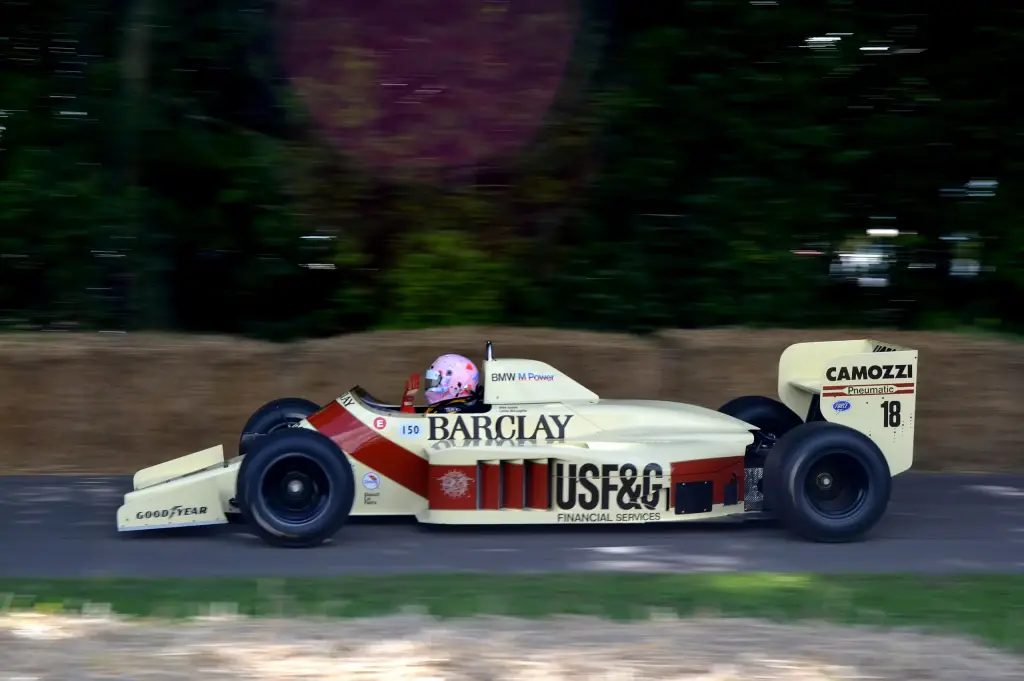
It was powered by the massively powerful BMW M12/13 turbocharged inline-four engine. Unlike the BMWs used by Brabham and Benetton, whose engines were maintained and updated regularly by BMW, the Arrows engines were maintained by the Swiss engine guru Heini Mader and were rated as the least powerful of the BMW runners.
As a result the A9 only saw action at three races. At the German and Austrian Grands Prix it was driven by Thierry Boutsen, and in both races the car failed to finish after its turbocharger failed. At the Hungarian Grand Prix team-mate Christian Danner raced the A9 but retired after seven laps with rear suspension failure.
The team found that the rear end was the major problem with the A9, and for a couple of races it was run with its new front end joined to the rear end of the A8. While this actually improved the performance of the new car, Arrows soon returned to running the older A8 for the balance of the season. The team finished the season in tenth place with a single point, earned by Danner in Austria while driving the A8.
Design and features
- Carbon composite chassis: the first Arrows built this way, supplied by British Aerospace.
- Late arrival: manufacturing delays meant the car missed most of the season.
- Mader BMW turbo: the least powerful of the BMW-engined cars on the grid.
- Hybrid experiments: an A9 front end was mated to the rear of the A8 for a couple of races.
Arrows A9 versions
- Arrows A9 (1986): the standard carbon-chassis car.
- A9/A8 hybrid: new front end with the previous year’s rear end, tried for a couple of races.
The A9 was the turbo-era member of the Arrows line, which later reached the Arrows A21 of 2000 and had begun with cars such as the Arrows A5. More cars are in the Arrows collection.
Sources
- Arrows A9, English Wikipedia: chassis, engine, races, results