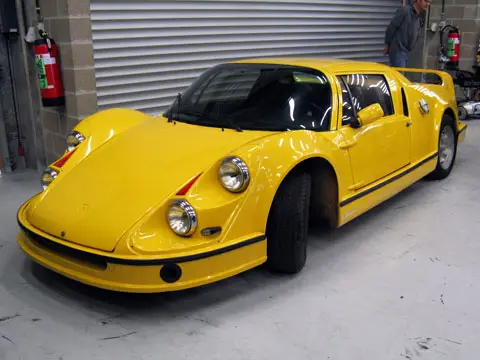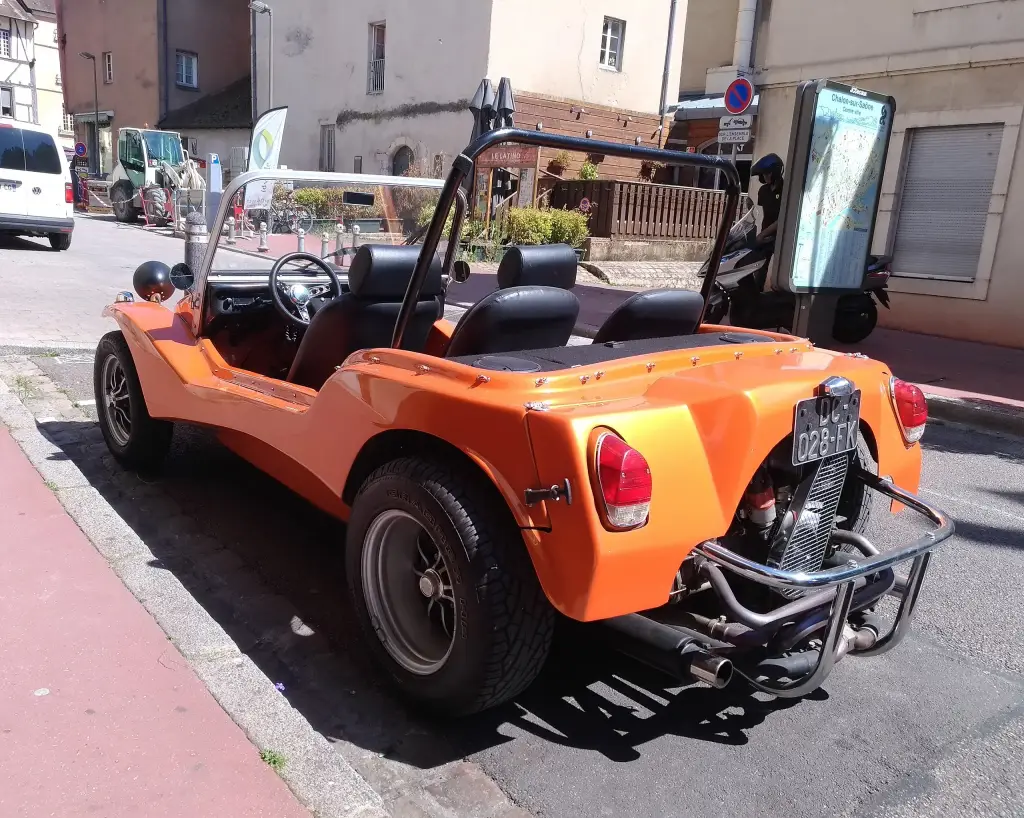
The APAL Buggy was the model that made the Belgian firm’s name. Built on Volkswagen Beetle mechanicals with a glass-fibre body, it came in two forms: the two-seater Buggy C on a shortened chassis and the four-seater Buggy L on a full-length one.
APAL Buggy at a glance
| Maker | APAL, Blegny-Trembleur, Belgium |
|---|---|
| Production | 1969–1981 |
| Body | glass-fibre, open, with wide wheels, bucket seats and an open roof |
| Chassis | Volkswagen Beetle floorpan |
| Buggy C | two-seater; Beetle chassis shortened by 27.3 cm |
| Buggy L | four-seater; standard, unshortened Beetle chassis |
| Engines | Volkswagen air-cooled, 1,200 or 1,300 cc |
| Built | about 5,500 of the two versions |
| Related models | APAL Jet, Rancho, Auki, Corsa |
| German successor | buggy moulds sold to a German firm, production stopped about 1996 |
The Buggy has no Wikipedia article of its own; this page uses the sections on the buggy models in the Dutch, English, French and German articles on APAL, with the Dutch article as the main source for the C and L versions.
History of the APAL Buggy
APAL began with closed cars, including the gull-wing GT coupé of the early 1960s, but the company found its market in the buggy boom at the end of that decade. The recipe was simple and cheap: a Volkswagen Beetle floorpan and running gear, an air-cooled engine at the back, and a light glass-fibre body in place of the saloon shell.
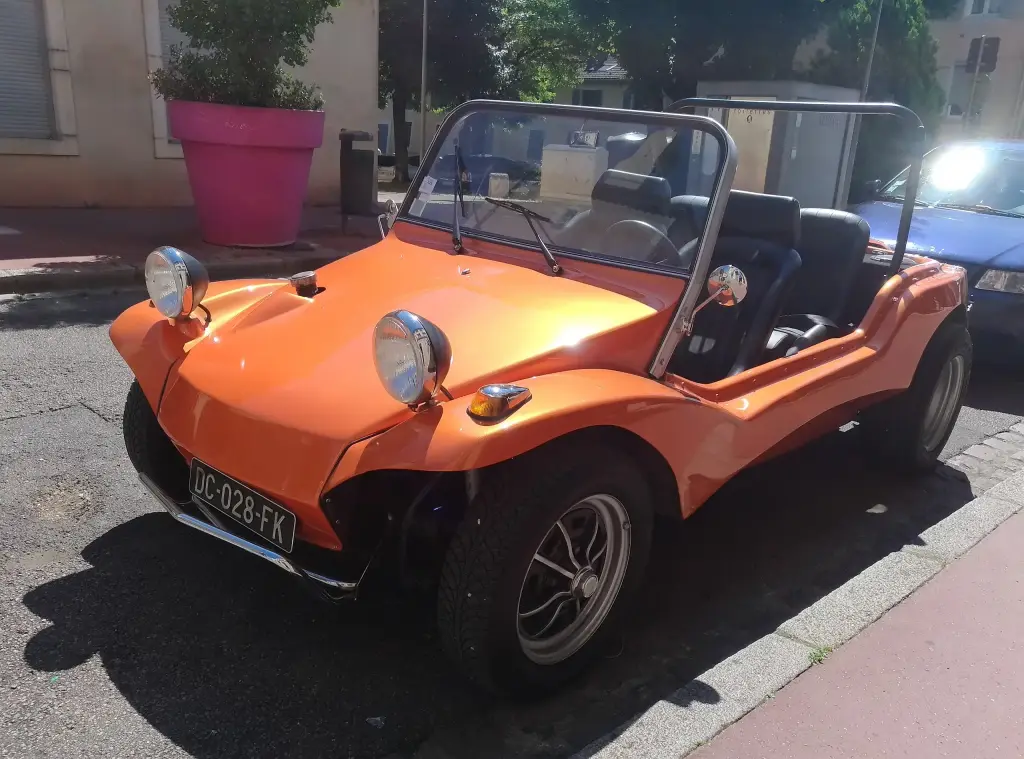
The APAL Buggy was sold in two versions. The Buggy C was a two-seater, and for it the Beetle chassis had to be shortened by 27.3 cm. The Buggy L was a four-seater that used the standard, unshortened chassis, so it offered more room at the cost of a longer wheelbase. Both had wide wheels, bucket seats and an open roof, the classic beach-buggy specification of the period.
Production ran from 1969 to 1981, and the Dutch Wikipedia puts the combined output of the two versions at about 5,500 cars, making the buggy the most popular model APAL ever built. The English article gives a similar figure for the company’s glass-fibre bodies as a whole: about 5,000 between 1968 and 1981, spread across the Buggy and its relatives, the Rancho, Jet, Auki and the gull-winged Corsa.
The buggy outlived the original model line in a small way. A German company bought the moulds, but tighter type-approval rules after the end of Beetle production made further building impractical, and buggy production was stopped around 1996. By then APAL had long since moved most of its business into bathroom fittings, and the Belgian car company closed in 1998.
Design and features
- Beetle mechanicals: a Volkswagen floorpan and air-cooled 1,200 or 1,300 cc engine, simple to repair and tune.
- Glass-fibre body: light, rust-free and easy to mould in small numbers.
- Two sizes: the shortened Buggy C for two and the full-length Buggy L for four.
- Open-air specification: wide wheels, bucket seats and no fixed roof.
- Long production: twelve years on the market, far longer than most APAL models.
APAL Buggy versions
- Buggy C (1969–1981): two-seater on a Beetle chassis shortened by 27.3 cm.
- Buggy L (1969–1981): four-seater on the standard Beetle chassis.
- APAL Jet: another buggy in the range, built from moulds traded with an English constructor and modified by APAL.
- APAL Corsa: a sporty buggy version with gull-wing doors.
- APAL Rancho and Auki: further buggy models sold alongside the Buggy.
The buggy followed the APAL GT, the company’s first car, in the range. More models from the marque are in the APAL collection.
Video: Saisonstart 2012: Ausfahrt mit drei VW Buggys
Video on YouTube.
Sources
- APAL, Dutch Wikipedia: Buggy C and L, chassis changes, production years and total
- Apal, English Wikipedia: buggy models, glass-fibre body total
- Apal, French Wikipedia: engines, Buggy 4000 production
- Apal, German Wikipedia: company history