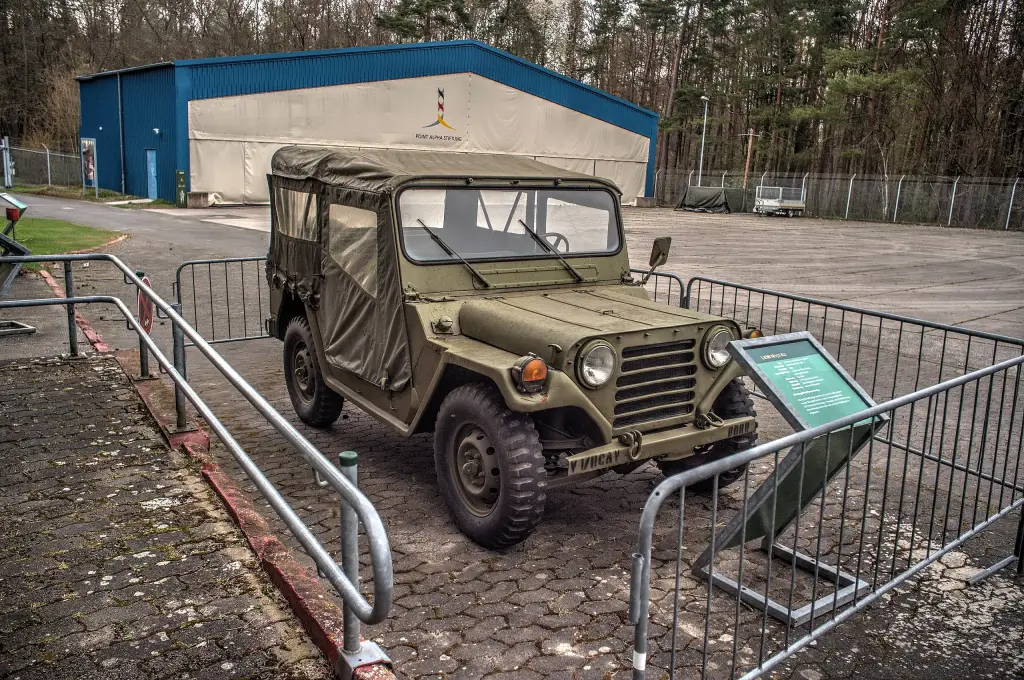
The M151 — officially Truck, Utility, ¼-Ton, 4×4 — was a light utility vehicle produced by several US manufacturers between 1959 and 1988. It succeeded the M38 and M38A1 jeeps, and was itself replaced by the much larger HMMWV from 1985.
AM General M151 at a glance
| Makers | Ford, later Kaiser and AM General |
|---|---|
| Production | 1959–1988 |
| Class | ¼-ton 4×4 utility truck |
| Predecessor | M38 and M38A1 jeeps |
| Body | unitary body and frame |
| Suspension | independent all round, coil springs |
| Wheelbase | 85 in (2.16 m) |
| Grille | horizontal, not the Jeep seven-slot |
| Notable variants | M151, M151A1, M151A2, M718 ambulance |
| Replaced by | HMMWV, from 1985 |
Based on one source: the English Wikipedia article on the M151.
History of the AM General M151
A clean-sheet Ford design
In 1951 Ford Motor Company was awarded the contract to design a ¼-ton 4×4 truck to replace the M38 and M38A1 jeeps, to the specifications of the US Army’s Ordnance Tank Automotive Command. Design started in 1951 and testing and prototyping continued through most of the 1950s. Although Ford developed and first produced the M151, production contracts for the M151A2 were later also awarded to Kaiser and to AM General, a subsidiary of AMC.
Unitary body and independent suspension
Although it kept the layout and approximate dimensions of its predecessors, the M151 was a completely new design. Where earlier jeeps had a steel tub bolted to a separate frame, the M151 integrated the box frame rails and the steel body into a unibody, which gave slightly more ground clearance and a lower centre of gravity. The wheelbase was 4 inches longer than its predecessor’s and the body was wider, so the truck was roomier while staying light. Instead of rigid live axles the M151 had independent suspension with coil springs, which made it fast across country and more comfortable. Because of copyright and trademark issues it did not wear Jeep’s seven-slot grille; a horizontal grille was used instead.
Rollover troubles
The M151 was never widely sold to civilians, partly because it did not meet federal highway safety standards and partly because of a series of rollover accidents. The high-pivot rear swing axle of the M151A1 was responsible for the rollovers: under hard cornering the inside rear wheel tucked under and the truck could turn over. Ford and the Army blamed driver error, but the geometry was the real problem. Drivers often put an ammunition box filled with sand under the rear seat when the truck was empty to settle it, and recoilless rifle carriers, with their stiffer rear springs, were subject to severe speed limits.
Thirty years of service
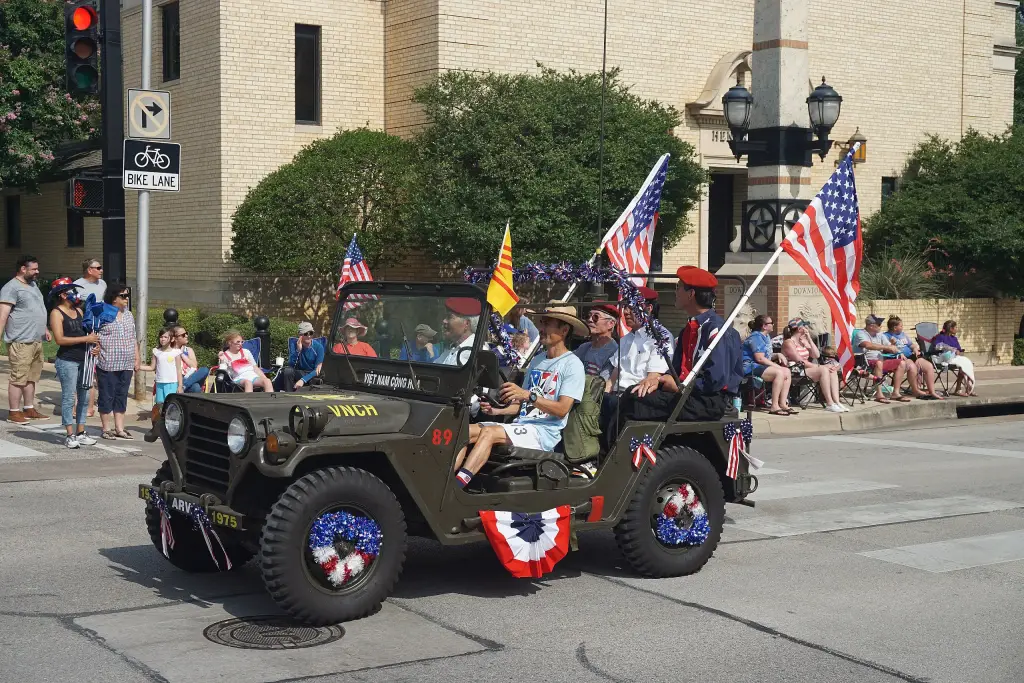
The M718 ambulance had a longer rear body and a taller canvas roof, and carried its spare wheel on the passenger side. From 1985 the M151 and M718 were replaced by the HMMWV in most roles. Some M151A2s were still in US military service in 1999, giving the series a longer run than the wartime Willys MB, the M38 and the M38A1 combined.
Design and features
- Unitary body: the first US ¼-ton jeep without a separate chassis.
- Independent suspension: coil springs all round instead of live axles.
- Horizontal grille: a trademark-safe front instead of Jeep’s seven slots.
- Long service: built for nearly thirty years and still in use at the end of the 1990s.
AM General M151 versions
- M151: the original Ford production version.
- M151A1: the version with the troublesome rear swing axle.
- M151A2: the later, improved version, also built by Kaiser and AM General.
- M718: field ambulance with a longer rear body and taller roof.
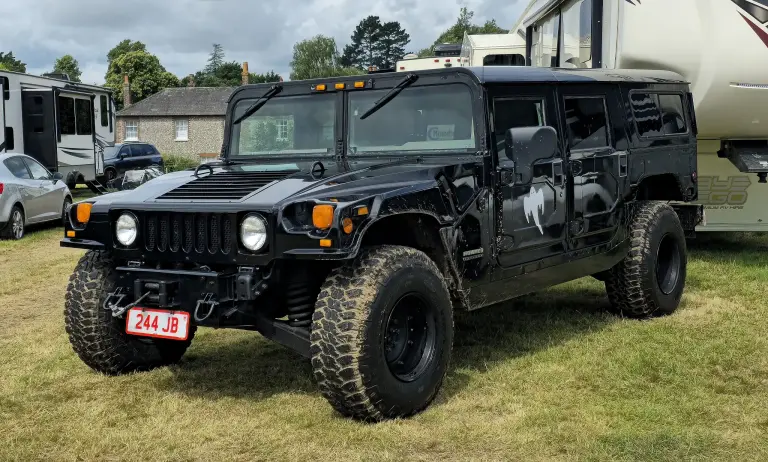
The M151 was replaced by the Humvee, whose civilian version is the Hummer H1. AM General’s larger trucks, the M35 and M809, are in the same AM General collection.
Video: The Rat Patrol – AM General M151A2 Military Jeep – M151
Video on YouTube.
Sources
- M151 ¼-ton 4×4 utility truck, English Wikipedia: history, design, handling, variants